USA · East Coast
Crossing to the USA, Brunswick and Savannah
After having to wait longer than planned for the right weather window, the time finally came on April 5. At 9:15 AM in the morning, we set off for our next major destination, the USA. For some the land of dreams, for others today already almost a swear word. In any case, I am approaching the new adventure with a completely open mind.
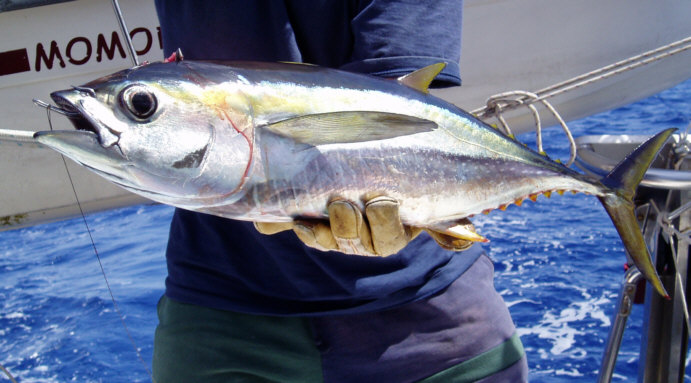
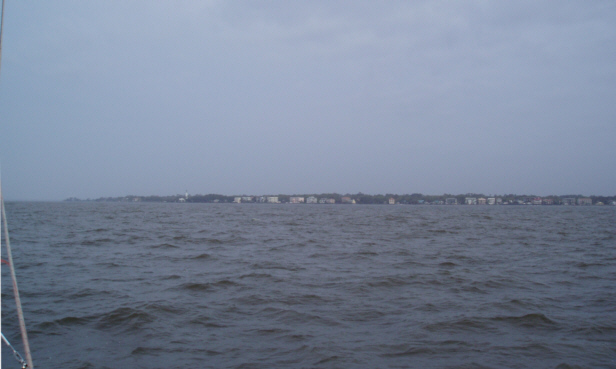
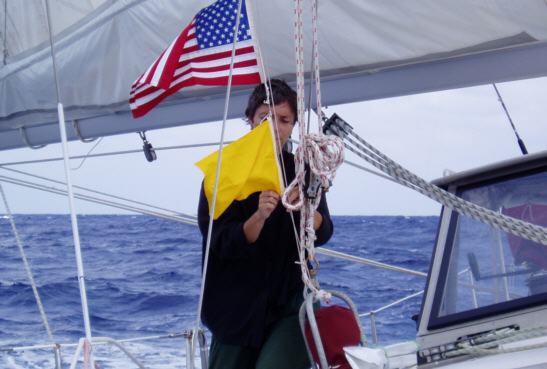
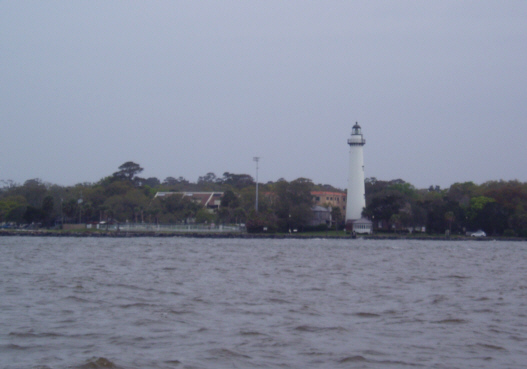
Due to calm winds and some tricky reef passages, we had to motor for the first few hours. Once we were far enough from the coast, the expected wind from the south kicked in promptly. That was also the moment to put our fishing rod back to work. Hopefully, out here there would be no more "poisonous" barracudas. As I had heard from old salts, the Gulf Stream should be teeming with fish. And indeed it was. It did not take too long before the beloved "rhrhrhrh" of the fishing rod sounded. We immediately took some speed off the boat and the fight with the fish began. And it truly became a fight. Always reel in the fishing line a little bit immediately whenever there is slack, only to let it out a little more the next moment. "Pumping" is what they call it in deep-sea fishing parlance. This reeling in and letting out of the line certainly lasted for a good twenty minutes and was genuinely exhausting. I suspected that my biggest catch yet was on the line and already pictured it sizzling in the pan. Suddenly, the fishing rod bent more and more. I immediately gave the fish the required line, but it swam away from the boat with uncanny power and speed. Despite the drag built into the reel, the fishing line ran out dangerously close to its end. Now I applied a bit more pressure to the drag, but that apparently was too much. The completely bent fishing rod snapped back like a whip. That was the clear sign that the fish, and if I had bad luck, the whole lure as well, was gone. Unfortunately, that is exactly what turned out to be the case. Nonetheless, a new lure was immediately attached and dropped back into the water. Half an hour later, the exact same scenario repeated itself. The only difference was that this time the tackle was not lost. Apparently, the hook had only caught in the flesh and simply tore out at some point. However, I was not going to give up just yet, and the next attempt could begin. And lo and behold. This time I had better luck, as a magnificent yellowfin tuna, measuring a proud 83 cm in length, was effortlessly hauled on board. Now this passage was saved, purely in terms of fish at least.
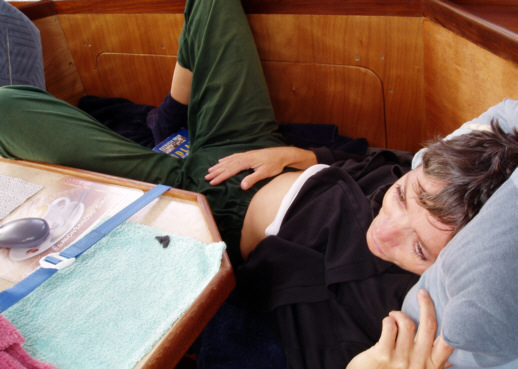
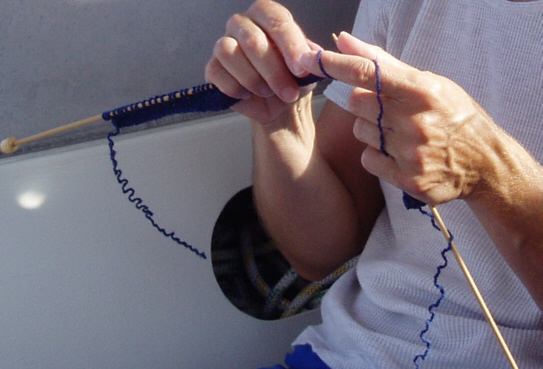
Once we reached the Gulf Stream, our boat speed increased noticeably, and the closer we got to the USA, the more the air temperature dropped. Yvonne had recovered well from her obligatory startup difficulties (a touch of seasickness) and eagerly began knitting a winter sweater. Thus, in our little world aboard the "SY MOMO", all was well and nothing stood in the way of a successful landfall in the United States.
Arrival and Clearing Customs in Brunswick, Georgia
To be honest, we were a bit unsettled before our first encounter with the American customs and immigration authorities. We had heard all sorts of horror stories in advance and consequently did not quite know what was true and what was fiction. From our side, we had meticulously done everything required by the US authorities. Our arrival had been announced by phone from the Bahamas and then once more just before entering over our VHF radio. We had not even properly tied off all the lines in the marina of Brunswick when customs and immigration were already standing in front of the MOMO. The two officers turned out to be extremely friendly, helpful, and generous representatives of the USA. Not the slightest difficulty was caused for us. The boat was not searched, and we even received a residence permit for a whole year! They did not even ask a single question about our weapons, even though we had already notified them of these by phone from the Bahamas. The only thing, and we did find this a bit of a contradiction, entry was denied to a single lemon (from California) and half a cabbage (also from the USA) which we had actually bought back in the Bahamas, and they were confiscated as a precautionary measure. So the first impression of the United States could not have been better. Not even the rainy and, by our standards, very cold weather could change that.
The Intracoastal Waterway (ICW)
Once in your life, as many true sailors are said to say, you should navigate the "dream waterway of the world". What the Panamericana, the long-distance highway from Alaska to Tierra del Fuego, is for car and Harley tourists, the Intracoastal Waterway along the east coast of North America between Florida and New York is for a portion of the international boating community.
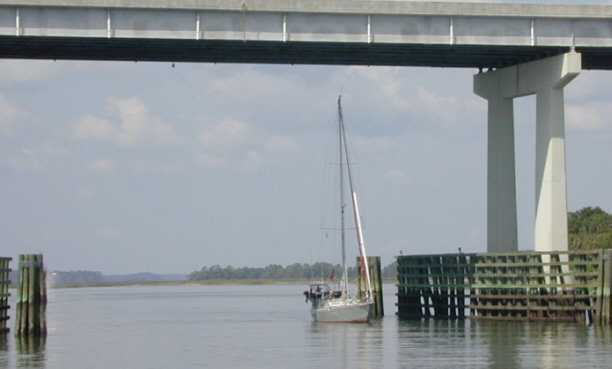
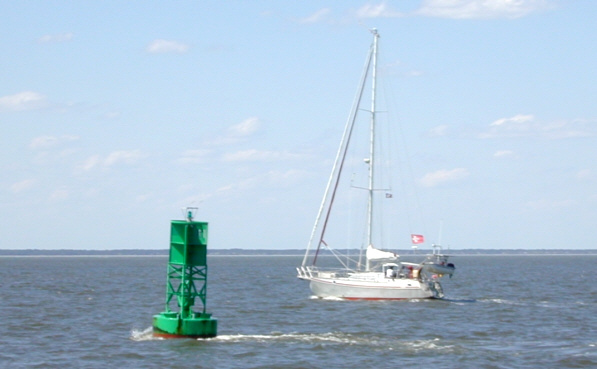
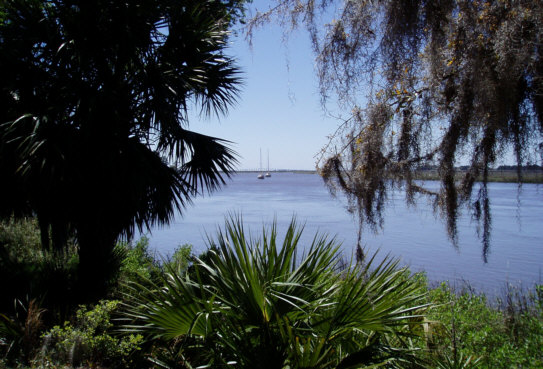
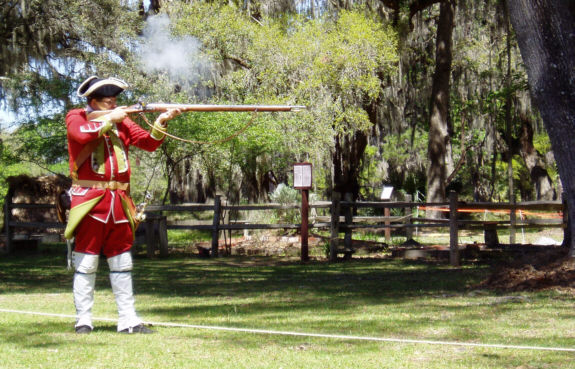
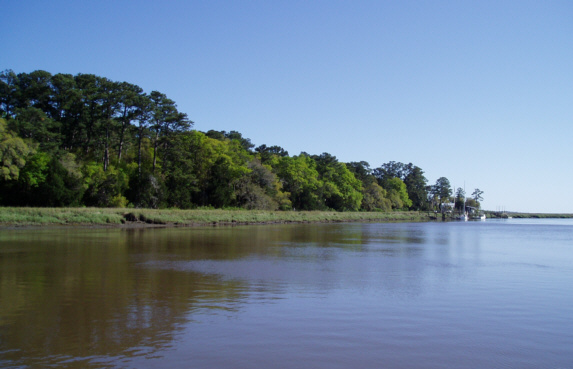
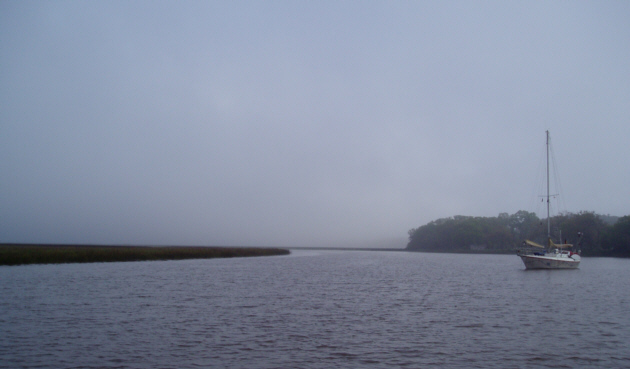
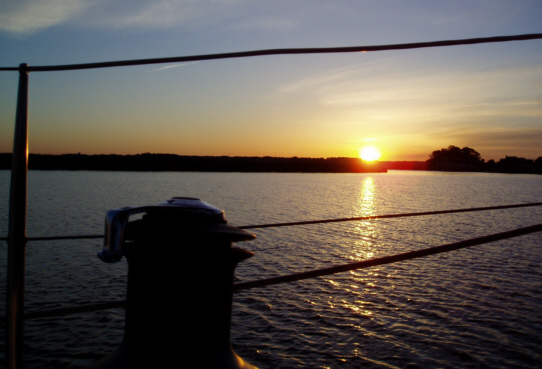
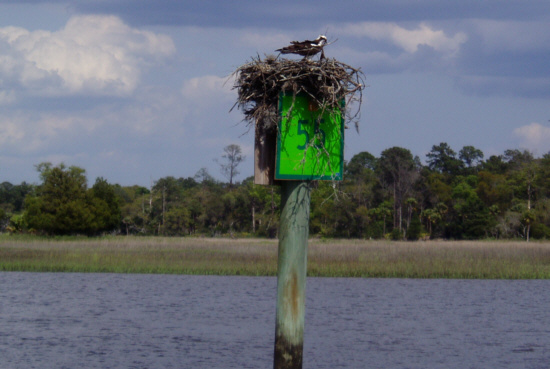
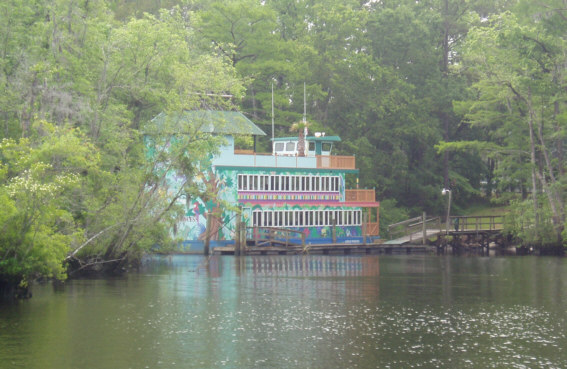
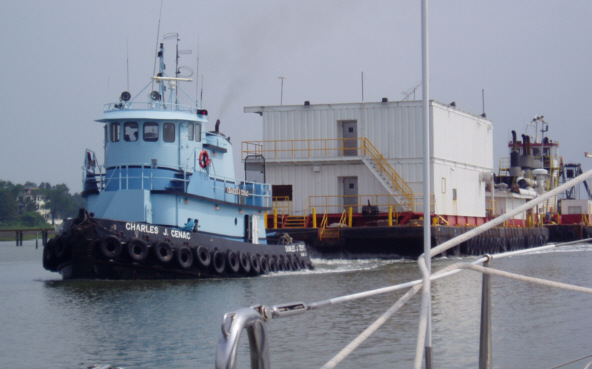
This almost 3000 miles long waterway is actually not a canal. It is everything one can imagine under inland waters: quiet basins and wide lagoons, rushing river mouths and narrow creeks, romantic primeval forest rivers and wide lake stretches without land in sight. Its waters change from turquoise, cobalt blue, slate grey, coffee brown to coal black. They are sometimes calm, treacherous, or also rough.
The Intracoastal Waterway, or ICW as Americans briefly call it, was created in the course of millennia by natural sand accumulations of the sea on the Atlantic coast.
Perhaps this gigantic inland route would never have been completed and brought to a target depth of approximately 3,60 meters without military interests. Already in the American Civil War, troops and war material were shipped on the ICW. Even today, large push tows transport bulk goods such as sand and grain.
The fixed bridges all have a clearance height of at least 65 feet, at mean high water. Our MOMO has a total mast height of 64 ¼ feet. I believe everyone can imagine how we sweat blood during the first bridge passages, although we always passed them extremely slowly. Mostly, the smaller German Momo also drove through ahead of us and so we could estimate the effective clearance height a little bit better based on her specially attached mast extension.
At the movable bridges, the watercraft almost always has the right of way over car traffic. Only the highway bridges and heavily trafficked city bridges have opening times on the hour or half hour, and sometimes remain completely closed for one or two hours during rush hour.
The varied water landscape usually put us under its spell. We often sat simply quietly in the cockpit and admired the shore regions on both sides of the creeks. Sometimes pine and palm vegetation alternated with each other. Then there were magnificent villas to admire again, or slight hectic came up because of all things on a very narrow section a wide towboat came towards us.
In front of the swamp meadows, herons and wild boars poked in the shore mud. High into the sky, a group of American black storks sometimes screwed themselves and with almost aristocratic dignity pelicans sailed past us in formation low flight. Every now and then an osprey drew its circles quietly above us without the slightest wingbeat.
Close next to our boat, many times the fins of the dolphins cut through the water. The friendly animals became our daily companions from then on and showed themselves, mostly swimming in pairs, even in the shallow inland creeks. At many anchorage places, we heard their blowing and whistling even in the middle of the night and through the hull.
Until now we have unfortunately never caught sight of the manatees, the sluggish and lovable sea cows. They are under strict protection, which unfortunately achieves little. The sea cows are still run over by fast running motorboats and dismembered by their propellers. Protection zones without boat traffic are now intended to open up better retreat possibilities for the sluggish herbivores.
One always had to navigate according to the markers. These are piles driven into the bottom for fairway marking. This system is very simple, because the landward markers always carry a red triangle with consecutive numbers, the seaward ones a green square, likewise with number. Thus, Yvonne could continuously help determine our current position in our very detailed Maptech sport boat chart with a Post-it.
Savannah
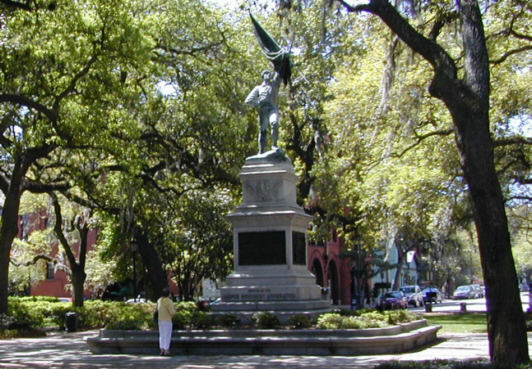
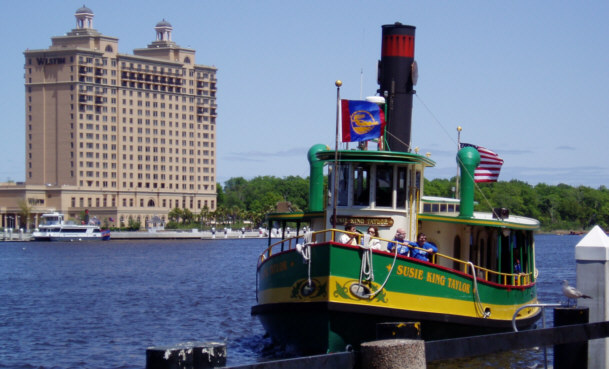
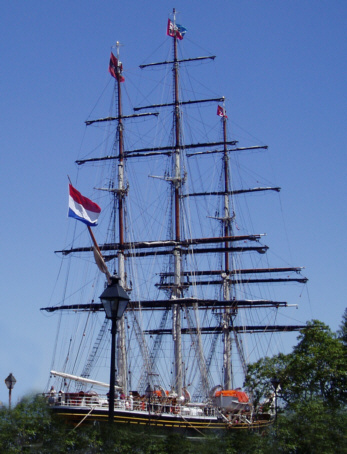
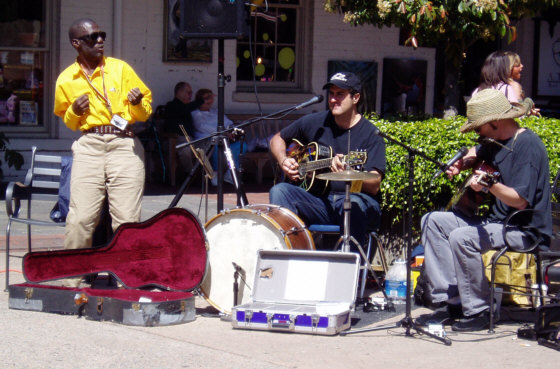
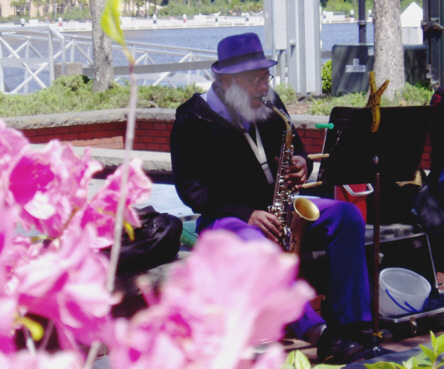
The city of Savannah, in the state of Georgia, is the county seat of Chatham County. It is one of the leading seaports in the southeastern United States. Shipyards and railway repair shops have established themselves here. In addition, the paper industry, aircraft and vehicle manufacturing, the chemical and food industries, and tourism are of economic importance. Savannah is the oldest city in Georgia and currently has a population of about 140'000. By the way, the sailing events of the Atlanta Olympic Games also took place here. In the city itself, however, you can practically see nothing of that today.
Here in Savannah, there was also one of the more than 600 "West Marine" boat supply stores. Now we could finally start tackling our long list of maintenance tasks that had been pending for some time. First of all, however, two bicycles had to be bought. Here in the USA, everyone has a car, because without one people would simply starve. That means they couldn't go shopping because practically all the stores are located outside the city. Outside here means at least about 5 to 10 kilometers away from the city center. On foot you are absolutely lost there, because a bus system like the one we know in Europe is very rare in these small towns.
Contrary to our actual travel itinerary, we spent over two weeks in this pleasant area. Only towards the end of the month could we move further north. However, since a truck had severely damaged the nearest drawbridge in a single-vehicle accident a few days earlier, it had to be closed for a few weeks. For us, that now meant motoring back a few miles on the ICW and then sailing north outside on the open sea.