USA · Canada
Erie Canal and Trent Severn Waterway
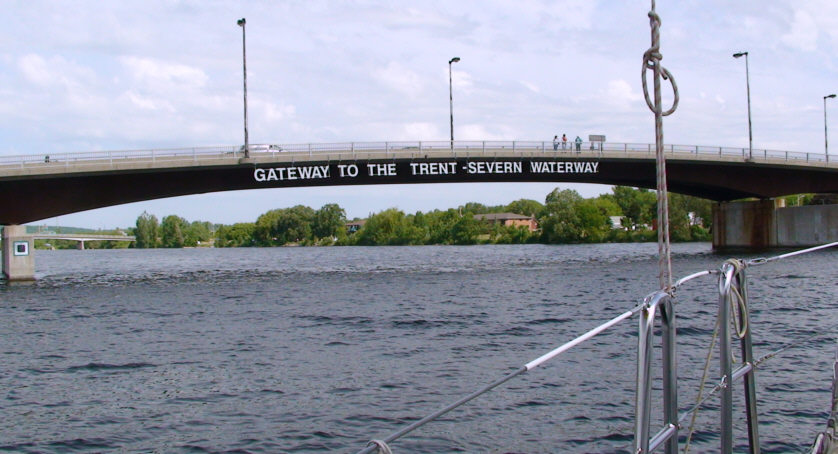
North of Albany, we steered our steadily chugging MOMO to port and said goodbye to the Hudson River. After roughly 250 nautical miles, always keeping an eye out for cargo ships, the quieter stretch of our journey northward began. We had reached the southernmost point of the Erie Canal.
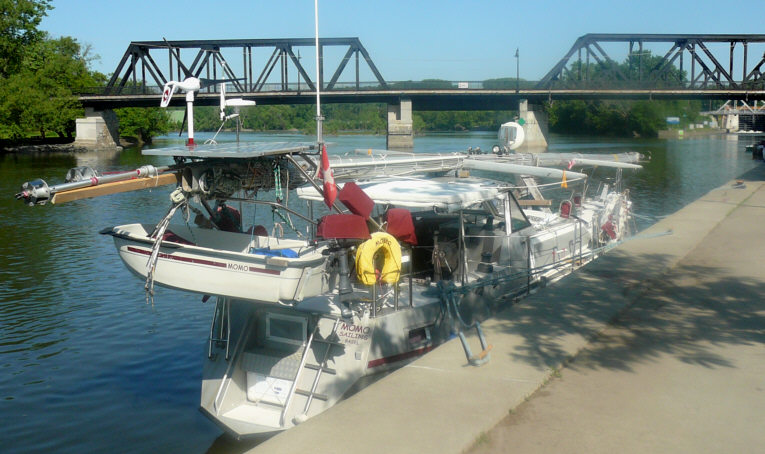
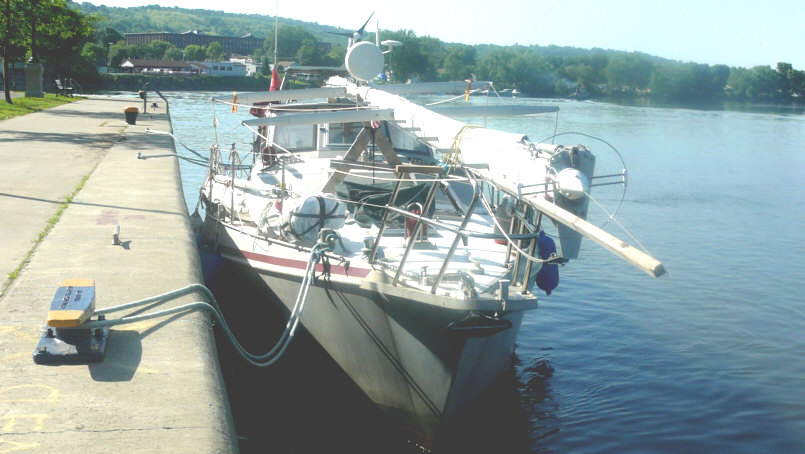
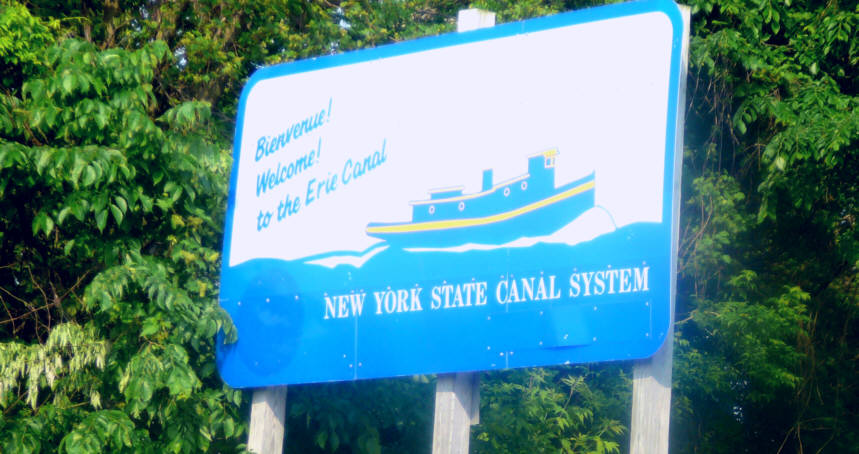
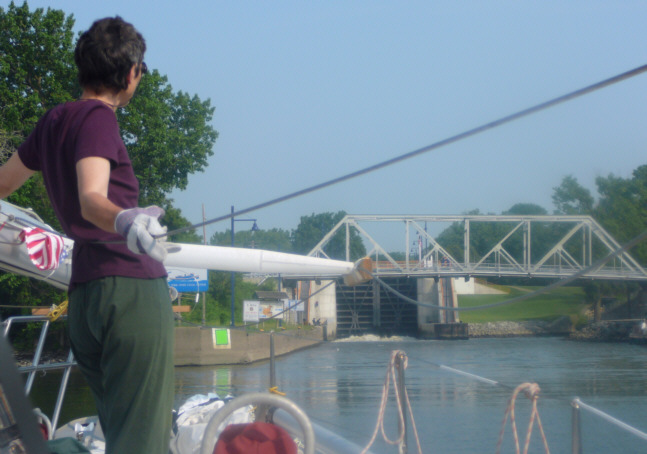
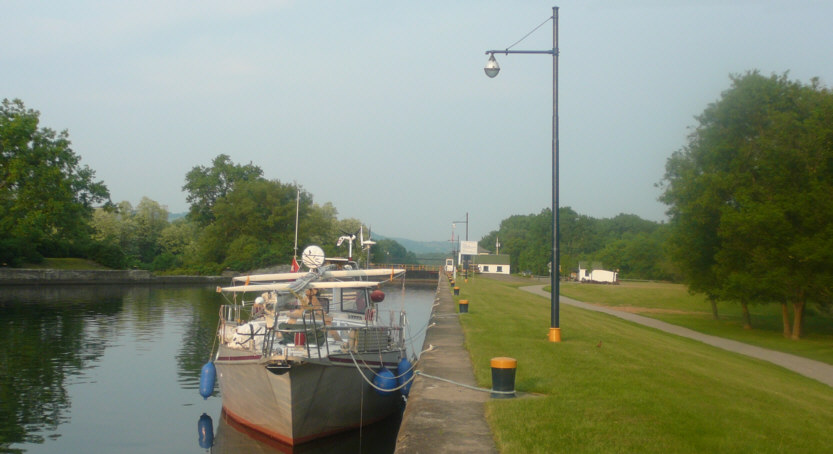
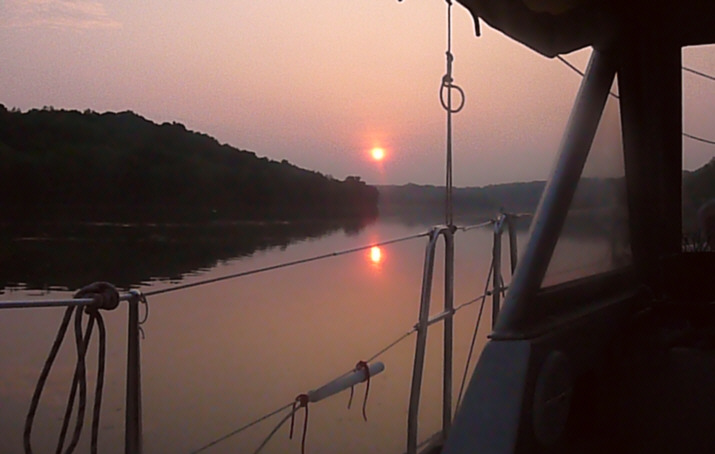
The 324 nautical mile long canal connects the Great Lakes with the Hudson River and thus also with the Atlantic. In Waterford, the small town at the beginning of the canal, we were at an altitude of 7 m above sea level. Afterwards, it rose continuously up to 130 m in Rome, before dropping back down to 116 m in Syracuse, where we had to make sure not to miss the turnoff to Lake Ontario. Once we arrived in Lake Ontario, the altimeter showed us 74 m.
In earlier times, this canal opened in 1825 was the most important and shortest connection to the Atlantic. Between 1905 and 1918, the canal was completely renovated, but today it no longer has any significance for freight traffic. Since the 1990s, it has served mainly recreational boating, in other words, ordinary people like us.
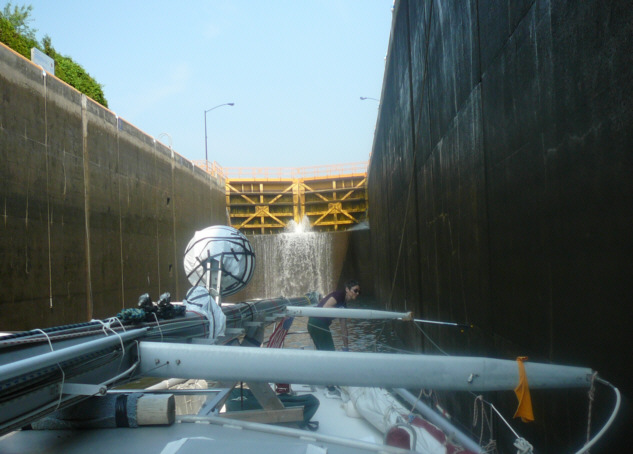
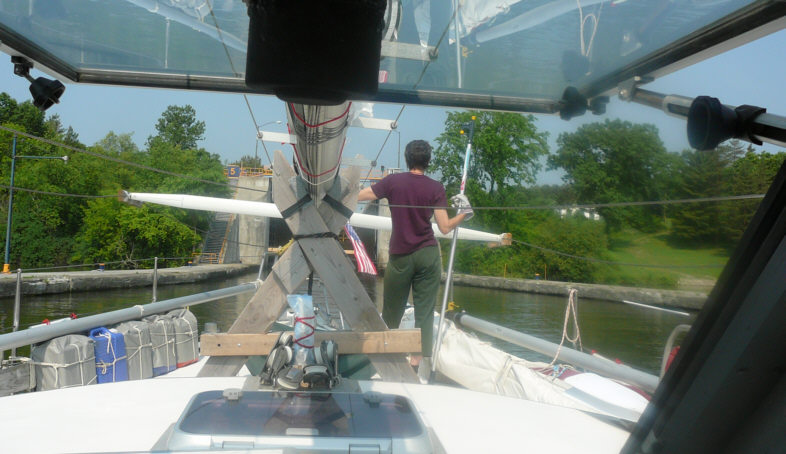
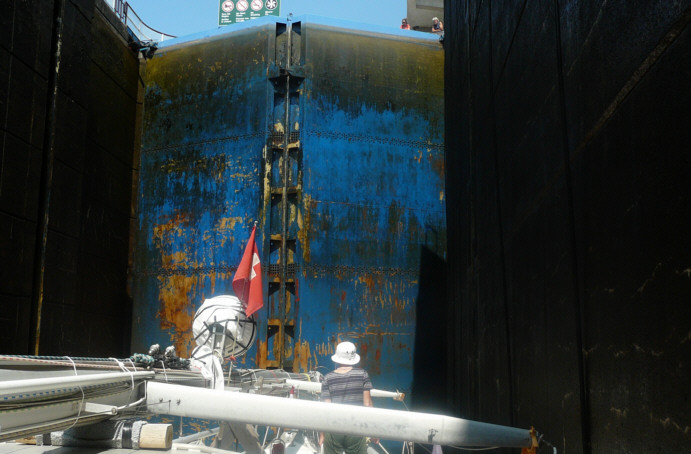
To manage the difference in altitude between the Hudson River and the Great Lakes with a boat, you naturally need locks, and this canal certainly has plenty of them. Since we chugged up the canal before the holiday season and therefore before the big wave of recreational captains, we were practically always alone in the locks. At the beginning, we were really glad that there was no crowding in these black shafts. You have to picture it like this. It was glorious sunshine and we drove into a black hole. In front, left and right, it suddenly went vertically up 10 to 12 meters, and then behind you, you heard a creaking and squeaking and finally a dull thud. The lock gate had closed and way up high we could just barely see the sun.
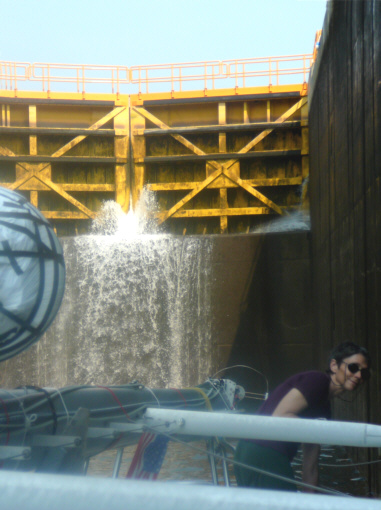
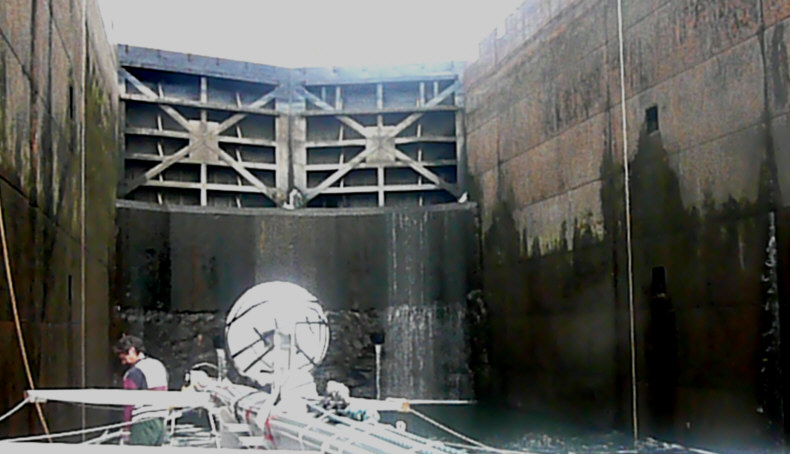
Now we had to quickly fish for a wet, slippery line hanging down the lock wall. Depending on the lock type, water would then gush in from the side or from the front. A fairly strong current always arose, and the entire boat crew had to take up position on the side deck, armed with the boat hook. Now it was a matter of pushing ourselves away from the rough lock wall with all our might while simultaneously taking in the rope tighter and tighter. Naturally, this was only when locking upwards, because when locking downwards the rope naturally had to be let out. All of this sounds a bit more complicated than it actually was. After the first few locks, we had this whole procedure well under control, and the black lock walls had largely lost their terror. I would even go so far as to say we had mastering the locks down, and over time a certain routine even set in, and it even meant a pleasant change of pace.
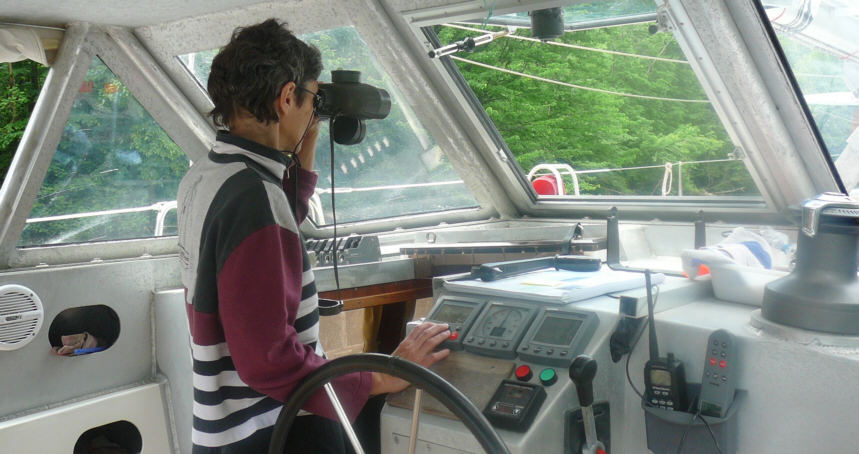
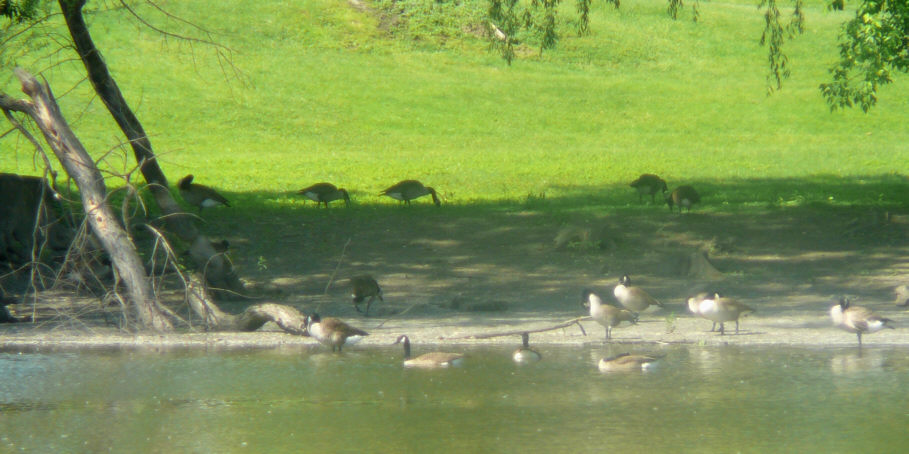
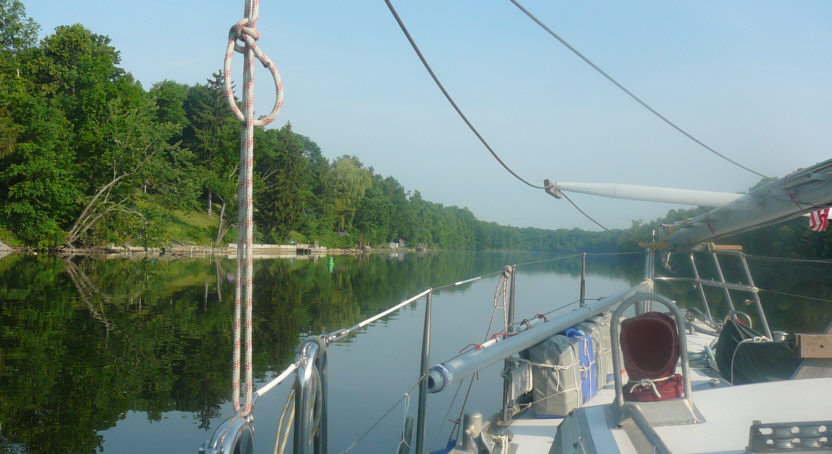
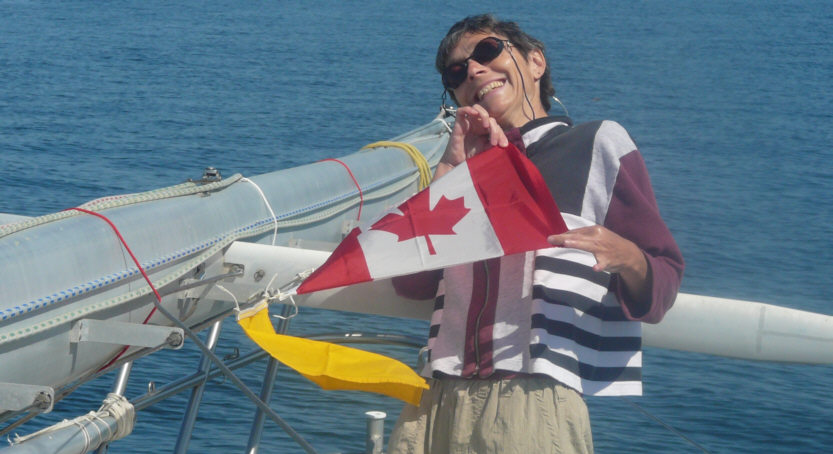
If we still saw a boat here and there in the Chesapeake Bay that was not flying the Canadian or American flag, that was now definitely a thing of the past here. We became even more of an exotic sight. In every lock we were always asked the same question: "Which kind of flag do you have and where are you guys from?" To our answer that this was the Swiss flag, over half responded with: "Aha, you are from Sweden", why I still don't know to this day. Looking back, however, we can now say that at least some of the Erie Canal lock keepers definitely know that Switzerland exists and has absolutely nothing to do with Sweden.
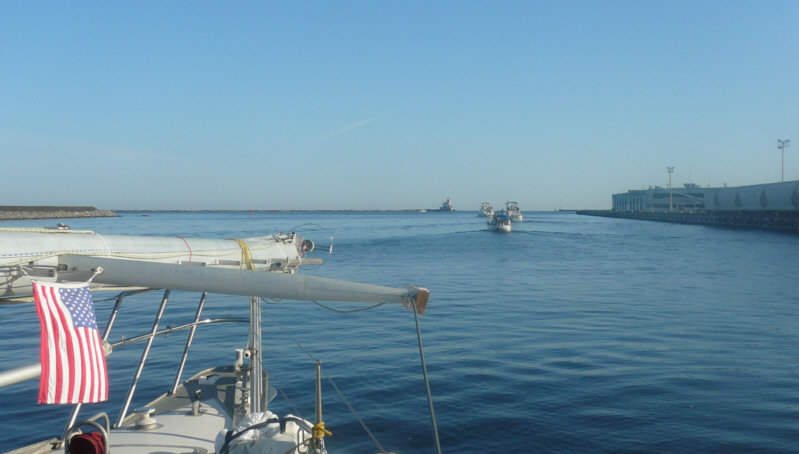
This led to many fun conversations about all sorts of things before the lockmaster announced us via VHF radio to the next lock. As a result, we were always expected and practically never had to wait anywhere. At various locks, there were even warm showers available, free of charge, I should add. In many small towns, there were also docks, sometimes even with water and electricity, and this was mostly free too.
Generally, I found that the already proverbial friendliness of Americans was even a little friendlier here. This also included the parting phrase of every lockmaster: "Have a great trip!"
Since my US visa expired on June 10, we could not make this leg of the journey quite as leisurely as would have been appropriate. Even though nothing would have happened if we had exceeded the time limit by a little bit, we did not want to take any risks. The power of a single US immigration officer is immense, and I do not like being at the mercy of the goodwill of the person opposite me.
After we had stocked up properly one last time in Oswego and filled the diesel tank to the brim, we were able to cross Lake Ontario. The MOMO was on the lake, there was a light breeze, and yet the engine roared. Our mast was still lashed to the deck since the Trent-Severn Waterway was now waiting for us on the other side of the lake.
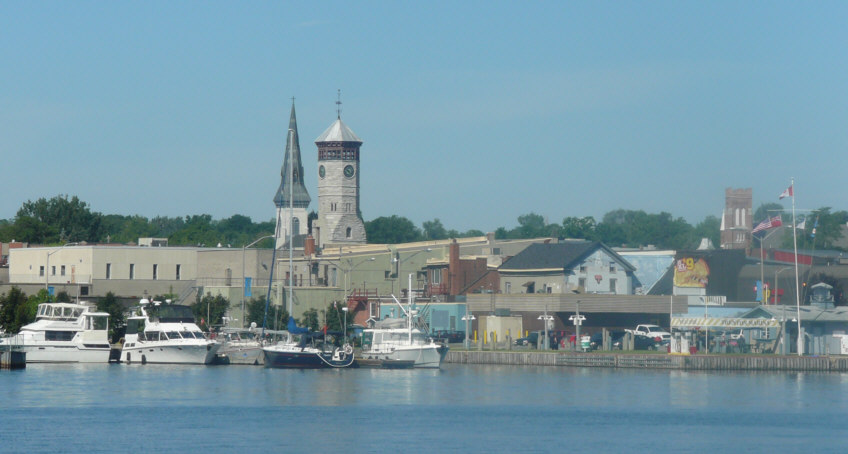
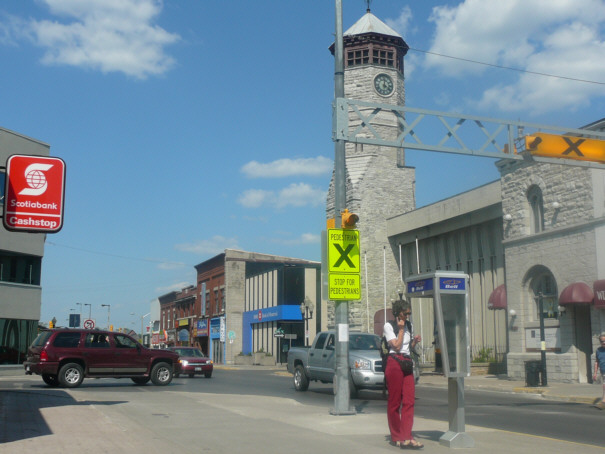
Speaking of waiting, in Trenton, at the beginning of the canal, we waited for a guest from Switzerland. KüWü, an old salt from the CCS regional group Bern, was supposed to join us there and accompany us for the next three and a half weeks.
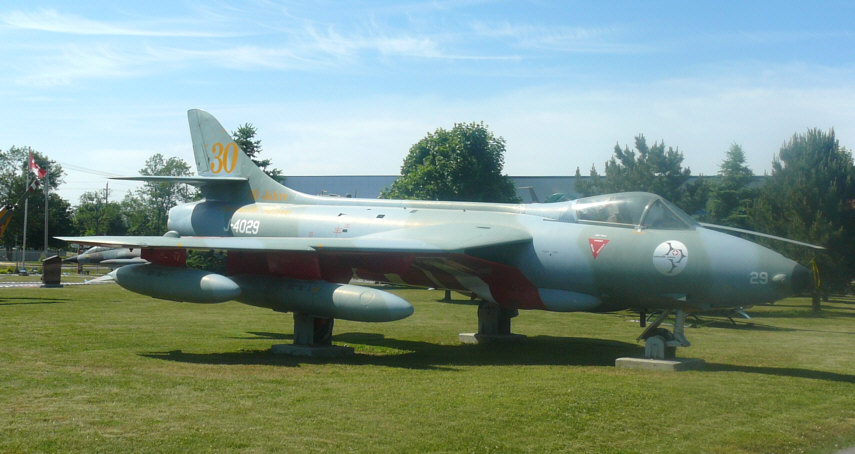
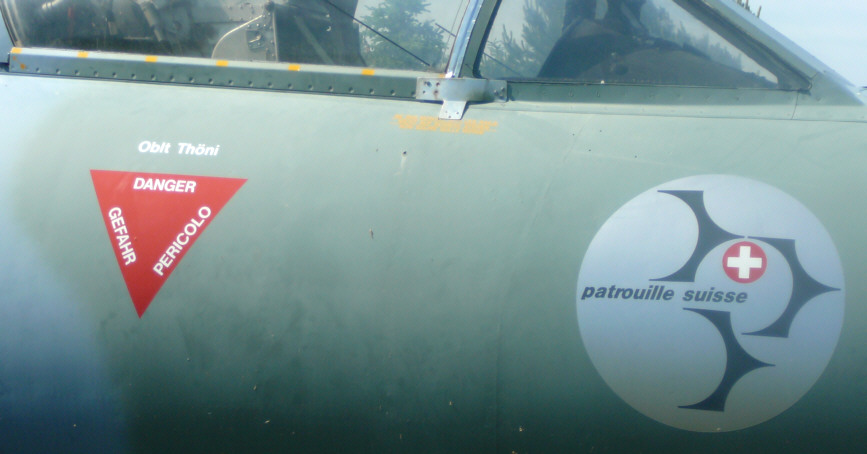
Since we had arrived in Trenton a few days early (thanks to the US visa), we found plenty of time to settle into the new country, calmly take care of the necessary customs formalities, and explore the immediate surroundings. Among other things, we visited Canada's National Air Force Museum. In the middle of the many displayed aircraft, my eye caught a type of plane I knew. Upon closer inspection, it actually turned out to be a former Swiss aircraft. Here, on Canadian soil, stood the former Patrouille Suisse plane of First Lieutenant Thöni.
Trent-Severn Waterway National Historic Site of Canada
After we had taken care of this and that and treated ourselves to a few days of vacation, our guest from Switzerland arrived at the Trenton train station.
After the joyful greeting, Kurt began unpacking the items we had ordered from Switzerland. The special spare parts for the boat, some of which were urgently needed, were received with great joy. When the ordered delicacies, such as Emmentaler cheese, Gruyère cheese, and of course genuine Swiss chocolate, were lined up on the saloon table, our mouths literally started to water.
For you in Switzerland, it is certainly unimaginable that such mundane things can give us such a genuinely huge joy. When I think of the gigantic and utopian Christmas wish lists of today's children, it might even make you burst into a little laughter, or at least bring a wistful smile to the corners of your mouth.
After KüWü had settled in a bit on the MOMO, we started our Trent-Severn Waterway adventure two days later.
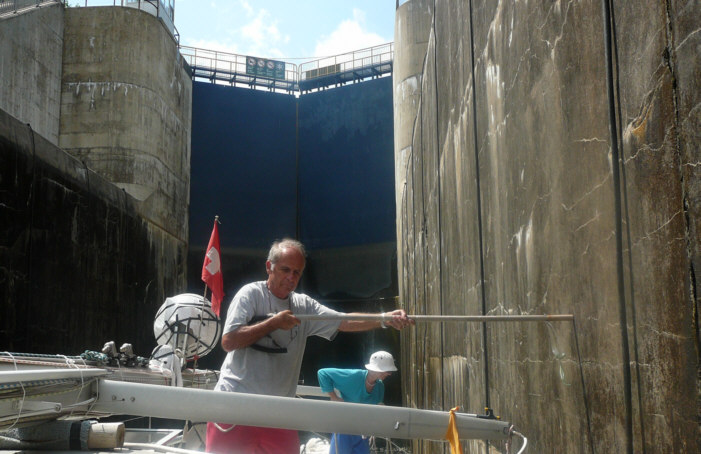
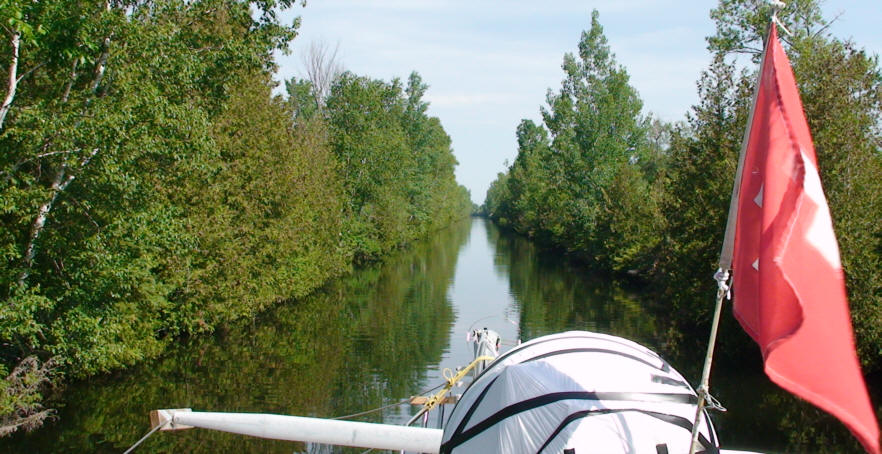
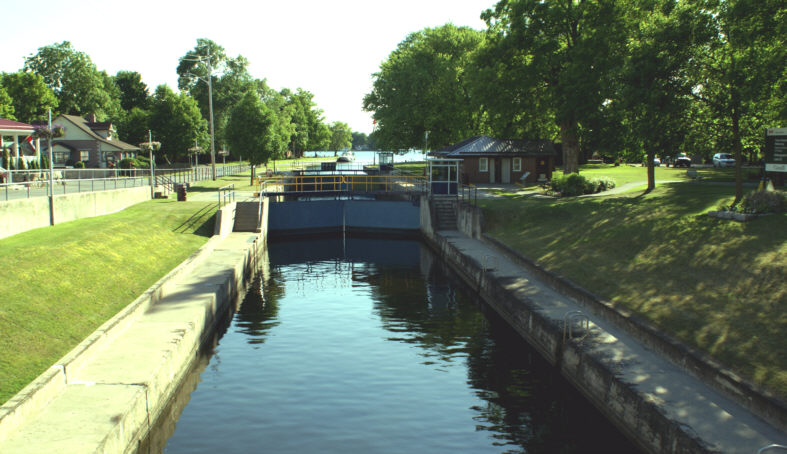
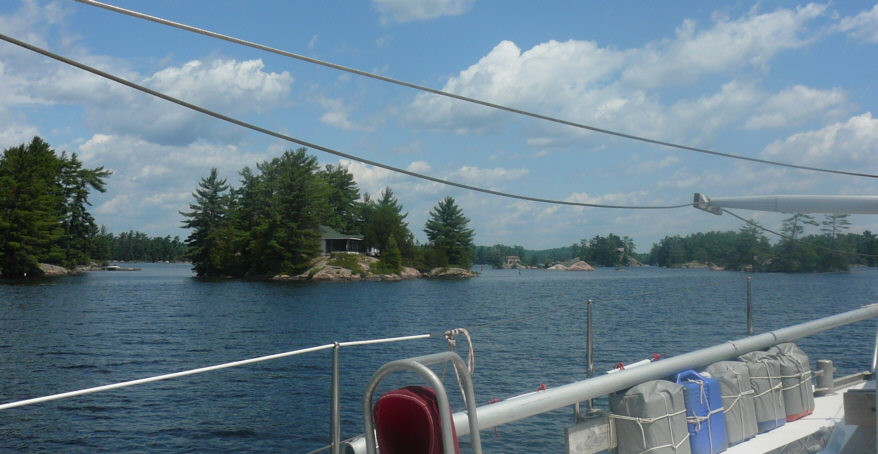
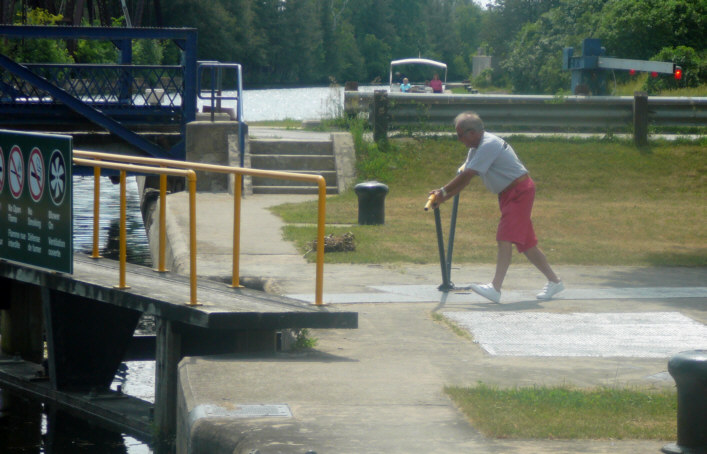
Over the next 241 miles (386 km), many locks awaited us once again. Exactly 44 in number. Most of them were still operated by hand, meaning the two lockmasters had to turn a large crank protruding from the ground to open or close the lock gates. The wheel of time sometimes seemed to stand completely still here, in contrast to the lock staff, who always had to bravely make their "crank rounds".
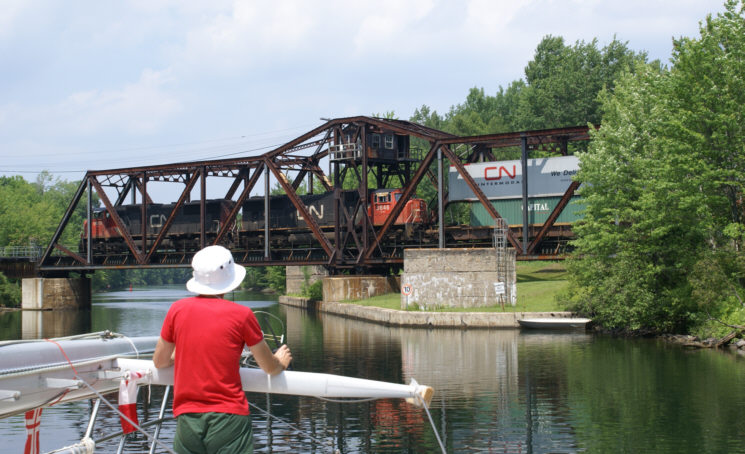
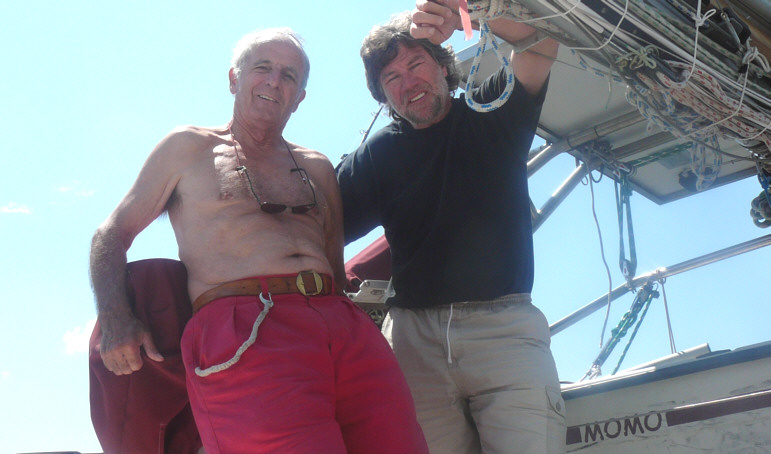
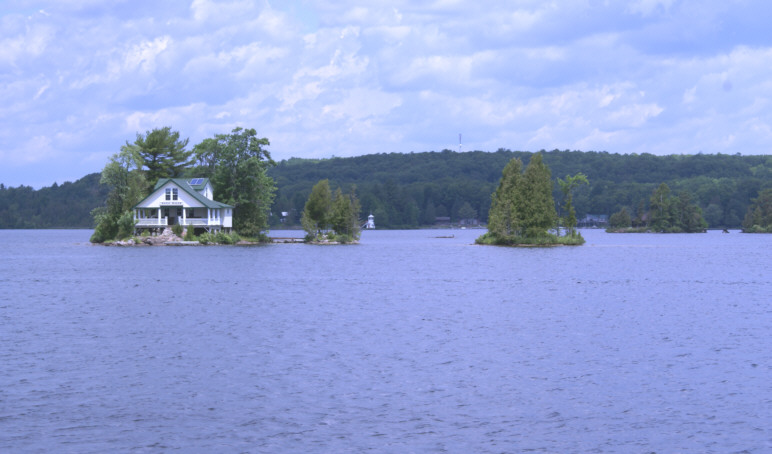
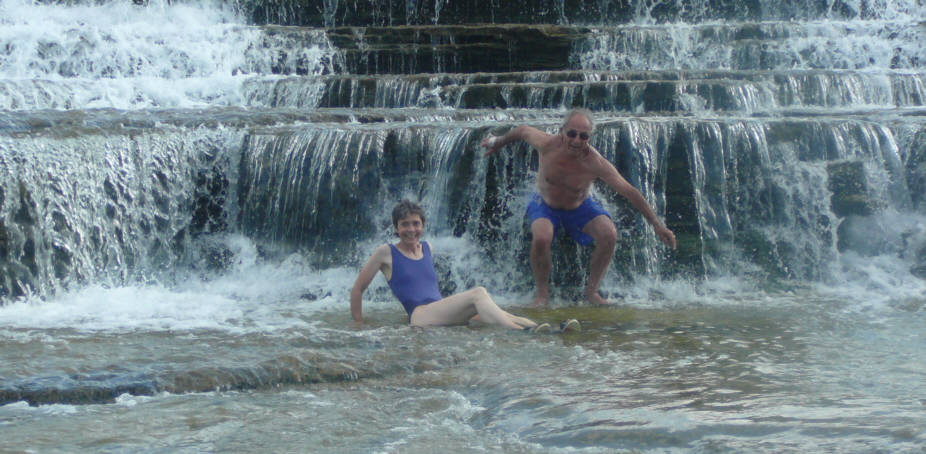
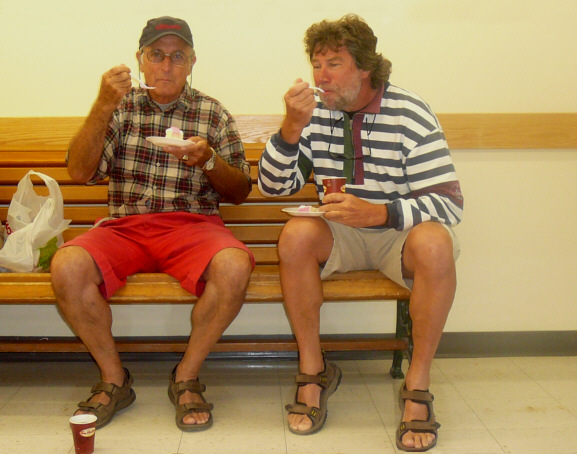
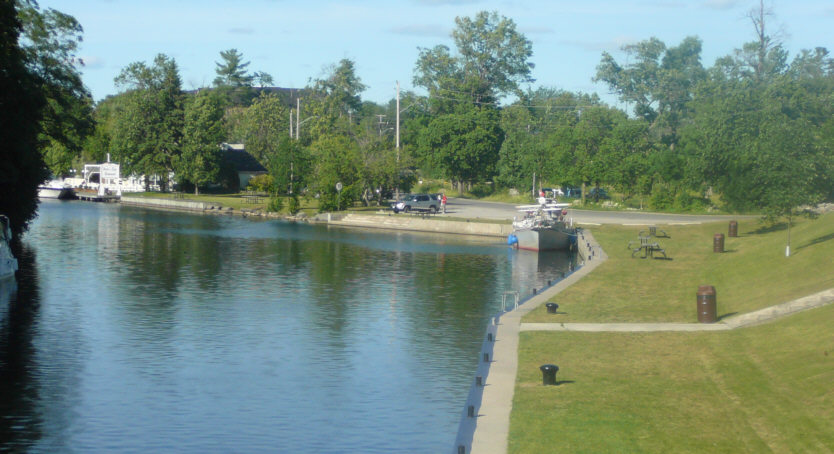
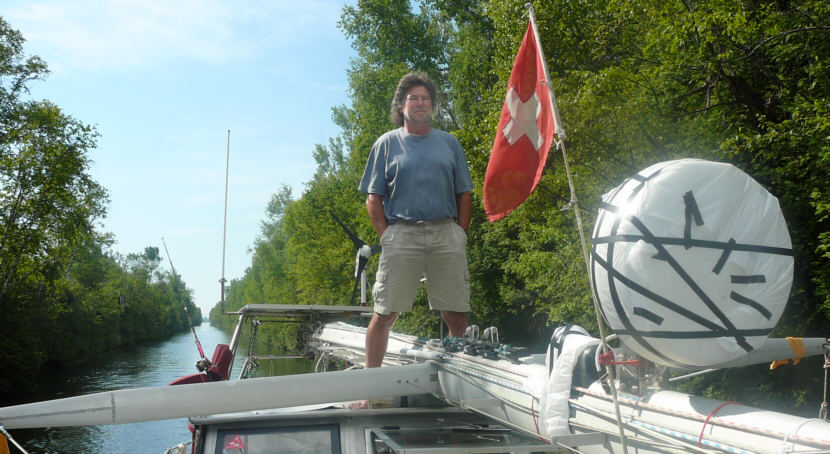
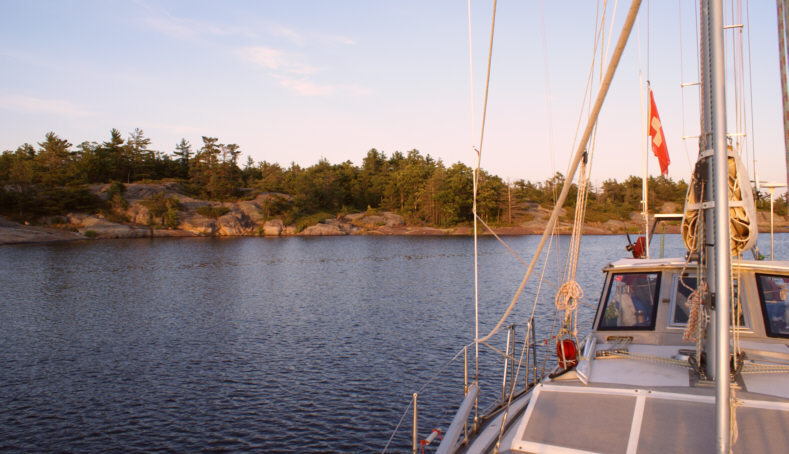
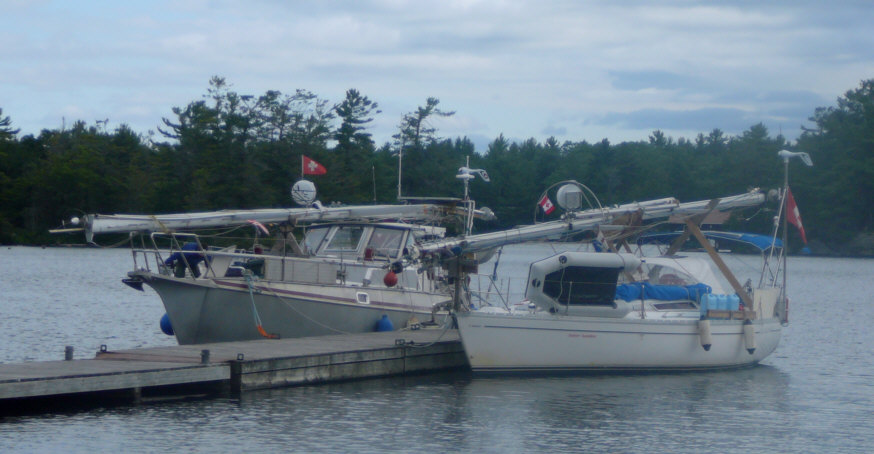
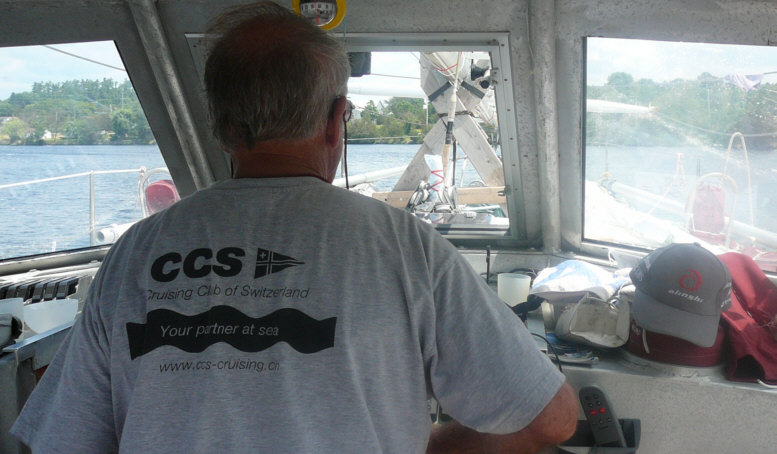
After we had issued and paid for our transit permit at the first lock, CAN $ 220.--, what a contrast to the Erie Canal, which was free, our guest really began to blossom. From then on, he stood at the wheel for hours, yes, days on end, without showing any signs of fatigue. Once again, this showed us the striking difference between a sailor and us long-term yachties.
What, you don't know this difference? Then here is a short explanation: The sailor finds their greatest satisfaction in pure sailing, steering the boat close-hauled, in the waves, and simply being out on the water. The yachtie, on the other hand, lives on their boat, putters around the world, and enjoys arriving in a beautiful bay the most so that they can go and explore the land and its people. Simply being on the move is naturally part of it for them too, but for them this is more a means to an end than absolute fun. The two types also differ greatly in their language. For example, a yachtie will sometimes say left and right instead of port and starboard, or bucket instead of pail. There would be many more examples, but let's leave it at that.
Encounter at Balsam Lake
On this lake, we had to anchor relatively far away from the shore due to its shallow depth. Yvonne was in the middle of preparing dinner when a sporty motorboat approached us.
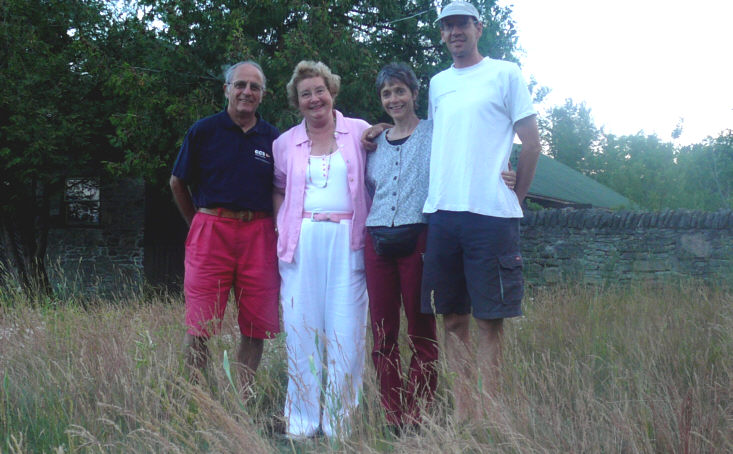
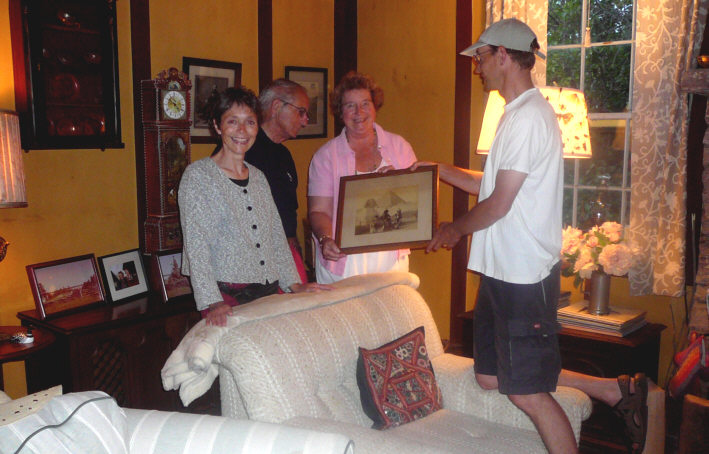
Now the questions started immediately about where from and where to and how and what. He himself, Doug, lives in Toronto today, but his mother lives there on the peninsula in the summer, because his family descends directly from the first settlers of this area. Would we like a glass of wine, he would gladly invite us for one. Of course, he didn't have to offer us that twice, because direct contact with the locals is always one of the most important things for us. That evening we learned many an anecdote from the time of the early settlers and what lands his family once owned and in some cases still owns today. The house was very well preserved and furnished as it was two hundred years ago. Full of pride, they showed us old photos, furnishings, and a miles-long family tree.
The Hydraulic Lift Lock of Peterborough
Most of the locks, except for three, were actually unspectacular. Now, however, there is the so-called Big Chute Marine Railway and two hydraulic lift locks in this canal. One lift lock is in Kirkfield and the larger of the two is in Peterborough. This one overcomes a height difference of 65 feet (approx. 20 m) and is the largest hydraulic boat lift in the world. The system is ingeniously simple and was designed by the Canadian engineer Richard Birdsall Rogers. It has been in operation since July 9, 1904.
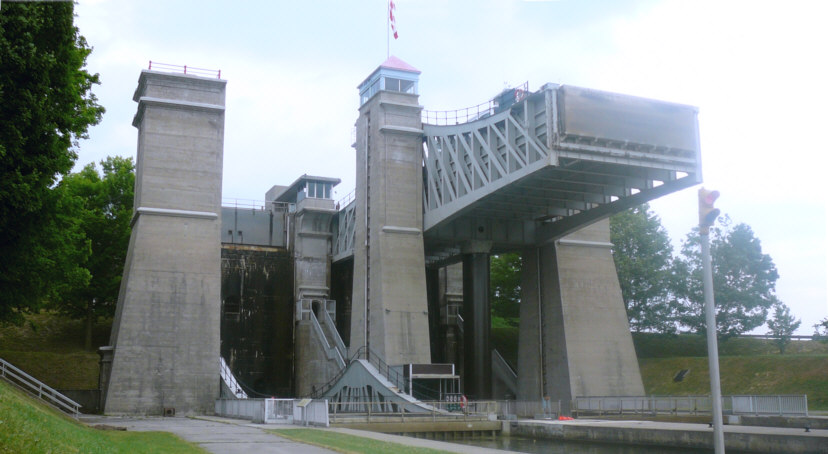
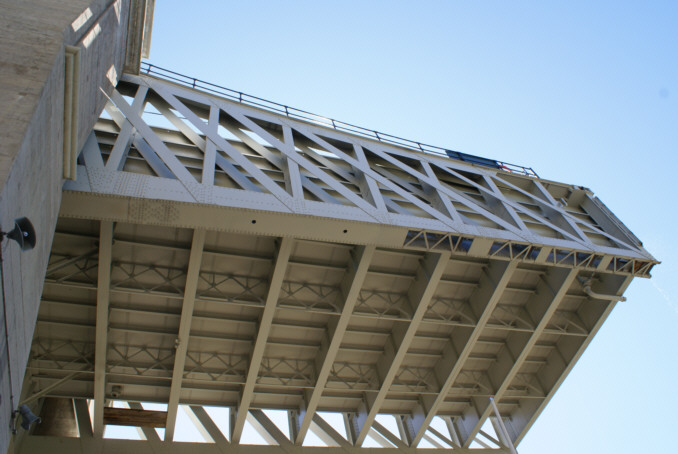
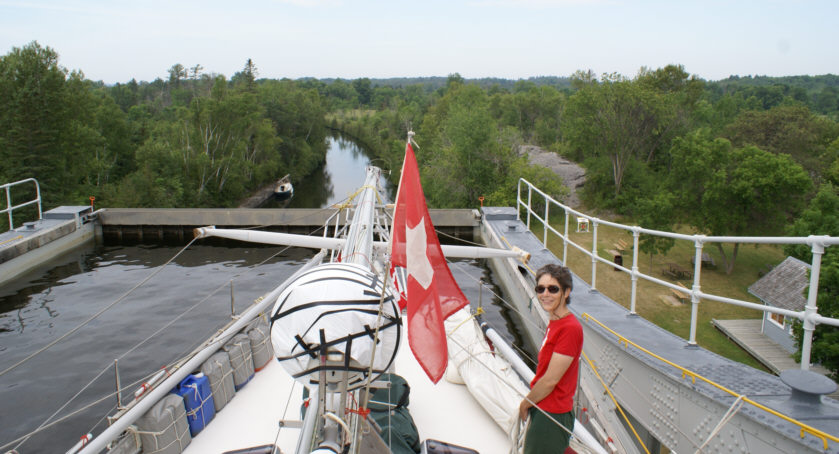
Like all hydraulic boat lifts, it is equipped with two interconnected troughs. The water level in the upper trough is raised by about one foot (30 cm). With this extra weight, it now begins to sink and thus hydraulically pushes the lower basin upwards. This is repeated with every lifting and lowering process. We navigated the Peterborough Hydraulic Lift Lock from bottom to top. That means we first stopped our MOMO in front of a tremendously huge wall. Now we were inside the lower trough. The view upwards frightened me a little, because when you consider how many tons of water and the MOMO as well (another 18,000 kg), were now supposed to float through the air like that..... But of course, the concerns were unfounded. We were hoisted up without any problems and suddenly had a tremendous view backwards. Better for me now, however, was not to look straight down, but to engage forward gear as quickly as possible and get back into solid water under the keel.
Big Chute Marine Railway
This structure is absolutely worth mentioning and almost unique. Originally planned as a normal lock and construction had already begun, it fell victim to the austerity measures and financial scarcity of the First World War. It was opened in 1917 as a temporary provisional structure in the form of a so-called inclined plane with dry transport. The Big Chute Marine Railway is descent structure no. 44 on the Trent-Severn Waterway and overcomes a height difference of 17.70 meters.
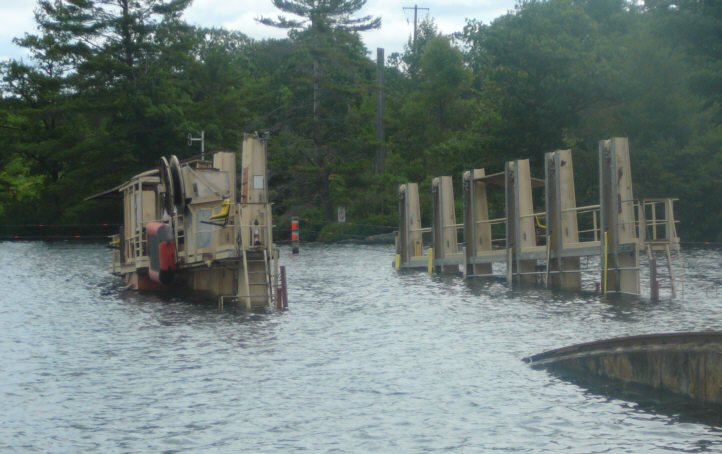
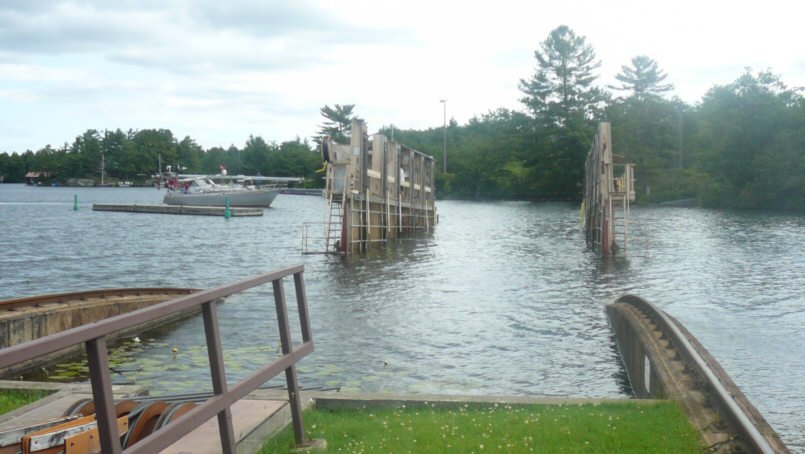
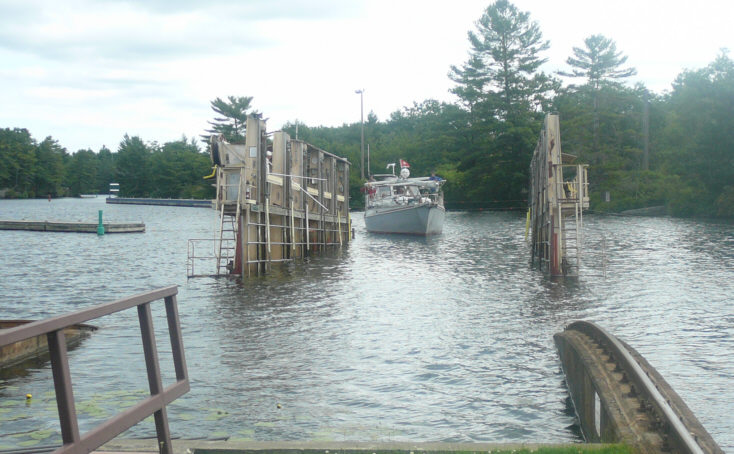
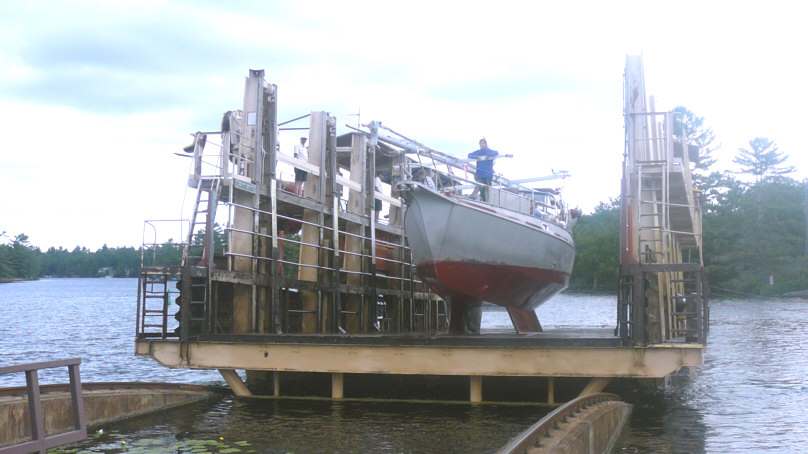
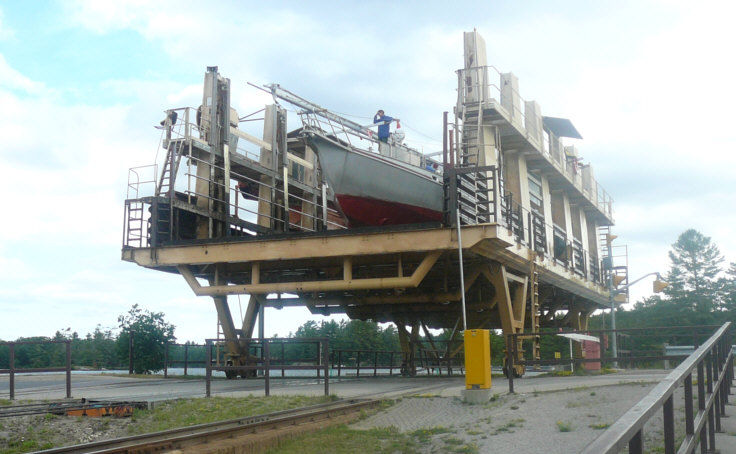
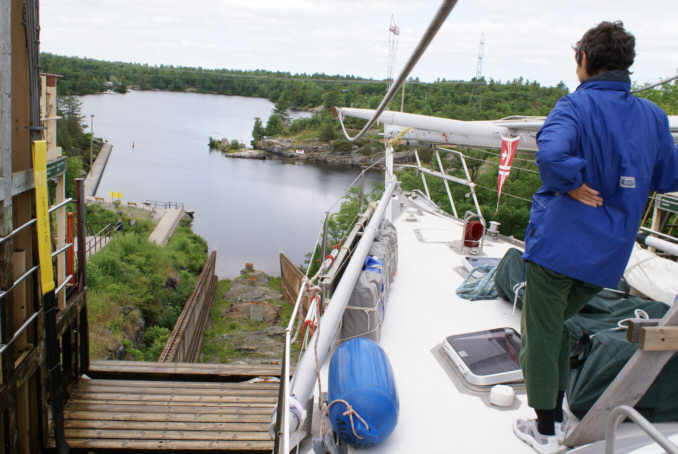
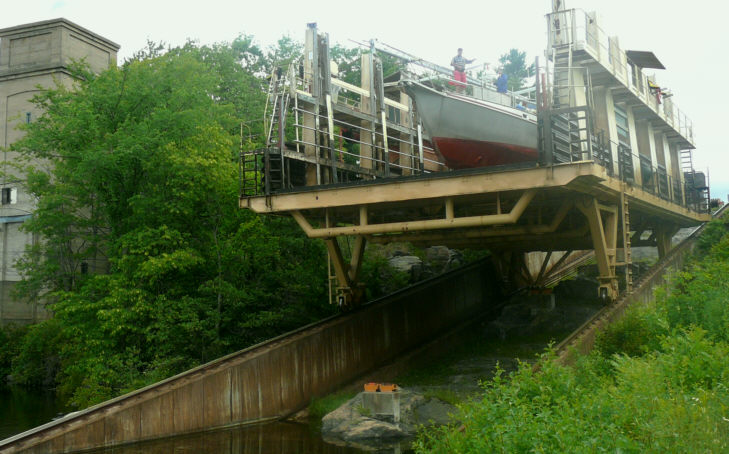
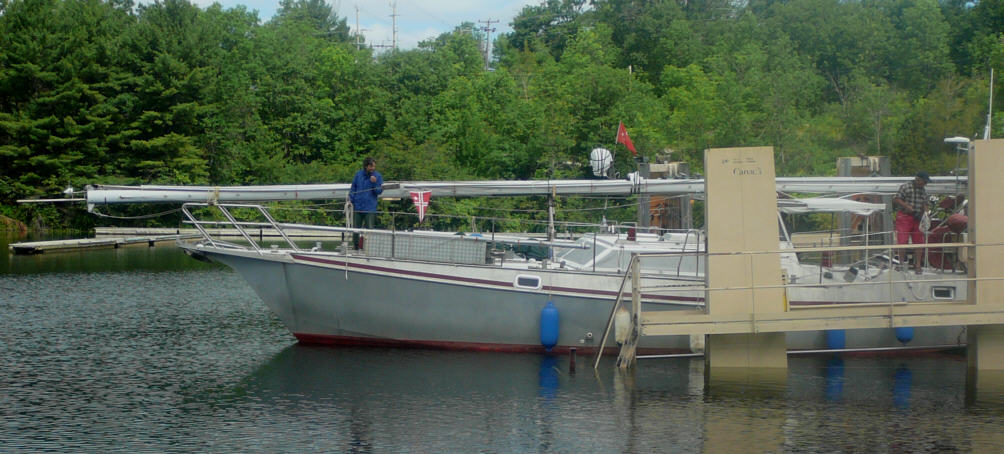
Using this lift is quite unique, as the major part of the system descends completely into the water. Once the platform is deep enough underwater, the waiting boat can move onto it and is subsequently secured with straps. Since we famously have two keels, we didn't need these, which the crew operating the lift noted with pleasure, as it gave them an unexpected half-hour break. Our MOMO and we were then slowly lifted out of the water and traveled comfortably up the hill, remaining completely horizontal throughout thanks to the ingenious rail layout. After the short uphill section, the downward journey followed, and upon arrival at the bottom, we were very gently returned to the water.
Today, any discussion about replacing this system with a normal lock is completely off the table. This is, after all, the only remaining true separation of the water from the Great Lakes to the Atlantic. As a result, the spread of parasitic fish populations from the northern to the southern part of the waterway can be prevented.
Penetanguishene
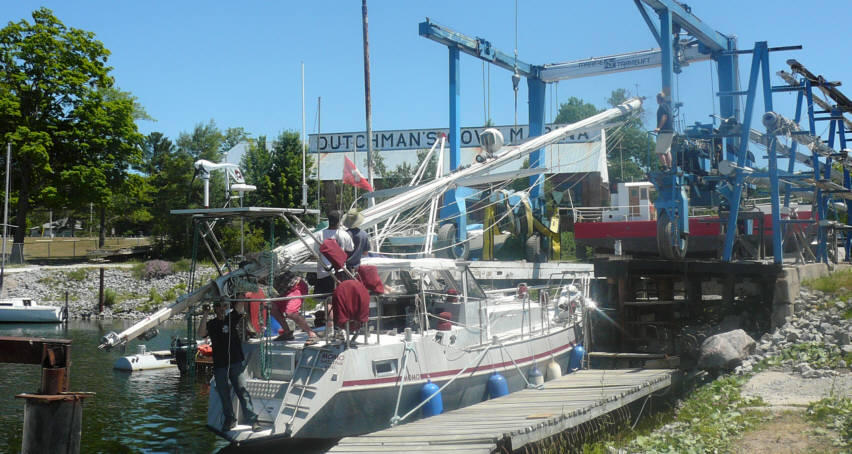

Here, at Dutchman's Cove Marina, we had actually planned to meet our friends from the German Momo again and also to transform our MOMO back into a sailing ship, meaning, finally stepping the mast again.
Unfortunately, the former didn't work out just yet, but after a few days our MOMO was rigged again and ready to go. The time with KüWü was drawing to a close, and we could only cruise around a bit in the immediate vicinity with him. An Indian reservation island here and a national park there were unfortunately the only things that still fit into the schedule.
Now that Yvonne and I were the sole occupants of the MOMO once again, nothing held us here in the south of Georgian Bay any longer.
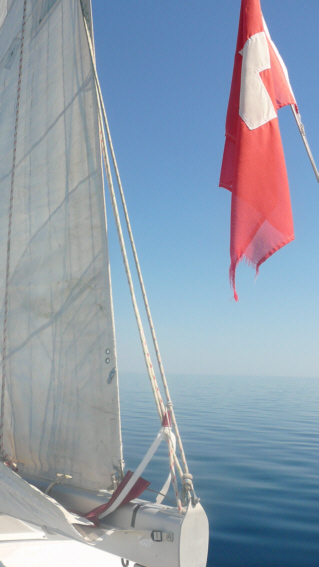
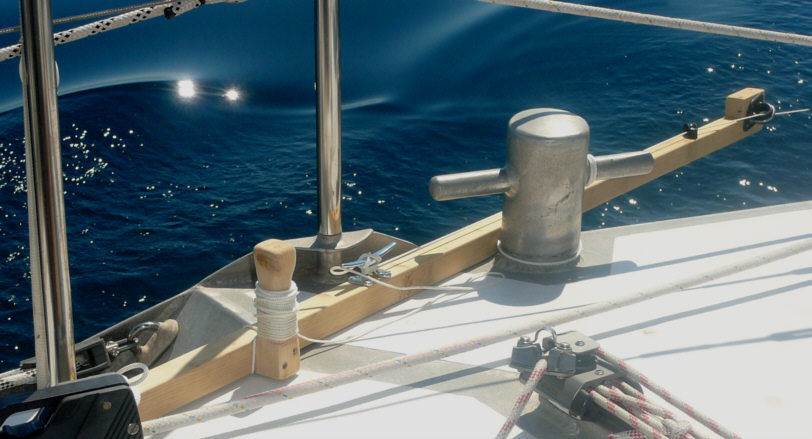
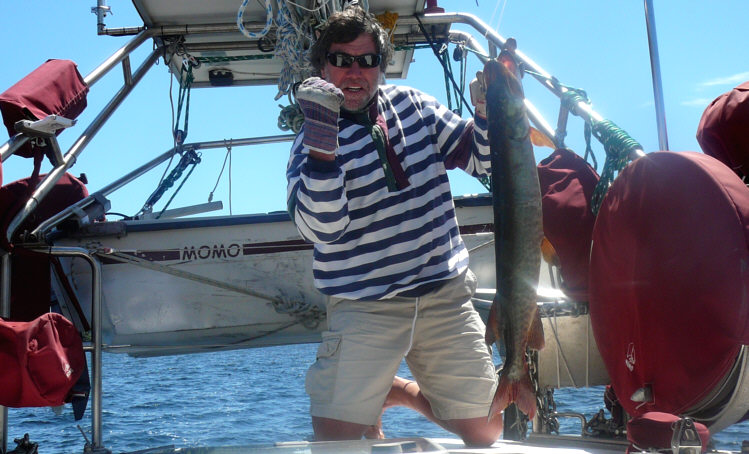
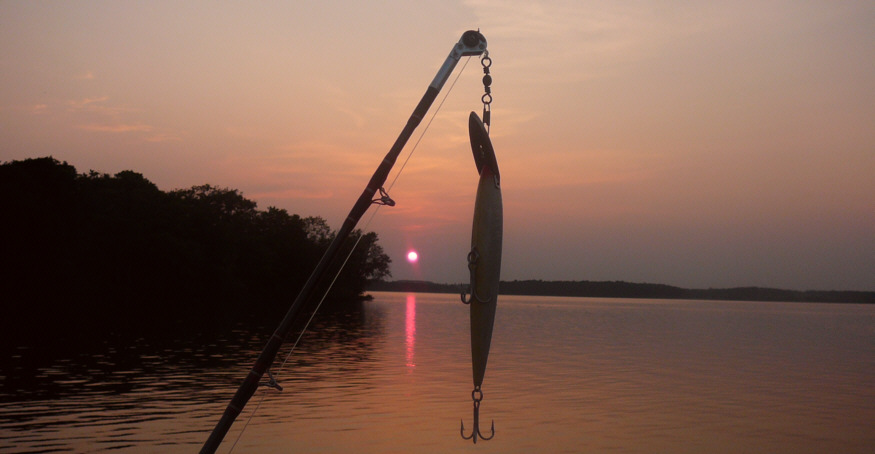
Our next destination was the North Channel and, of course, finally seeing Barbara and Wolfgang, our friends from the German Momo, again. Although we actually could have hoisted the sails on the MOMO, we had to resort to the motor once more for the trip north. Under a brilliantly blue sky, glass-smooth water, and a relaxed mood on board, I tried to finally catch my first salmon. Despite enormous effort and perseverance on my part, not a single one could be outsmarted. My self-made downrigger and the lures I received from locals didn't help either.