
MOMObil · Canada · USA
Manitoulin Island, a Pow Wow and Wisconsin
After we had arrived on Manitoulin Island a few days earlier than agreed with Barbara and Wolfgang, the German SY Momo sailed into the bay of Bartman's Campground on the afternoon of August 1. At the sight of the sailboat, we felt very much (especially me) how much more we are blue water people than campers.
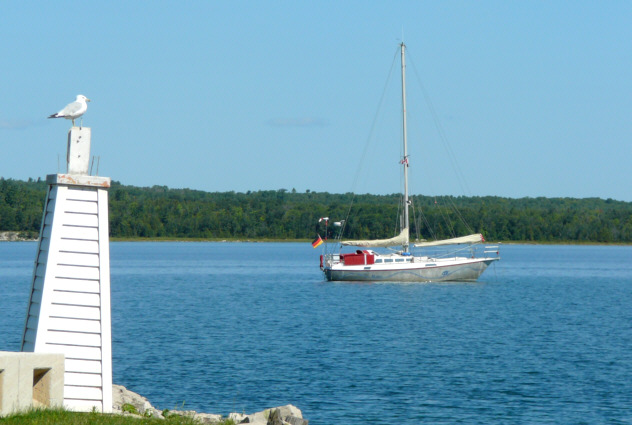
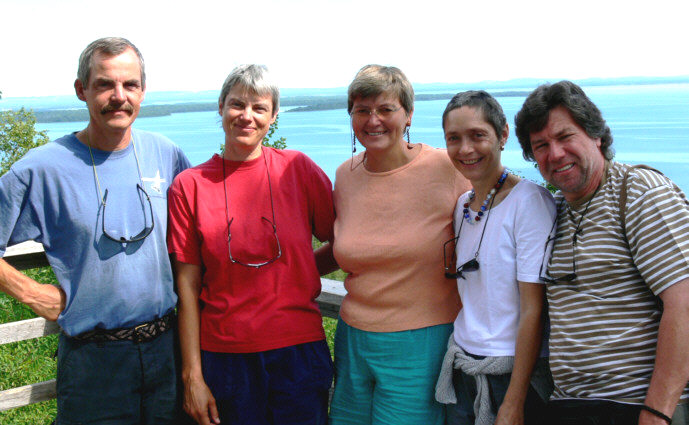
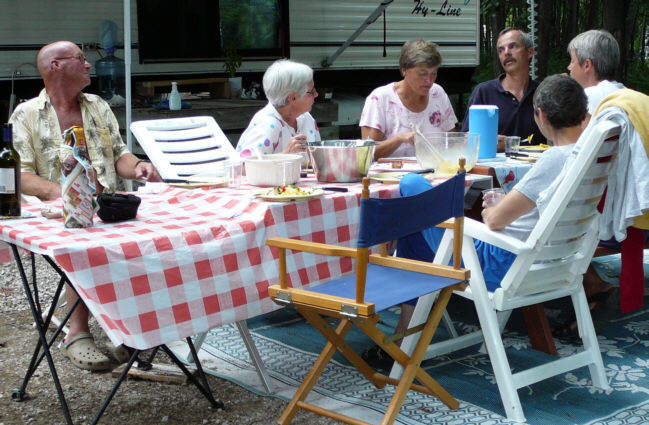
After a very warm welcome from our friends, we set about catching up on the latest news, as we hadn't seen each other since last November and therefore had quite a bit to catch up on. When we heard from you, among many other things, that you had firmly planned to spend the winter up on the Great Lakes to wait for us, we were very touched. The thought of continuing our blue water journey together with the two of them next year made us immensely happy!
The time scheduled for this meeting flew by and after a week it was unfortunately time to say goodbye again. A last, wistful look at the sailboat and after the unavoidable female tears had dried, we continued our land journey towards Michigan/USA.
Here is a brief word about Manitoulin Island. Located in Lake Huron and belonging to the Canadian province of Ontario, it is larger than Luxembourg at 2766 km² and is the largest island in the world situated in a freshwater lake (lake island). There are over 80 lakes on the island in total, some of which in turn contain small islands. The historic island town of Manitowaning, founded in 1837, was the first European settlement on the island.
Pow Wow
When we scheduled our meeting with our friends from the German Momo, we tried our best to align this with the date of the annual Native American gathering on Manitoulin Island. When we had sometimes spoken to some Canadians in advance about our planned visit to the Pow Wow, they consistently turned their noses up and usually had only a pitying smile left for us Europeans. In those moments, we felt very clearly that the indigenous population there is still not considered equal today.
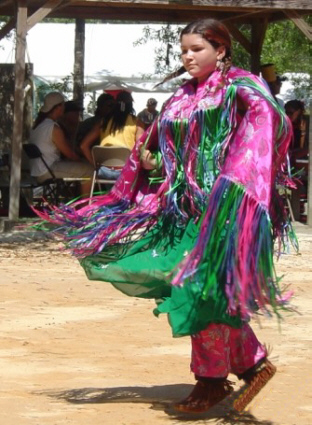
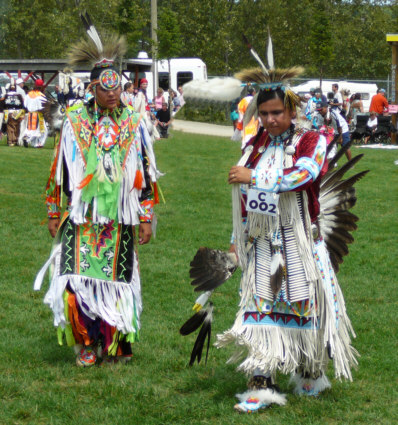
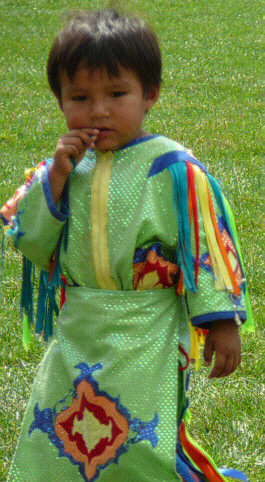
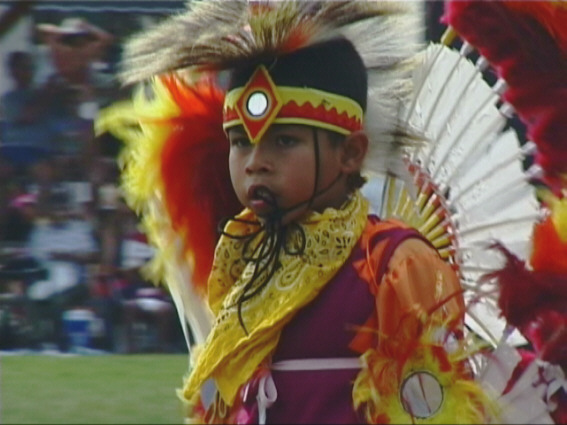
The two sailors, Reg and Sharon, a Canadian and his American wife who were spending the summer at a campground on Manitoulin Island, spontaneously offered to drive us all together in their large truck to Wikwemikong. The 46th Annual Cultural Festival took place there on August 5, 6 and 7.
A Pow Wow is a public festival of Native Americans and consists mainly of music and dance. The precursors of today's Pow Wows emerged around 1850 among the Ponca and Omaha as public events of warrior societies. The purpose of these events included strengthening the community in psychological and social terms. This was achieved through the development of the society's own identity in all areas of traditional life and the conscious handling of it. Internally, people created their own principles, which they demonstrated in public on certain occasions. Therefore, these events used to exhibit military, religious, social, economic, legal, didactic, culinary, artistic, entertaining, and other traditional aspects. They were, and still are, typical Native American festivals. The old components of the festival were retained and further developed, making them simpler in some parts and more complex in others.
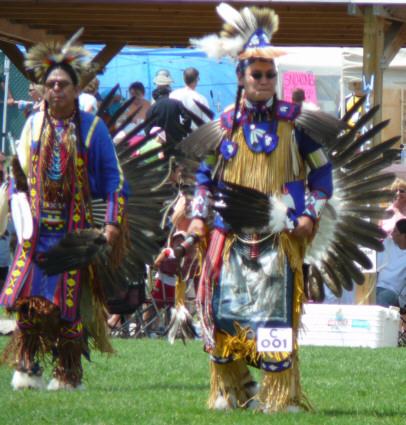
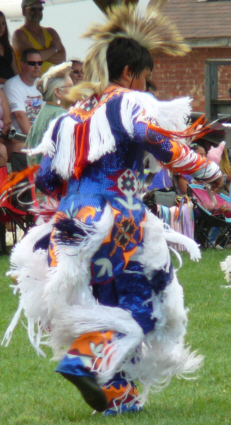
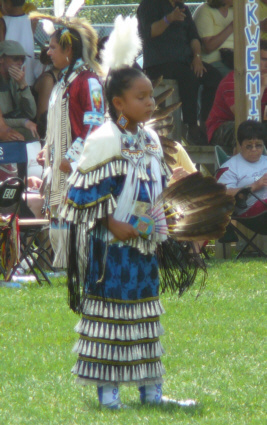
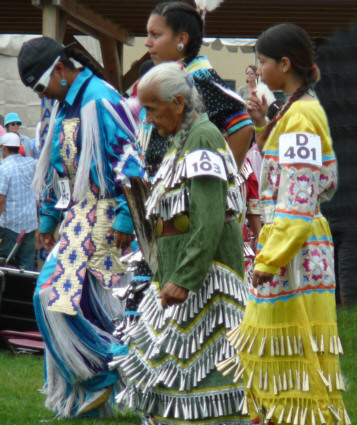
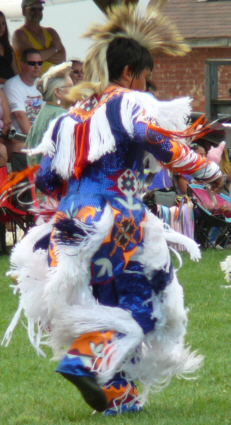
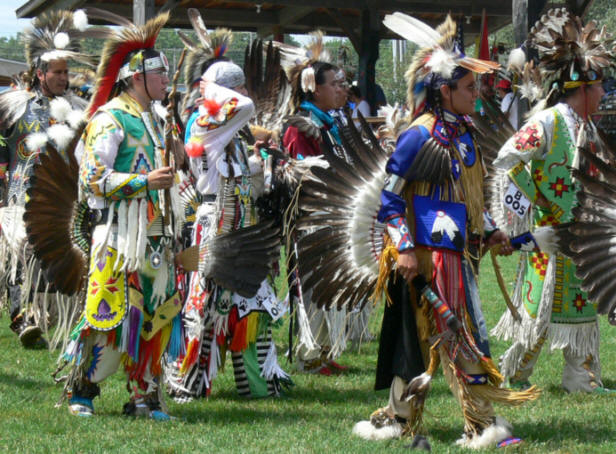
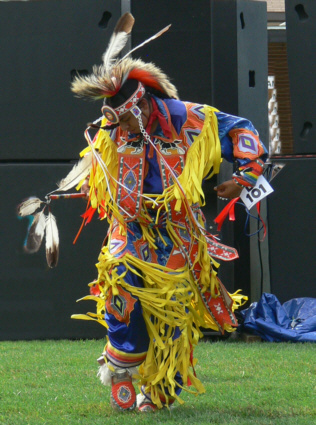
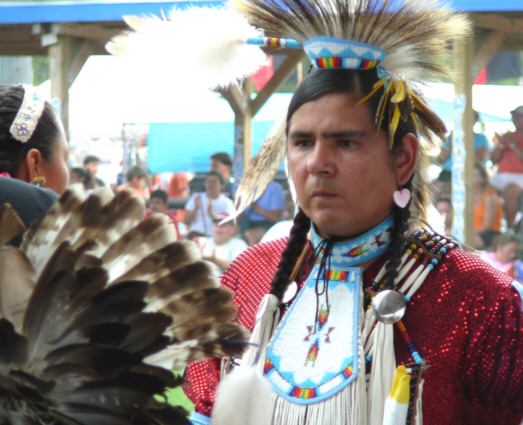
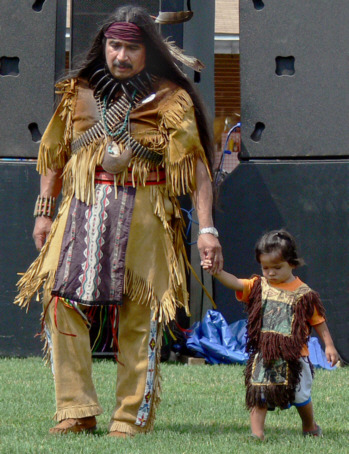
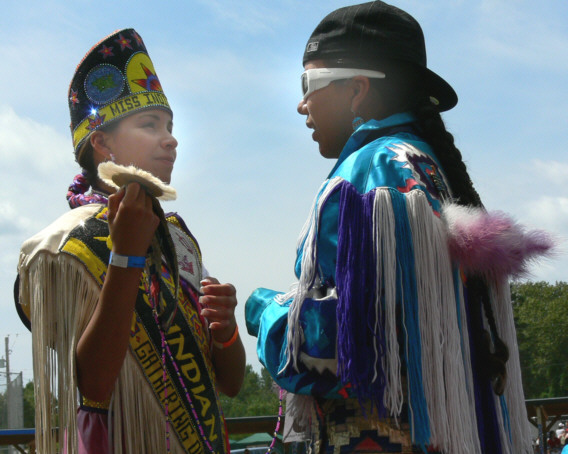
The purpose of Pow Wows today is to provide a better life for the Native American community as a whole. This is done by strengthening body, soul and spirit. For a good life, it is still important for Pow Wow people to consciously live their own identity according to the old rules. At Pow Wows, this happens, for example, through traditional costumes, badges, symbols, dances, rituals, legal acts, ceremonies, honors, food, language, songs, prayers, stories, anecdotes, jokes, art, games, sports, etc. etc. Today, Pow Wows are therefore primarily a compressed reflection of the traditional lifestyle of the indigenous peoples of the North American plains and prairies.
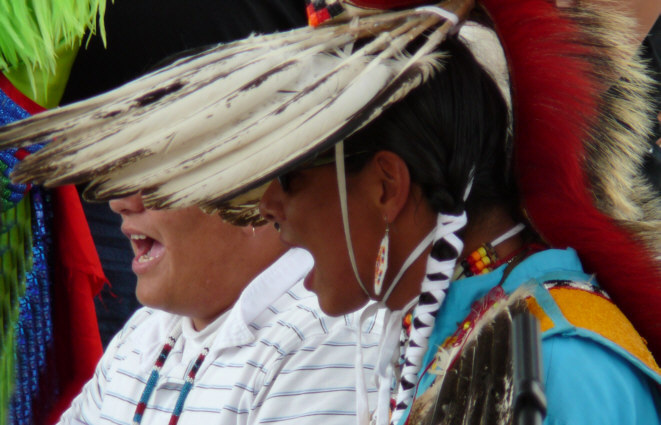
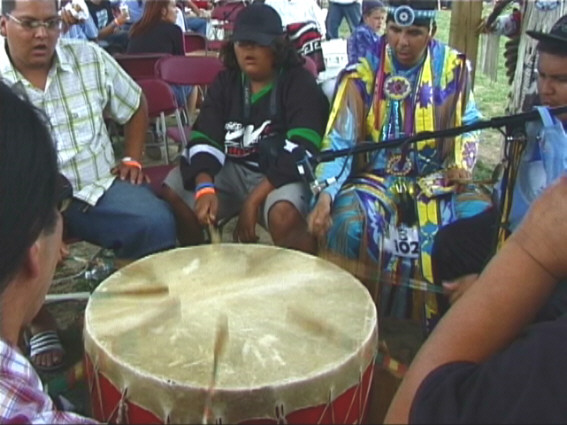
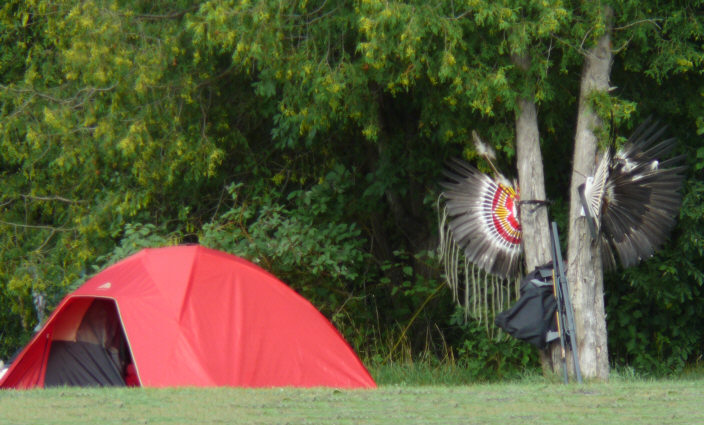
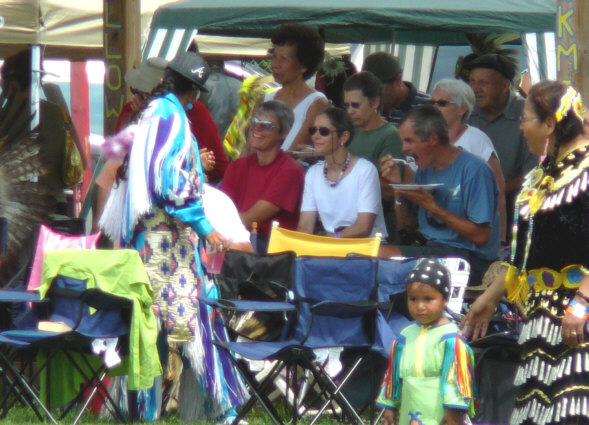
The more a powwow corresponds to its original principles, the better the quality of the event. A powwow can last only a few hours, or up to several days. There are always different types of dances with various costumes. Each dance has its own fixed rules and its own history of origin. The music is performed live by groups. The members of a group strike a large drum together and sing traditional songs. There are many different powwow songs with special lyrics and rhythms for a wide variety of occasions. Apparently, new songs are still being composed every day. Within a music and dance event, there are usually competitions. Both the best musicians and dancers are awarded prizes. It is said that quite a few Native Americans make a living exclusively from such powwow prizes today. However, I find that very hard to imagine, as these prizes are quite modest.
In retrospect, I would like to emphasize that this experience was very impressive for us, not to say moving. Whether very old or still a small child, the dedication of the participants while dancing was sometimes overwhelming. The mood and atmosphere that hovered over this occasion were truly unique and certainly not just due to the special scents that the various Native American food stalls emanated.
Michigan
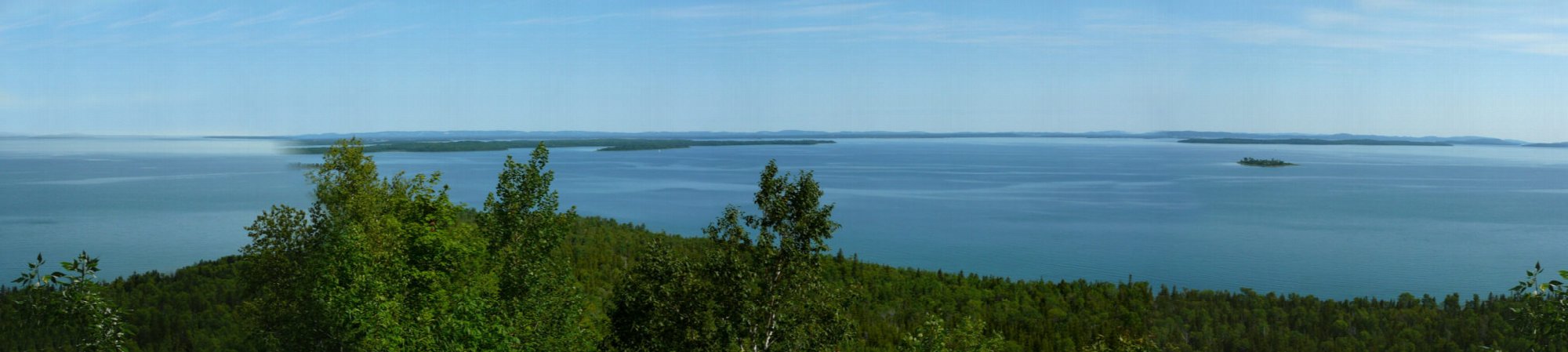
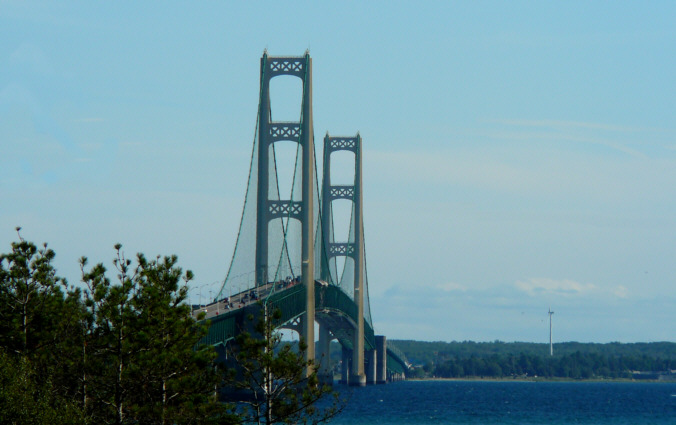
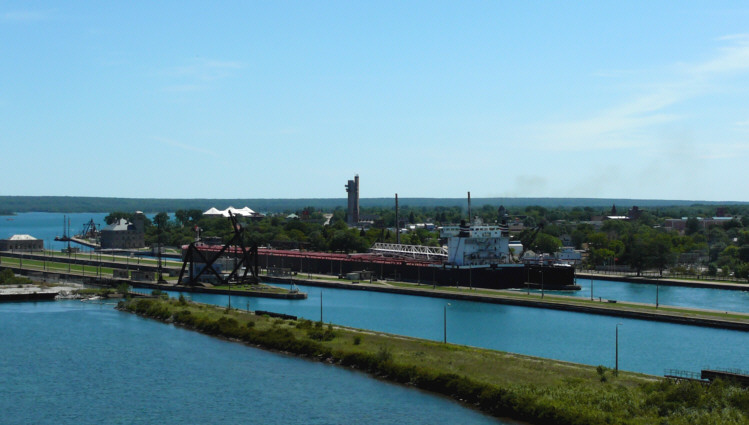
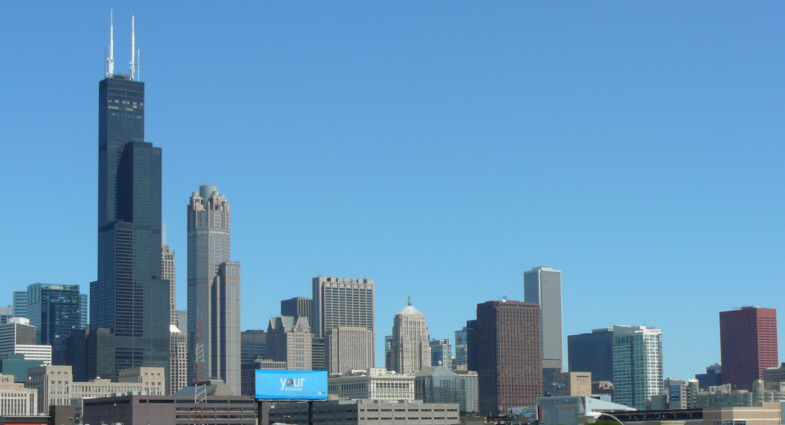
Michigan, the name originates from the Native Americans and actually means big lake. Nowadays, this region is better known as the birthplace of the American automotive industry. Due to its location on the Great Lakes, Michigan has the longest coastline of any US state, with the exception of Alaska, and is the state with the absolute most motorboats. Besides the four Great Lakes, Michigan has more than 11'000 smaller lakes. After passing the large Mackinac Bridge between Canada and the USA, which with its 8038 meters is one of the longest suspension bridges in the world, we first had to look around for a gas station. Gasoline prices in Canada are still quite a bit higher than those in the United States. With the thirsty car engines here overseas, it is very important to find an affordable gas station and always keep the current gas prices in mind. Therefore, it can happen that the price per gallon (3,78 liters) here is 3.15 $ and two blocks further only 2.75 $, which is still very high at the moment!
Bronner's Christmas Wonderland
We now drove south along U.S. Interstate 75 for two days. From time to time, a billboard appeared on the roadside that caught our interest. Bronner's Christmas Wonderland in Frankenmuth, supposedly the largest Christmas market in the world. Well, Christmas in August, why not?
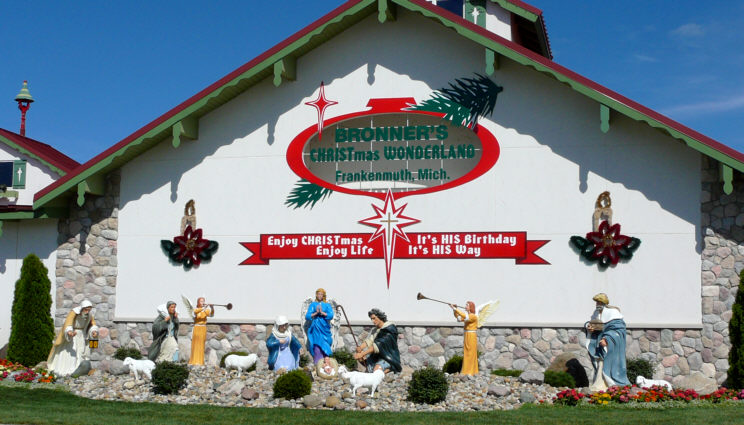
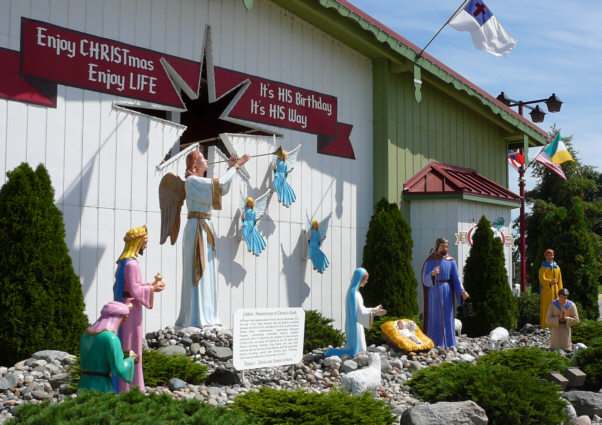
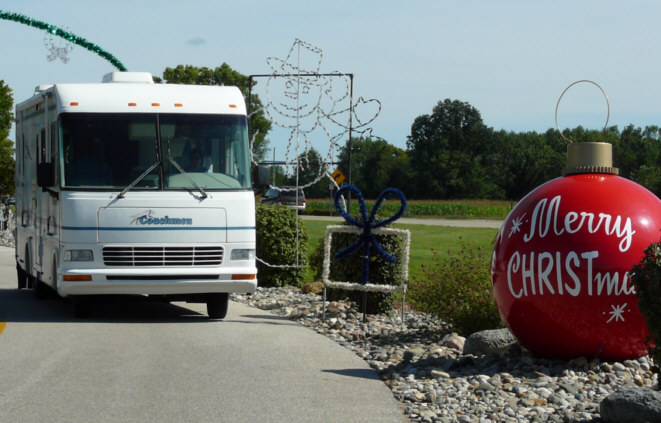
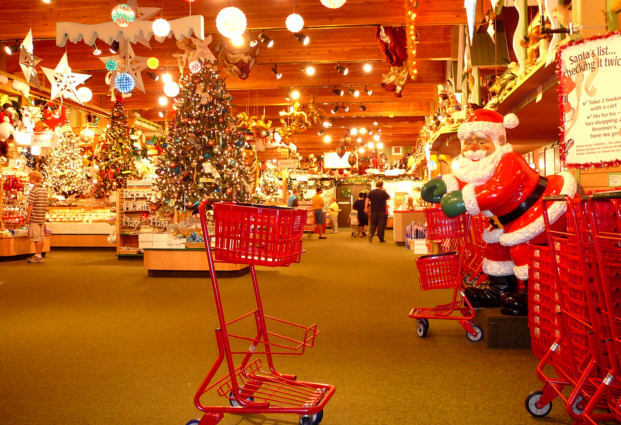
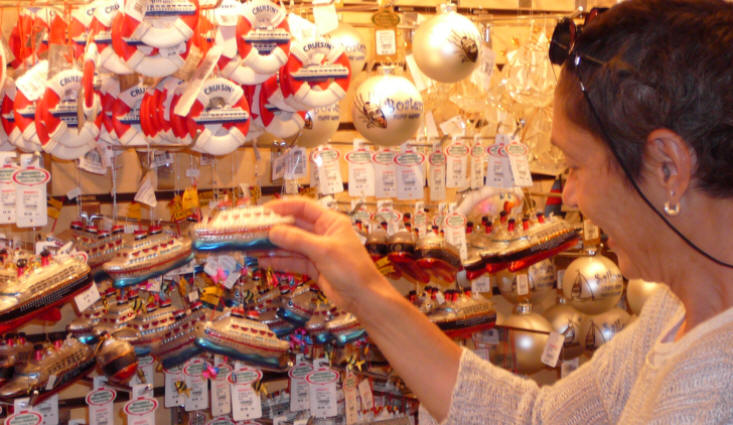
We still had some time left before visiting Christian and Tammy. So, off the Interstate 75 and on to a small detour to Frankenmuth. Once there, it looked like a small Bavarian town, only a bit too exaggerated, geared entirely toward kitsch and tourists. We could not miss the Bronner's Christmas Wonderland building. You could honestly fit three football fields inside it. Gigantic dimensions for a Christmas decoration sales building. Right in the parking lot, it started with oversized angels, candles, ornaments, and so on.
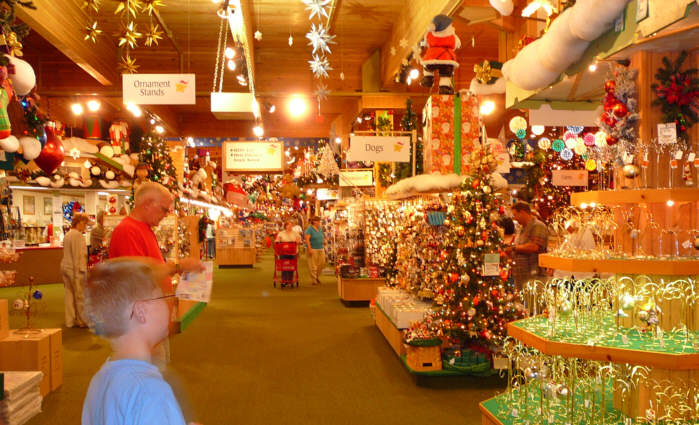
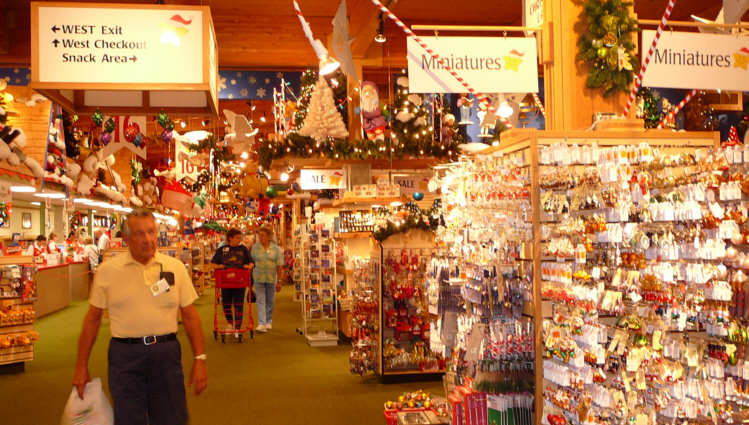
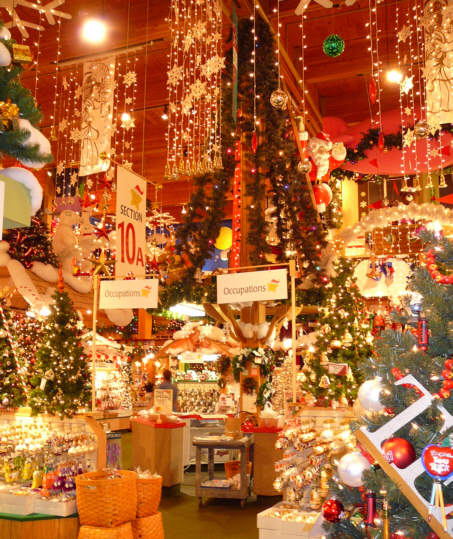
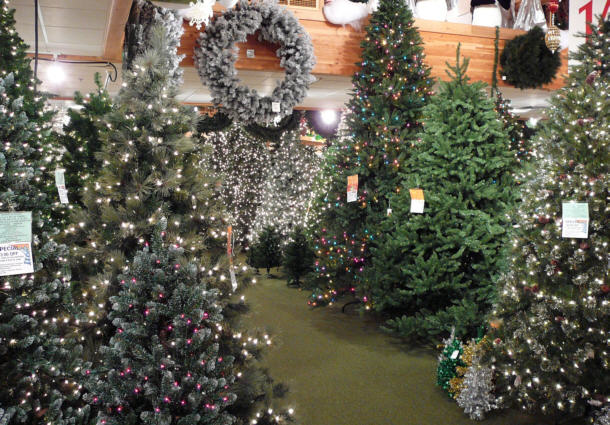
We decided on the west entrance and then we were almost overwhelmed by the selection. There were shopping carts just like in a normal supermarket. When walking to the left, we could not see the end of it, and the same went for the right. The height of the sales area was at least six meters and completely packed with Christmas accessories, artificial Christmas trees with and without snow, singing snowmen, and everything else you cannot even imagine for Christmas.
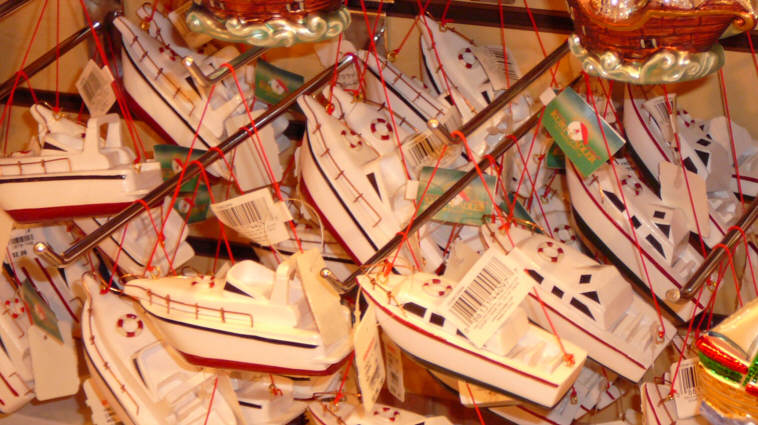
Practically everything was available to buy as Christmas decoration. We could have chosen between classic decoration, nautical (sailboats, life vests, lighthouses, etc.), animal (dogs, horses, frogs, etc.), patriotic (flags, presidential heads, national monuments, etc.), sports (baseball, football, tennis, etc.), military (tanks, bombers, weapons, etc.), by country (Caribbean, Mexico, Finland, etc.), plant (vegetables, fruits, flowers, etc.), colorful (everything in red, blue, yellow, etc.) and a few other directions. In some cases, the decorative items were completely kitschy, but among them were also very high-end and tastefully crafted small works of art.
When we left this Christmas supermarket after about two hours, we agreed and were very glad that we do not have to rack our brains over Christmas decorations and Christmas trees.
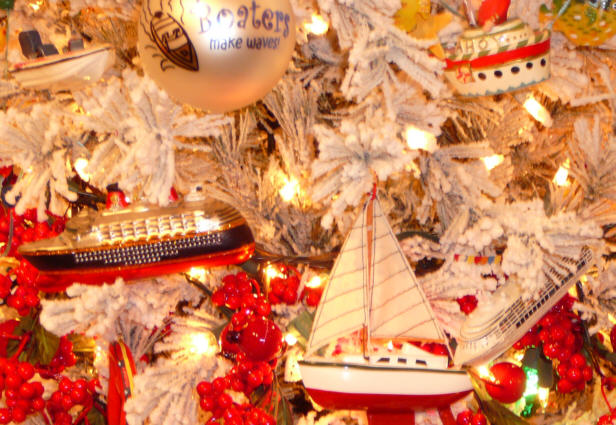

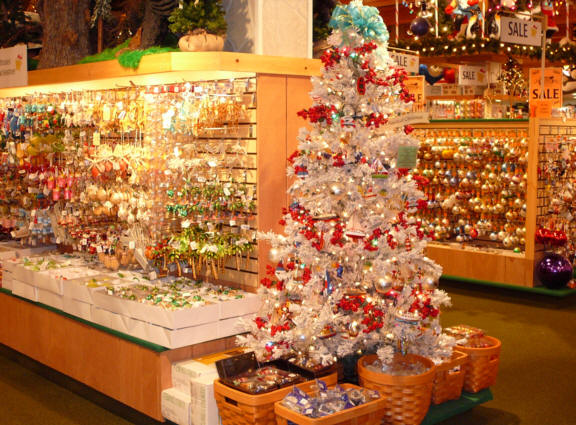
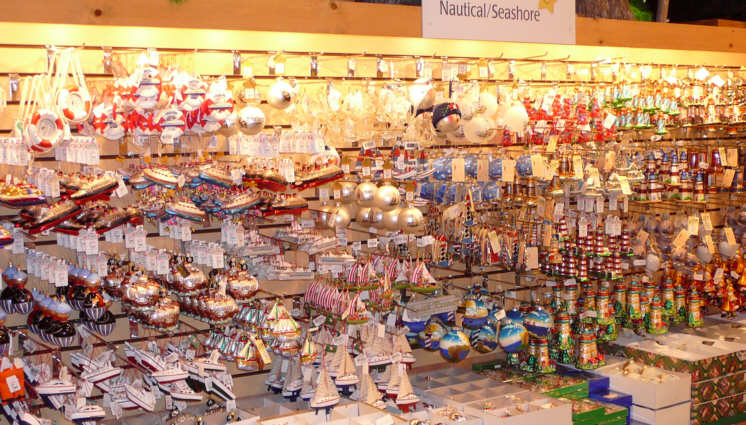
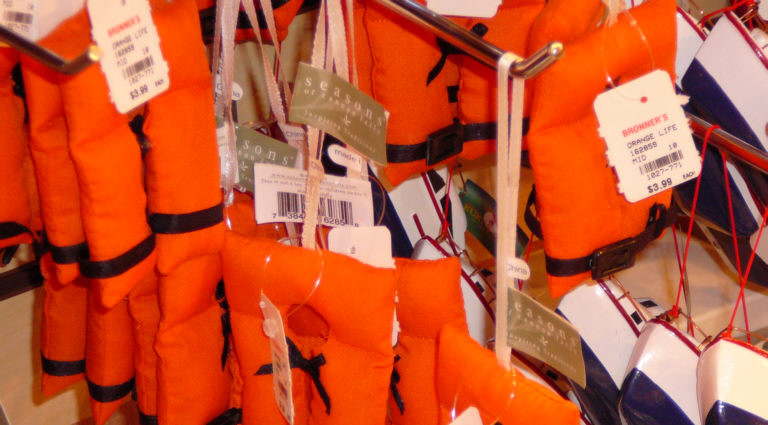
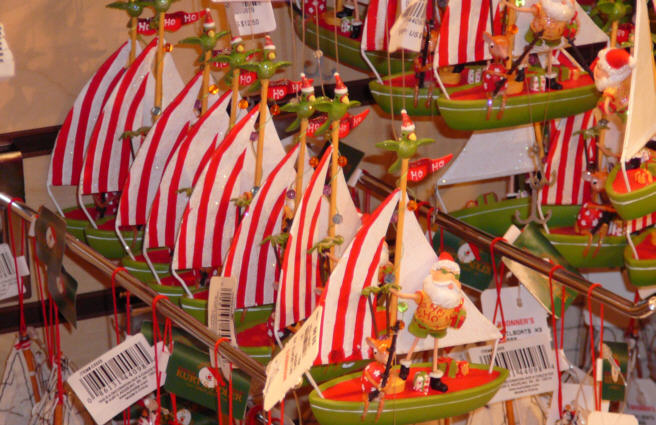
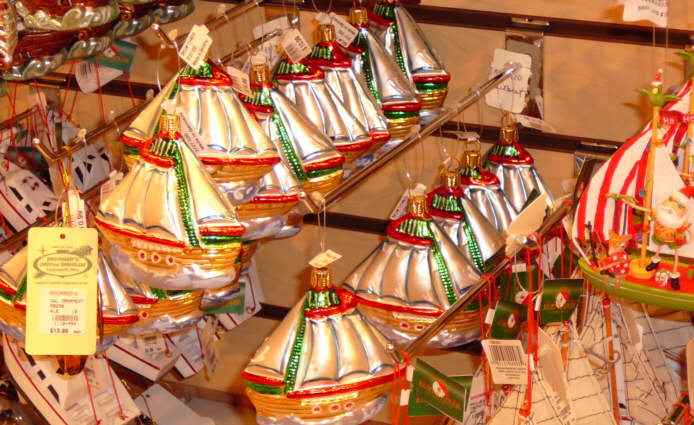
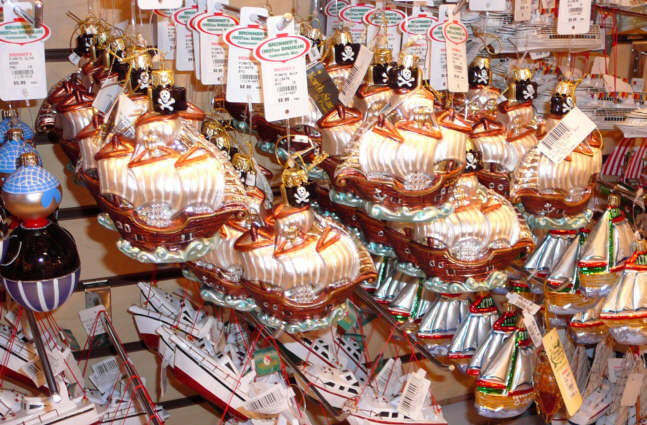
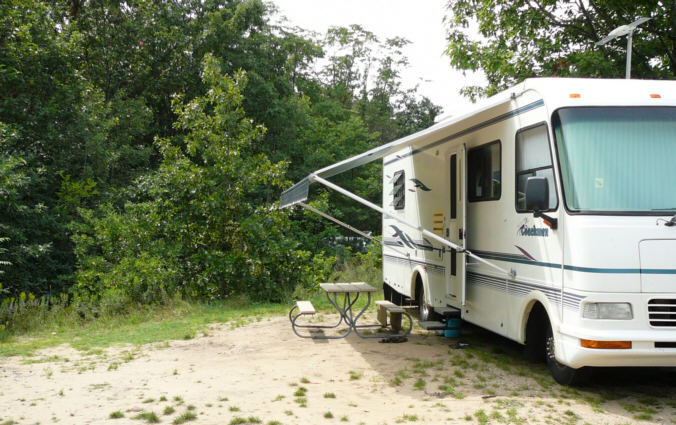
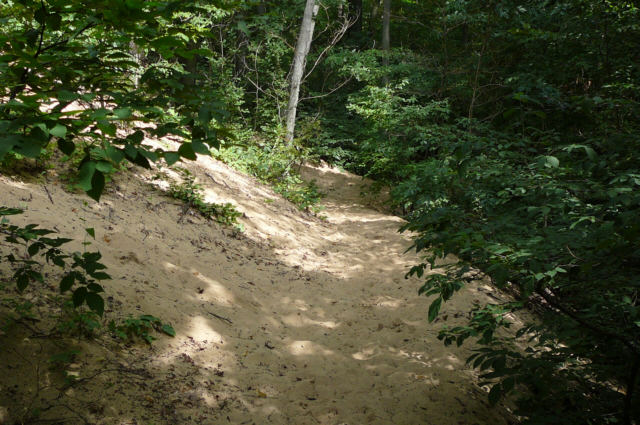
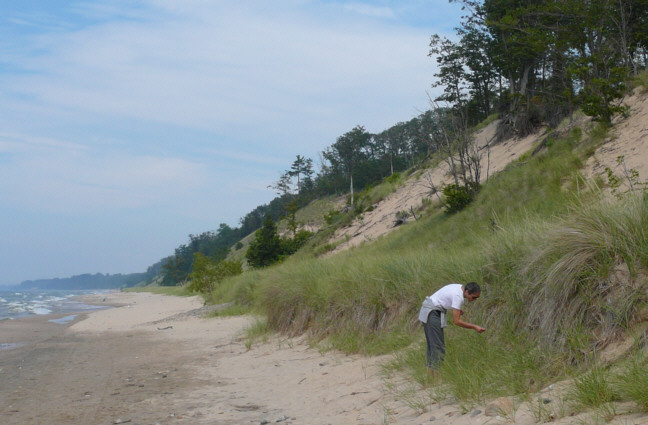
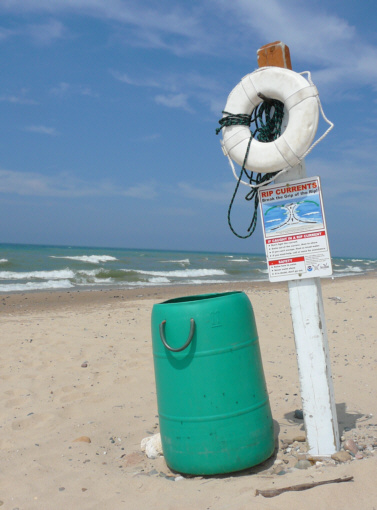
Next we headed to Fenton to visit Christian and Tammy. There we picked up our mail from the insurance and spent a pleasant evening after enjoying a delicious T-bone steak dinner. Since time was unfortunately breathing down our necks a little bit, meaning autumn with its first snowfalls in Yellowstone National Park, we had to move on again the very next morning. After a brief stop at the large dunes of South Haven on Lake Michigan, we bypassed Chicago and headed straight for New Glarus.
New Glarus
After giving Chicago, the third-largest city in the USA, a wide berth, we left U.S. Interstate 94 and took smaller roads to New Glarus. Along the way we stopped to finally get that long overdue engine oil change done, enjoyed the views of the countryside and felt almost transported back to Switzerland, except that the distances here are unimaginably vast. As a result, I once again completely misjudged the travel time and our arrival at New Glarus State Park took place in the dead of night.
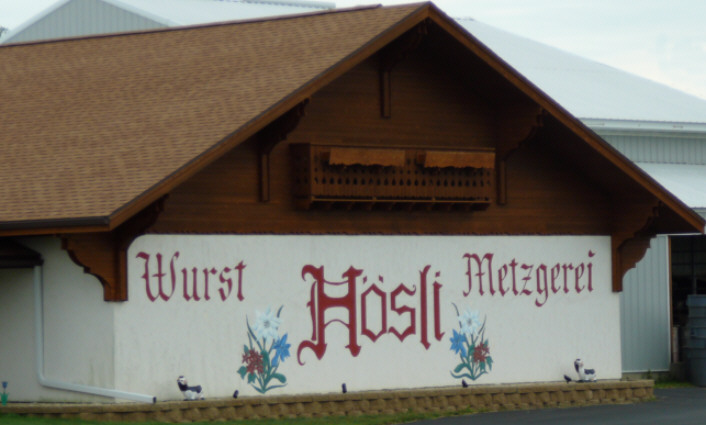
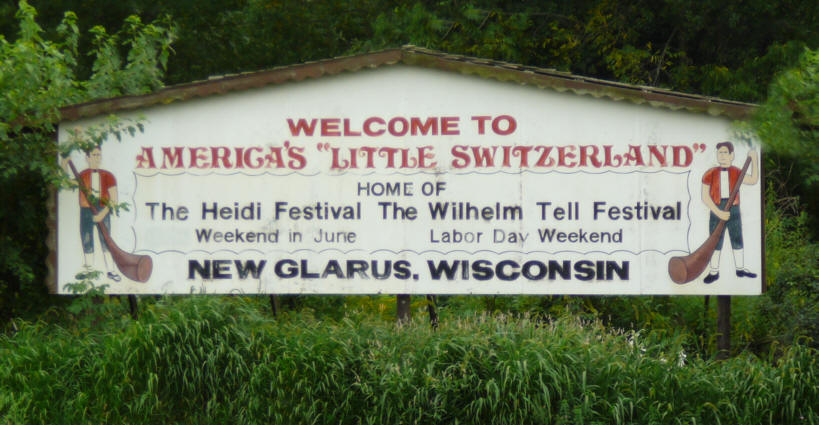
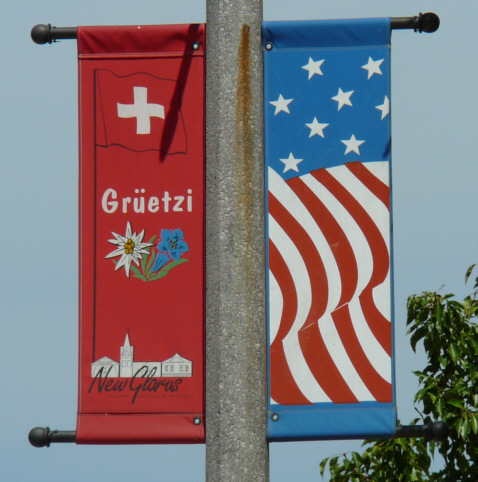
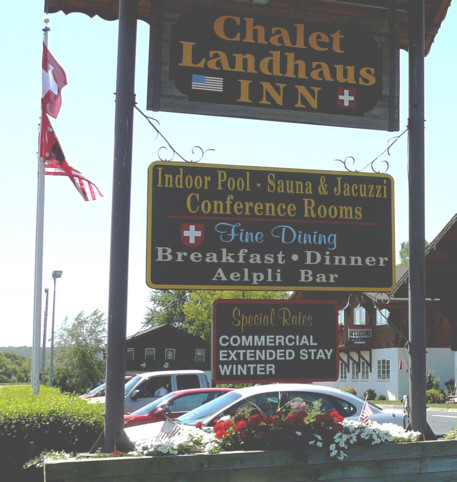
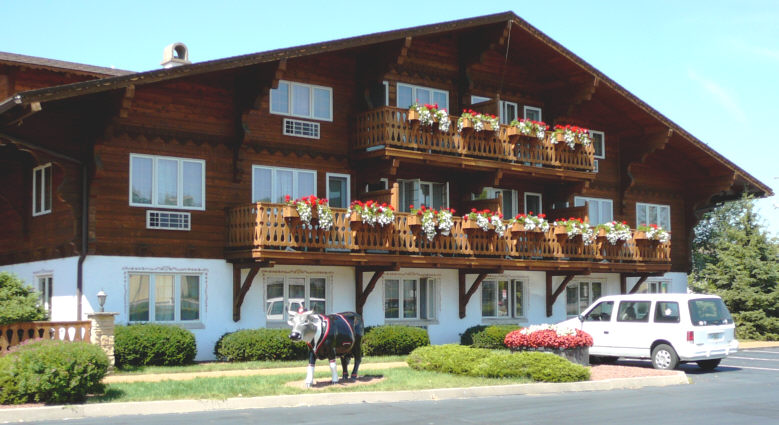
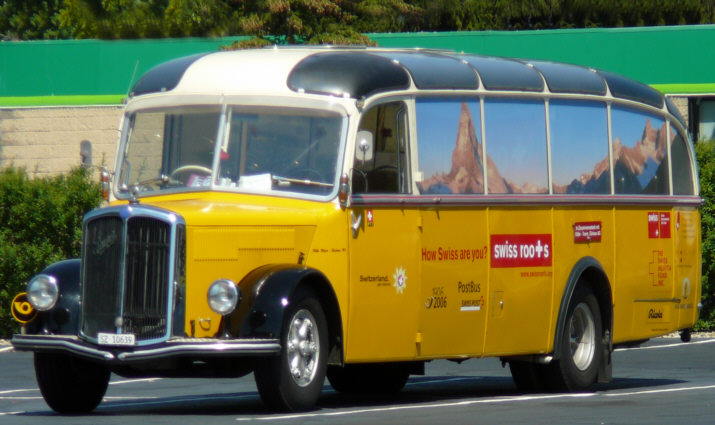
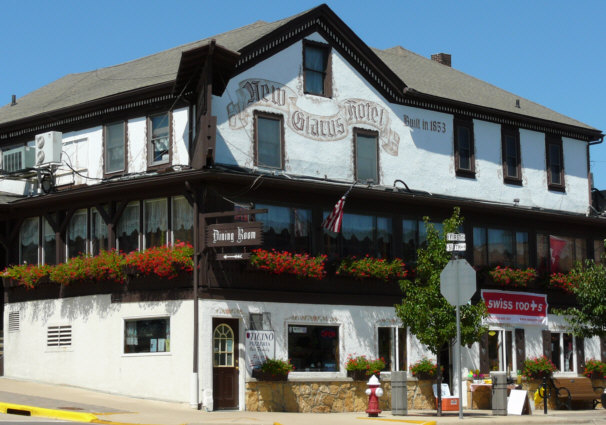
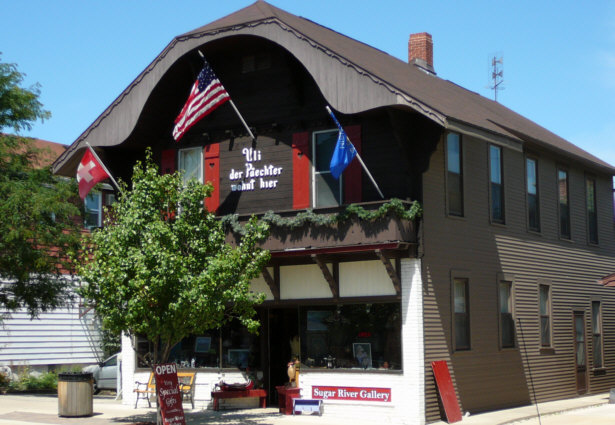
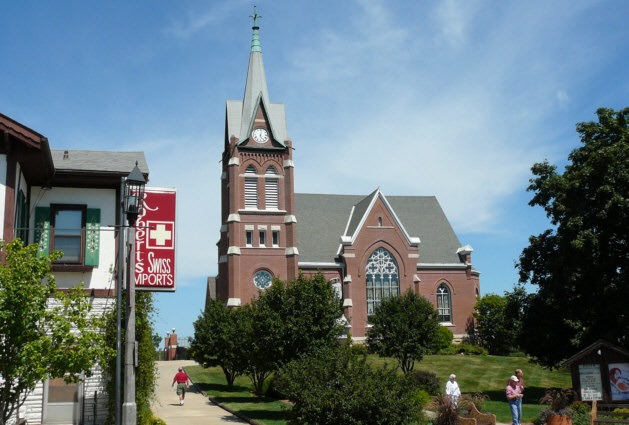
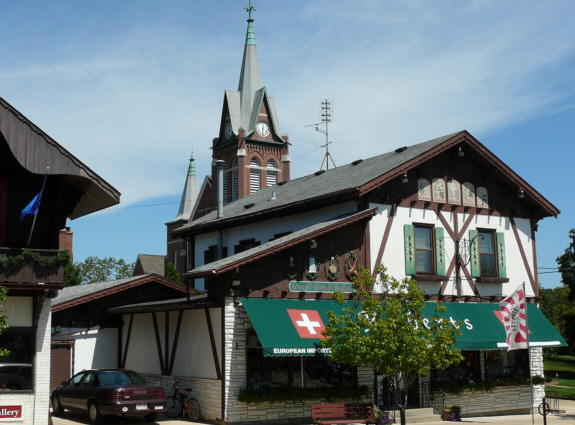
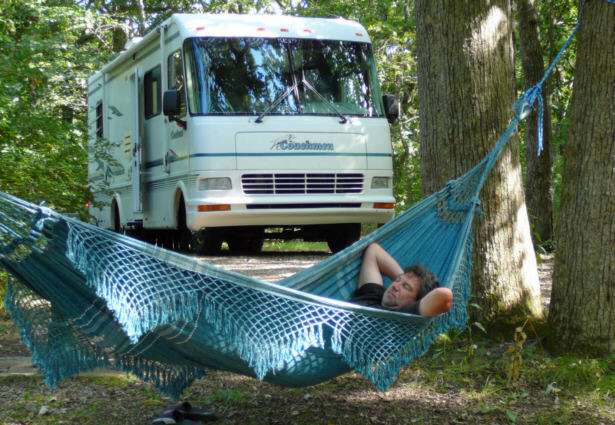
New Glarus, with a population of just over 2000, is a town in Green County in the U.S. state of Wisconsin. The small town is named after the Swiss municipality of Glarus. It was founded in 1845 by about 150 immigrants from Glarus. New Glarus attracts thousands of tourists every year and is also known for its rustic restaurants serving Swiss specialties, which have been slightly modified for American tastes, however.
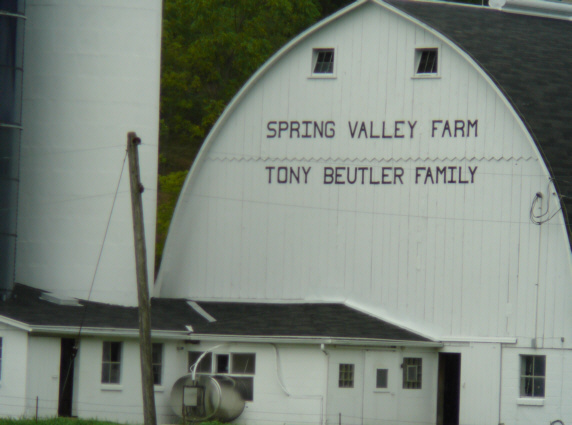
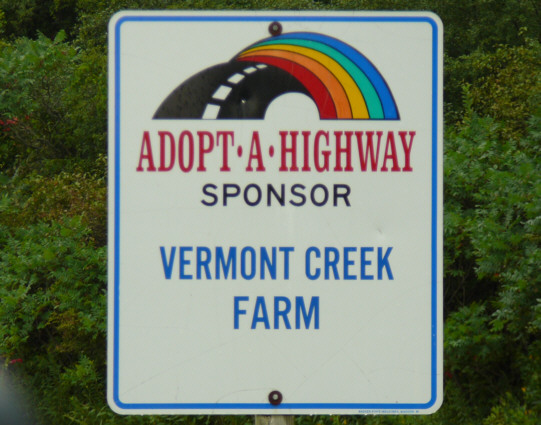
Even on the car ride before we reached the little town, we had to burst out laughing on more than one occasion. In the USA, almost every farm has a large sign with its name on it. Here, of course, that is called a farm. Suddenly we spotted a sign reading "Tony Beutler Farm", or another one with "The Vögeli Family Farm". There were many more examples, because this area is truly in Swiss hands.
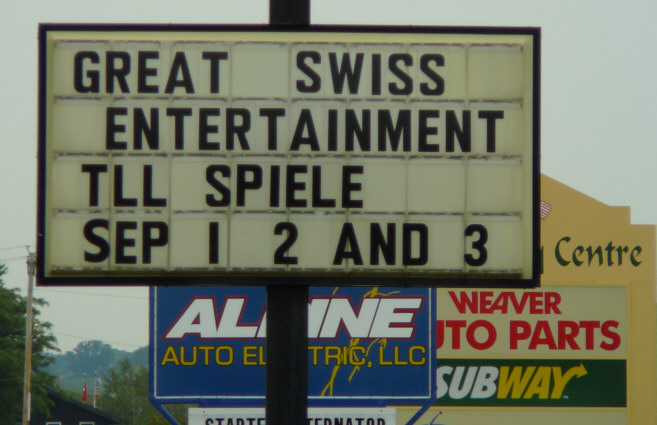
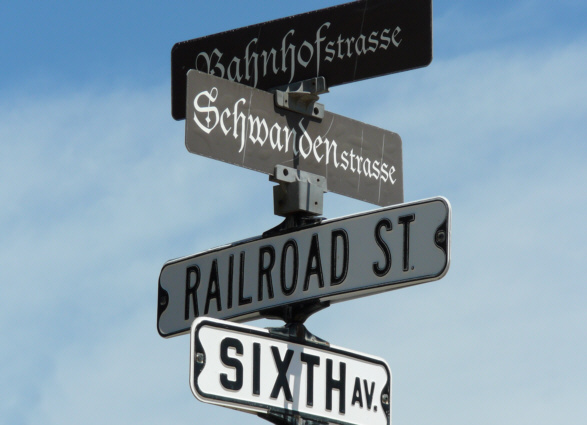
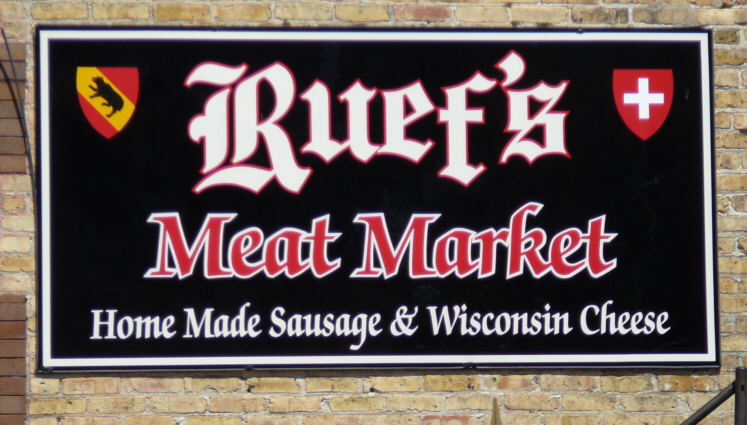
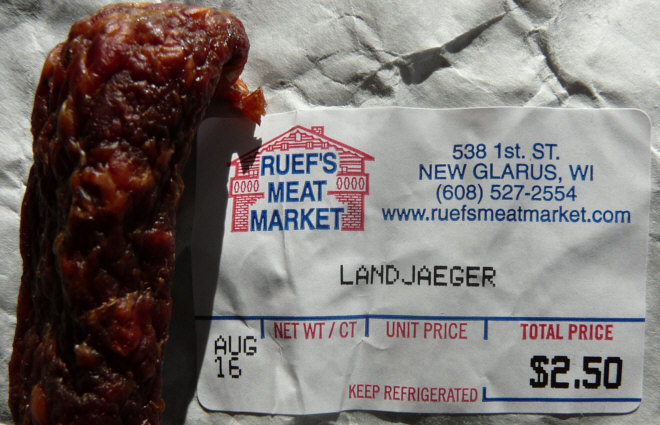
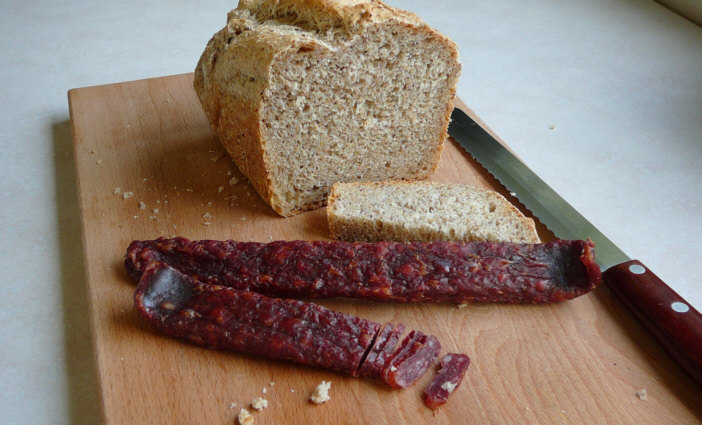
Indeed, they put on a performance of "William Tell" every year, and a "Heidi Festival" is also on the schedule. The fact that the name "Tell" was misspelled on a large billboard in the village center naturally bothered no one here. Some of the street signs are also in both German and English. This results in signs that say Bahnhofstrasse at the top and Railroad Street underneath. While taking a stroll through the town, we came across "Ruef's Mead Market" (butcher shop). Homemade sausages and Landjäger were said to be the specialty there. A bit skeptical as to whether they could actually make genuine Landjäger, I bought a few pairs. That was a big mistake, though not in the way you might think now. These Landjäger were so good that I should have definitely bought a lot more of them.
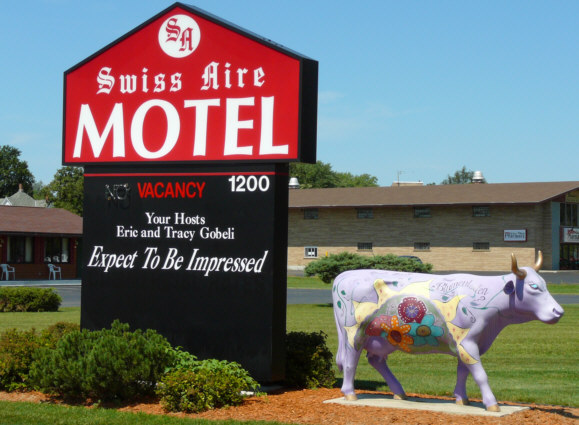
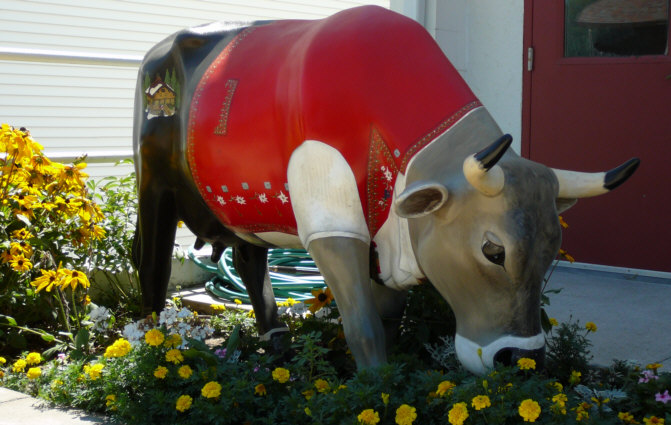
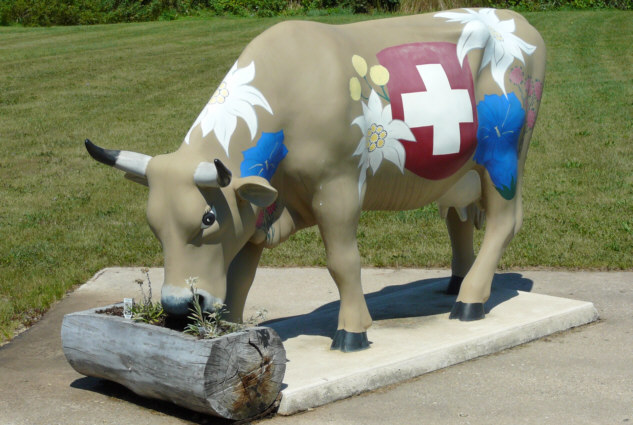
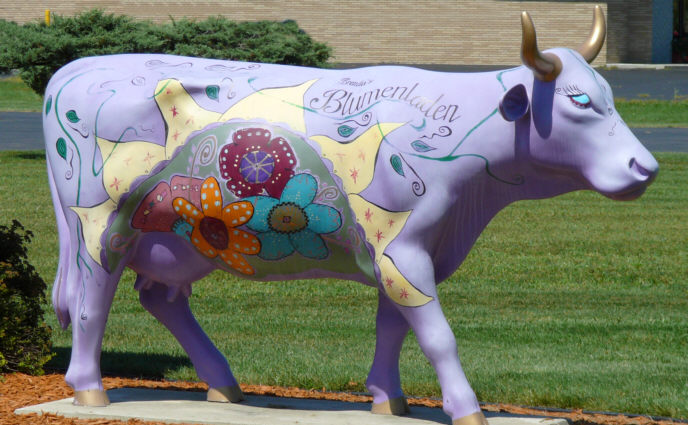
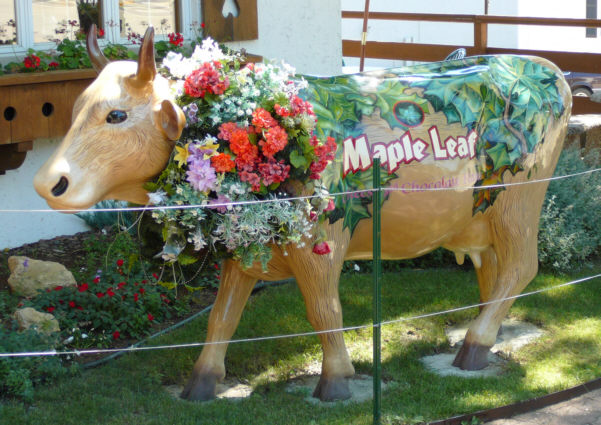
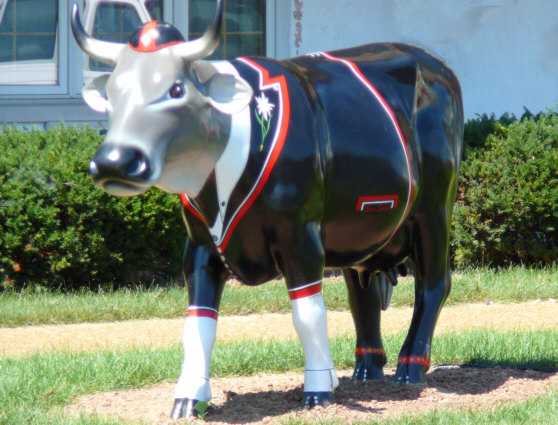
Cows were standing around everywhere in the town. Not real ones, but life-sized ones, each designed by a different artist. Something similar to what the city of Zurich experienced years ago, but on a small scale here. You can look at a few of these cow creations below.
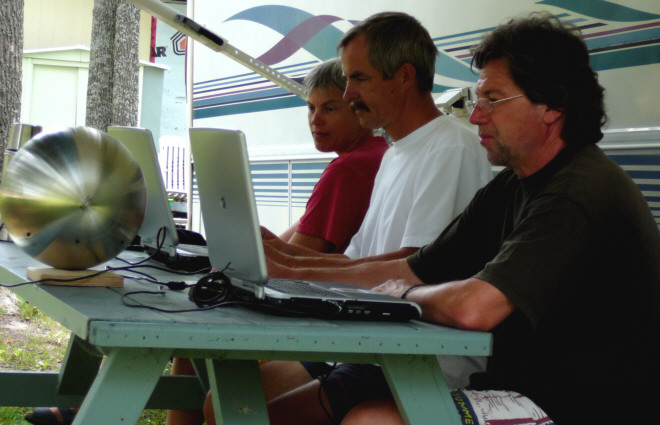
Another little experience will remain unforgettably etched in our memory. Before driving on, we had parked the MOMObil right in front of the village laundry. Yvonne had a big wash day and I was able to log into an unsecured wireless network using my self-made "satellite dish" to empty our email inbox once again. Suddenly someone knocked on the motorhome. An older man, estimated to be well over 70 but absolutely sharp, was standing there and addressed us in his rustic US Bernese German: "i bi dr Hofer, sit dir würklech us dr richtige Schwiiz?" An immensely interesting conversation developed and we got to hear a lot of personal background from the perspective of a descendant of Swiss emigrants. How much this man knew about Switzerland and how proud he was of his old homeland, even though he had never set foot on Swiss soil, was almost uncanny. Half an hour after we had said goodbye, there was another knock on our door. Once again our "Hofer" was standing in front of it. Looking a little embarrassed, he said his wife had instructed him to bring us something fresh from their garden. With that, he handed us a plastic bag full of nice cucumbers.
Wisconsin
In terms of area, Wisconsin ranks only 23rd among the 50 US states with its 140,662 km². It has around 15'000 lakes, or in other words, about 17 % of its surface is covered with water, which is certainly one reason why numerous tourists regularly travel from all over the US to the northern state. Because of its intensive dairy farming, this state bears the name "America's Dairyland". The locals are also jokingly called "Cheeseheads", so the fans of the famous Green Bay Packers football team love to wear hats shaped like an Emmental cheese wheel.
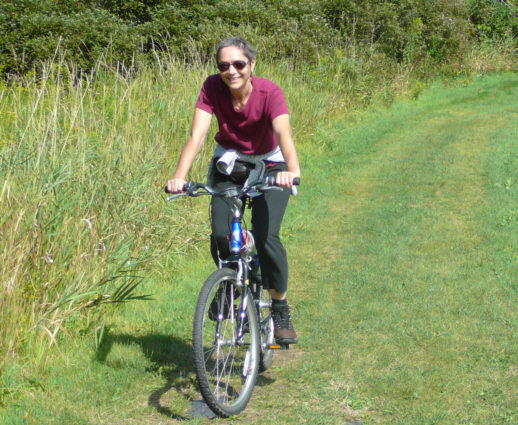

Even when New Glarus, "America's Little Switzerland" as it calls itself, was finally out of sight behind the rolling hills, we did not stop our heated discussion about our home country. Again and again, we brought up "Hofer", the old man. Most of his knowledge about Switzerland and the traditional Bernese German language was passed on to him by his parents. The daily broadcasts of "Radio Switzerland International" in the past contributed the rest.
By the way, these Swiss shortwave radio broadcasts, which had been broadcast worldwide for decades, were completely discontinued about a year ago. Poor Switzerland could no longer afford this extremely important information broadcast for Swiss people abroad for financial reasons, it was succinctly stated from official sources. Instead, there is now a boastful internet platform, which, however, cannot fulfill the purpose by a long shot. People abroad who have an internet connection certainly do not go to this page, but instead get their information directly and even more comprehensively. How is someone living, for example, in Brazil, Peru, or somewhere out in the sticks supposed to get a fast internet connection? We can already see that on our trip, which takes us almost exclusively through the "civilized world". Even there, we sometimes have no way to communicate via the internet.
How out of touch with reality must that bureaucrat in Bern have been who made such a grave and absolutely wrong decision back then!!!
The "Deutsche Welle", the northern counterpart to the former "Radio Switzerland International", has even been continuously expanded in recent years, I think that says enough about the importance of these shortwave radio broadcasts.
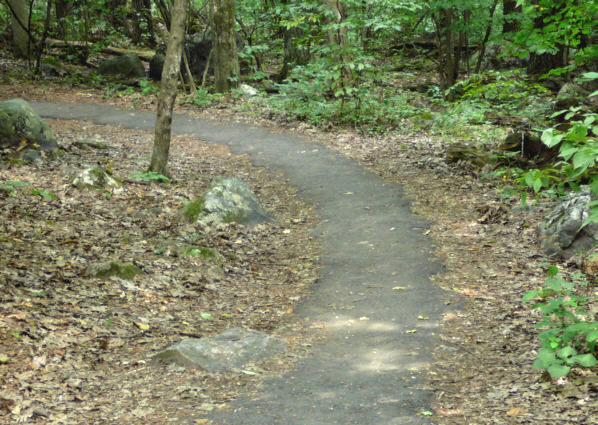
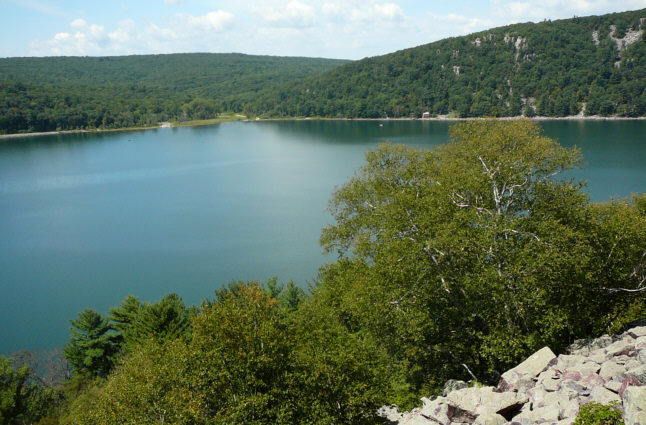
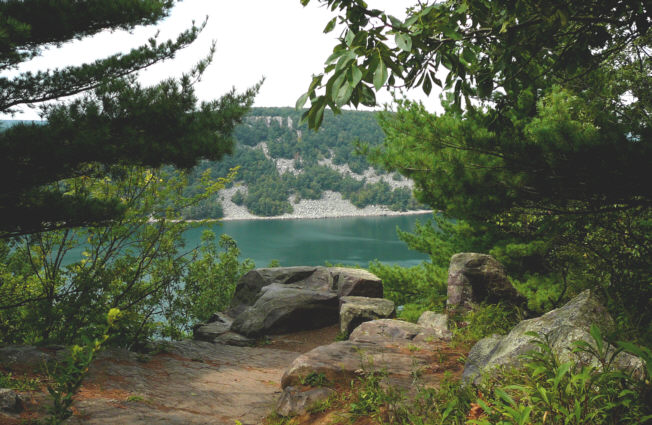
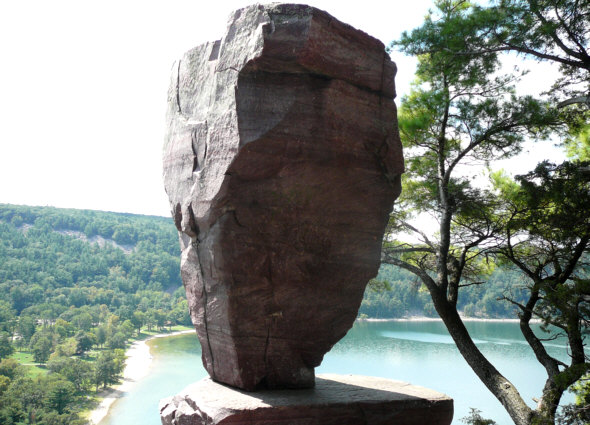
Well, now enough of getting upset and complaining. In the meantime, we had arrived at Devil's Lake State Park. We wanted to stay there for a few days to process what we had experienced and also to go on several hikes and bike tours.
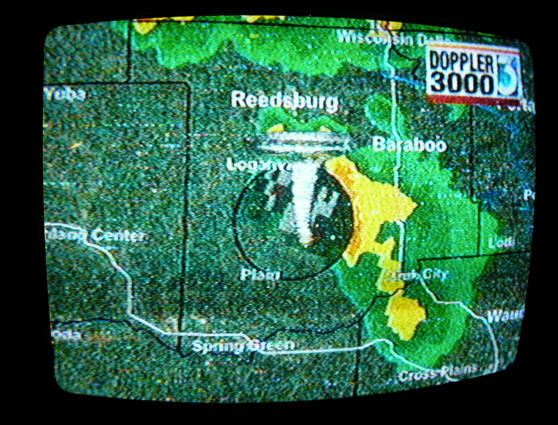
Everything had gone very well, except for one night when there was a tornado warning. The state park rangers drove around the park in their car with a megaphone and continuously issued warnings. "All campers who only have a tent should immediately seek shelter in the shower and toilet rooms." Whoever has the opportunity should definitely turn on the TV and follow the exact weather developments. Since such a device was available in our mobile home, we turned it on and became increasingly nervous at the images and information shown. Only about 10 miles from our location, all the external conditions were present for a dangerous tornado to form there. The latest developments were constantly displayed on TV while a violent storm unloaded outside and it was pouring buckets. After about an hour, the danger was over for the time being and everything calmed down a bit. After another hour, they gave the all-clear for our region. The tornado threat had shifted further south. It was well past midnight when we could finally slip under the warm blanket. Despite the previous tension, I slept wonderfully and deeply, which unfortunately I cannot report of Yvonne.
Badlands National Park
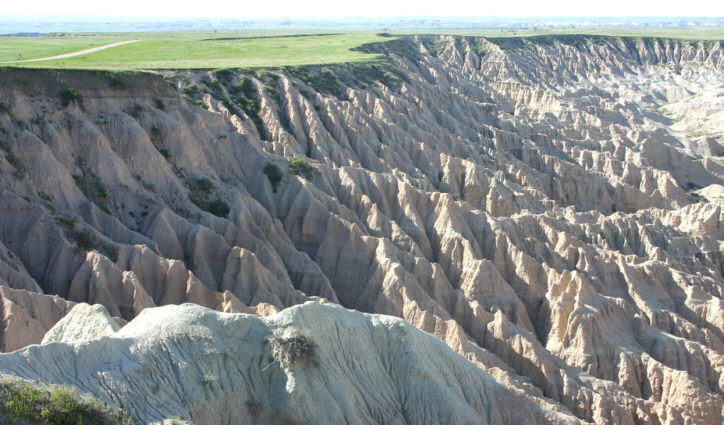
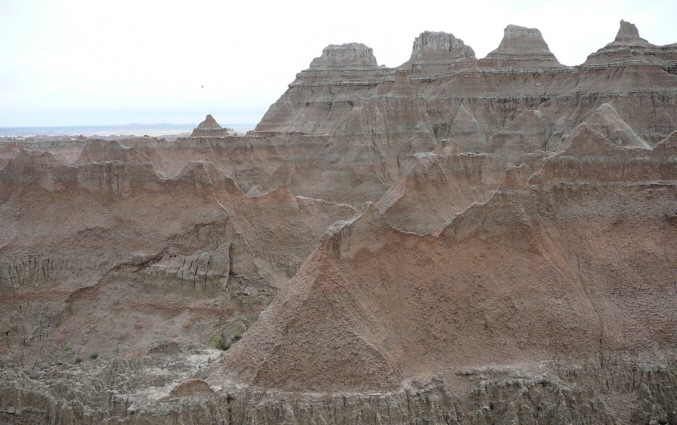
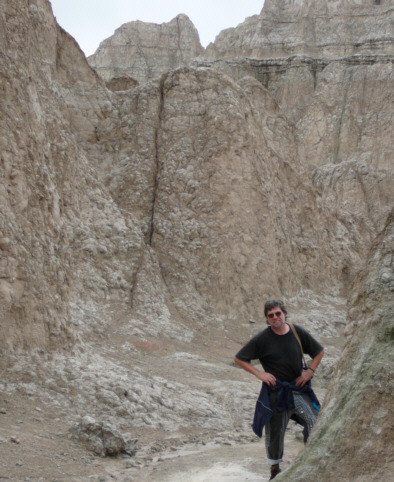
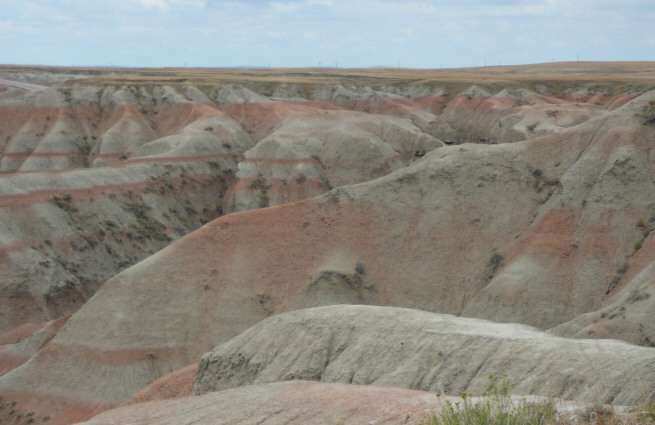
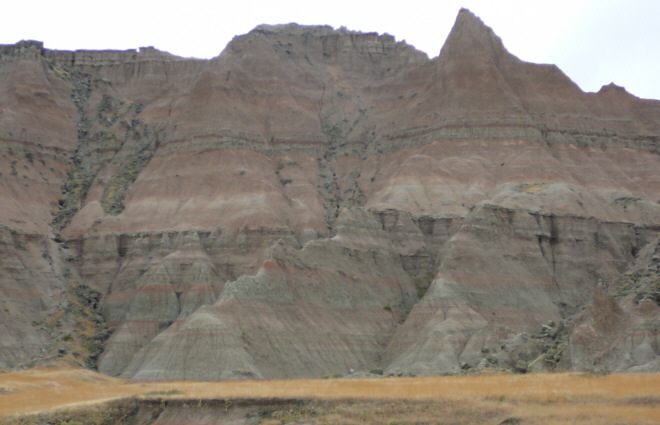
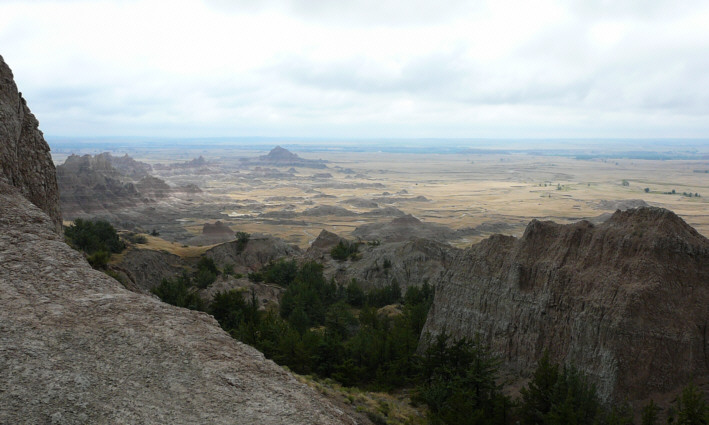
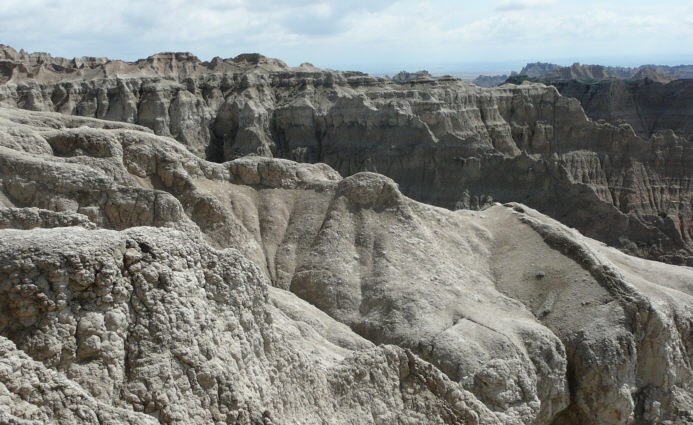
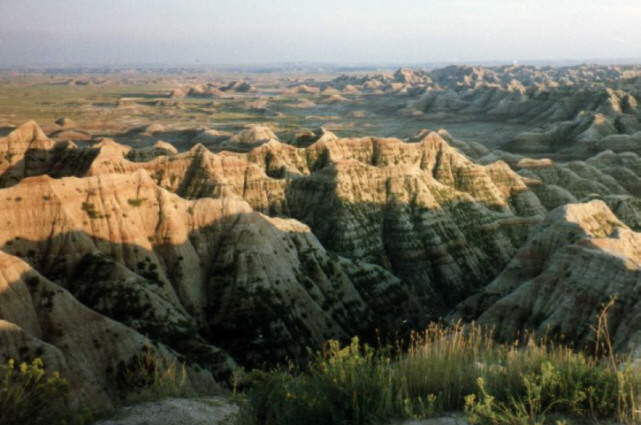
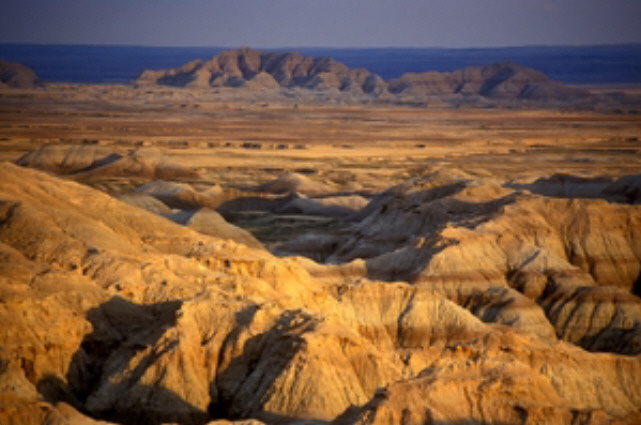
This was our next destination and is located in the southwest of South Dakota. It consists of a weathered landscape that seemed completely unsuitable for agriculture and was therefore given the name Badlands.
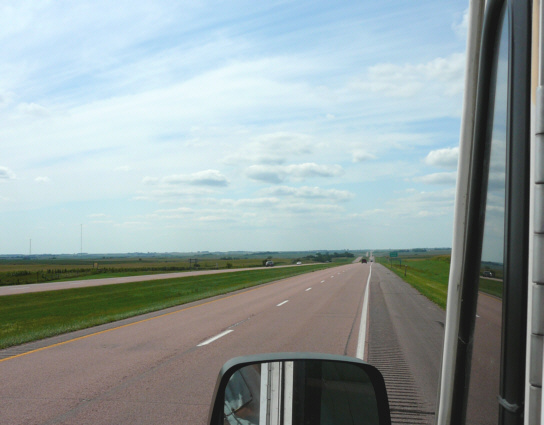
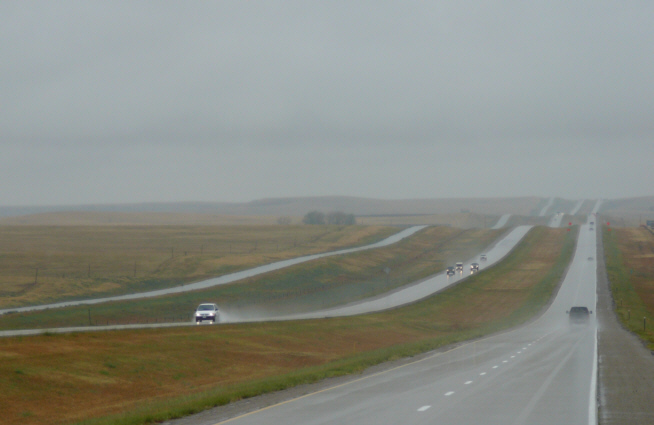
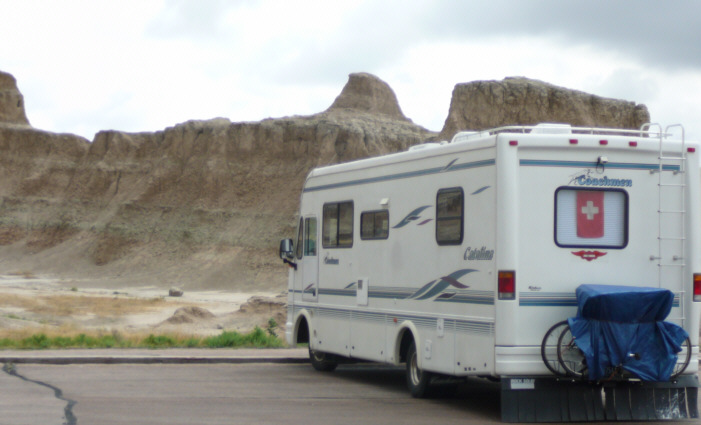
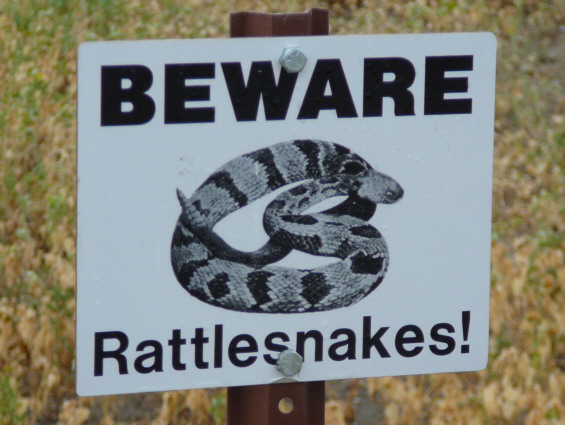
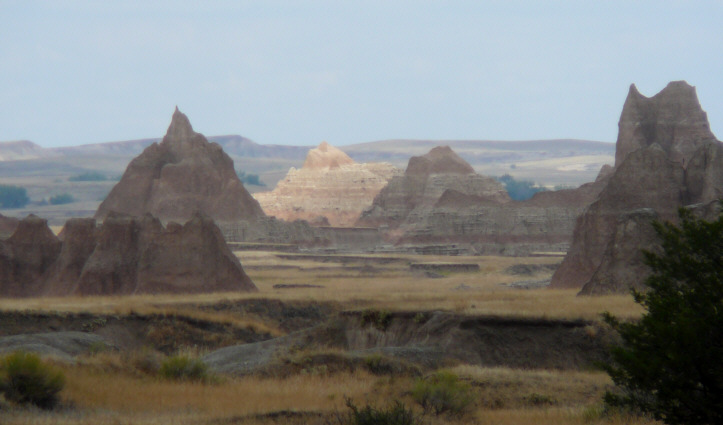
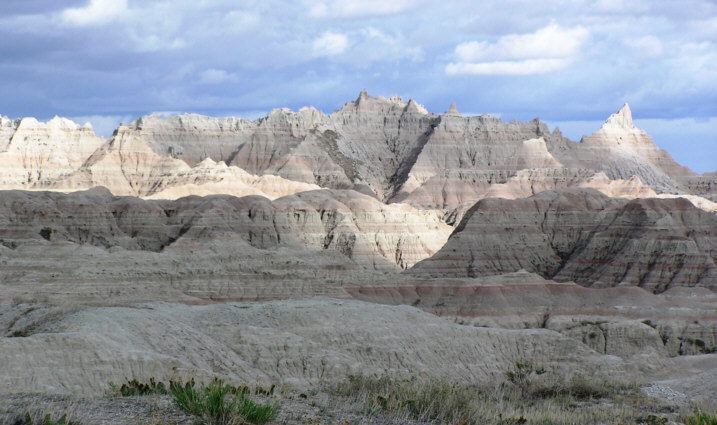
After a long and somewhat boring drive through a rather monotonous landscape, we reached the national park along with a front of bad weather.
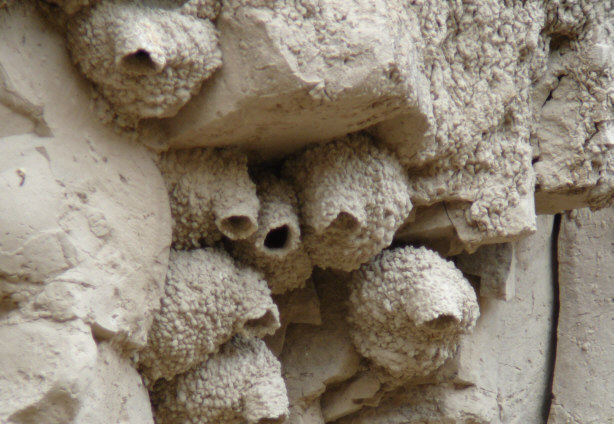
Temperatures had dropped significantly, and unfortunately the sun was rather sparing with its warmth. This also affected how the fragile rock was illuminated. As soon as it shone briefly into the abstract landscape, the latter lit up in magical colours. Without the sun, this unique weathering landscape unfortunately immediately looked a bit dull again. The park encompasses a desert-like, dry region that has been transformed by erosion into a fantastic landscape with deeply incised rock gorges. The rock is very fragile, and the multi-coloured rock formations are constantly taking on new shapes. Less than half of the 982 square kilometres total area is covered in vegetation. The vegetation consists mainly of prairie grass, and trees only appear sporadically. Bighorn sheep, antelopes and a few bisons live here in the wild. Originally, this area was swampland.
The park contains rich deposits of fossils, such as those of prehistoric horses, sheep, rhinoceroses or pigs. Finds of human civilisation dating back 11'000 years were also made here. The area was declared a National Monument in 1929 and was only upgraded to a national park in 1978.
Wall Drug Store
After leaving Badlands National Park, we wanted to visit a typical American business fairy tale. Thousands (and that is truly no joke) of miles beforehand, it had been announced to us. It is mentioned in the guidebook, and other "Cämpers" had already drawn our attention to it long before. You simply had to see the "Wall Drug Store".
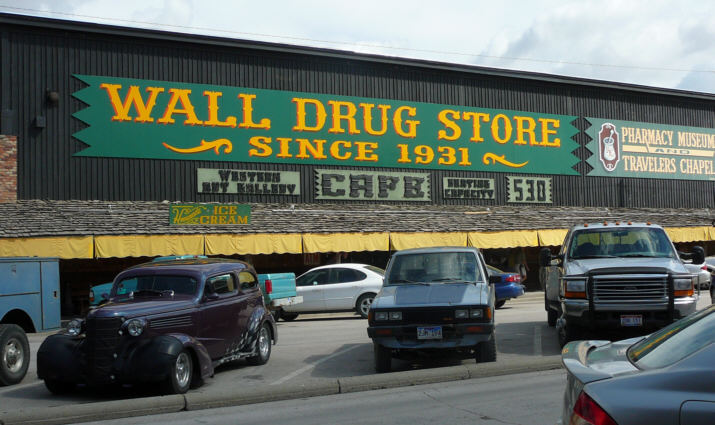
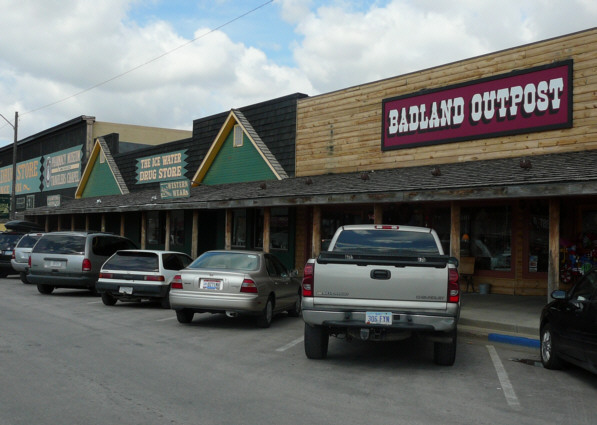
The small village of Wall is located on Interstate 90. Right in the middle of the Great Depression, on December 31, 1931, Dorothy and Ted Hustead bought an old drugstore in the prairie town, which had a population of around 300 at the time. Unbearably hot summers, dust storms, crop failures and bitterly cold winters did not exactly make the economically tough times of back then any easier. None of this sounds like ideal conditions for running a store successfully either, and to top it all off, practically all cars and tour buses simply drove past the village at that time.
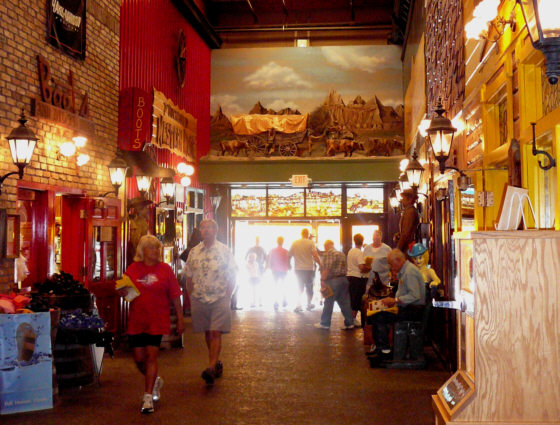
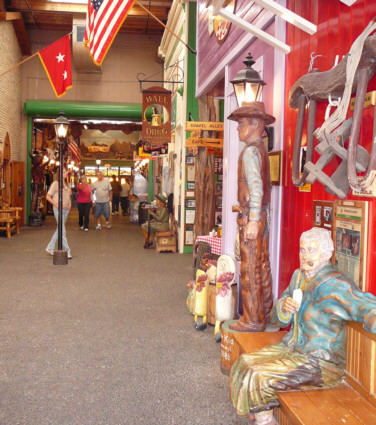
But the Husteads were brilliant businesspeople. They gave themselves five years to get the business off the ground. In the fifth summer, Dorothy then had the simple but brilliant idea of luring the thirsty travellers passing Wall on their way from the Badlands to Mount Rushmore or Yellowstone National Park into her store with free ice water and coffee for 5 cents. For this purpose, the Husteads put up signs everywhere along the highway with the inscription "Free Ice Water and Coffee for 5 Cents". It worked, people came in droves and not only drank the refreshing free water, but also shopped in the store. As early as the next summer, they were able to hire eight additional people, and today it is probably the largest drugstore in the world. It now consists of numerous small shops that live exclusively off tourists. You can buy anything that has even the remotest connection to the Wild West... and of course plenty of kitsch.
I think there is hardly a newspaper in the entire USA that hasn't run a major feature report about this extraordinary drugstore and its history at some point.
The business is still owned by the Hustead family today. In the summer, an unbelievable 20'000 people stop by the Wall Drug Store every day. It now takes up almost an entire block and, alongside the many sales departments already mentioned, now also houses restaurants, walls full of old photos from the Wild West era and more or less curious exhibition objects, such as a two-metre-high rabbit, a kitschy roaring T-Rex dinosaur, or a giant jackalope.
And of course, the "Free Ice Water" and the "Coffee for 5 Cents" are still available today.
Here is the link to the website of the Wall Drug Store: http://www.walldrug.com