Brazil
Northward, towards the Caribbean: Maceió and Maragogi
The fresh water tanks and all reserve canisters are completely filled with Itaparica mineral water. The hull has been thoroughly scrubbed once more and our beloved Salvador is now abeam. So now we are finally back out on the open sea.
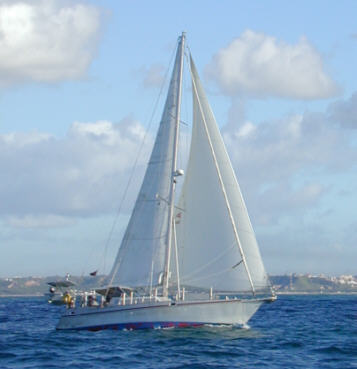
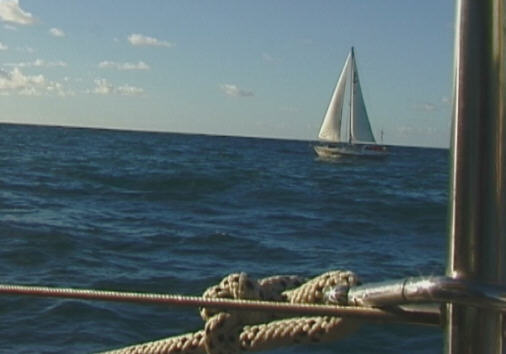
This time, however, meaning at least for the next few months or perhaps even longer, we are no longer traveling alone. Barbara and Wolfgang (I almost forgot Einstein the tomcat), from the German boat Momo, also have the Caribbean in their sights as their next stop. So we decided to travel this route together. Firstly, this provides a certain amount of additional safety on the high seas and secondly, both boats can benefit from each other's fishing. In any case, the shared meals and fish dinners are always interesting and fun, and not just because of the wine.
Maceió
Our first stopover. No, that is not entirely correct. We wanted to drop anchor just 9 miles before. Porto Francés, where the French first landed years ago, would have been a very nice anchorage. Unfortunately, it is the wrong time of year for this idyllic spot. The entrance through the reef is very narrow and the swell is currently coming from a southerly direction, which is the absolute wrong way. Thus, it is clear that we must divert to the port of Maceió. However, we had already been warned about this port back in Salvador. Dirty, the favelas right in front of the boat, and noisy from the industrial area, they said. As we entered the harbor, these thoughts went through my mind again and I told myself that it surely couldn't be that bad. Definitely wildly exaggerated, just sailor's yarn.
The next day, when we wanted to go ashore with our dinghy to clear customs, I didn't believe my eyes and nose. We cruised back and forth in front of the beach. The people from the favelas watched us out of the corners of their eyes and didn't understand why we wouldn't come ashore. I don't know if the locals here are already blind and their taste buds completely dead. In any case, I said to myself: "No thank you, I am not walking through this cesspool." The thought was barely finished when our dinghy motor began to stutter and shortly after cut out completely. One of the thousands of floating plastic bags had caught in the propeller and promptly blocked it. Now it was clear that the waves and wind were driving us right into the middle of the biggest cesspool and toward the garbage beach. Since there were still scattered boulders on the beach, Yvonne, Barbara, and yours truly had to get out of the dinghy in waist-deep water. Amidst used diapers, dead fish and beer cans, toilet paper and its contents, rotting vegetables, and who knows what else, we waded up this garbage dump. Speechless at so much filth and stench, we carried the dinghy ashore. Fortunately, we were able to wash and scrub ourselves down thoroughly right away at the friendly yacht club. However, our thoughts were already elsewhere, namely on: How are we going to get back to the boat?
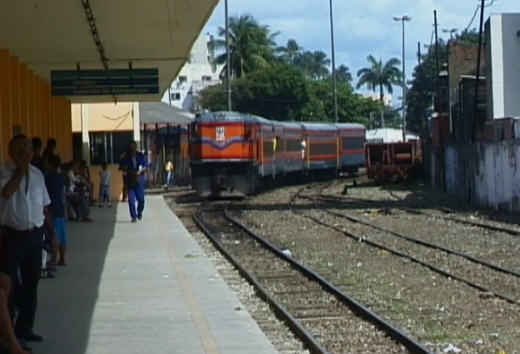
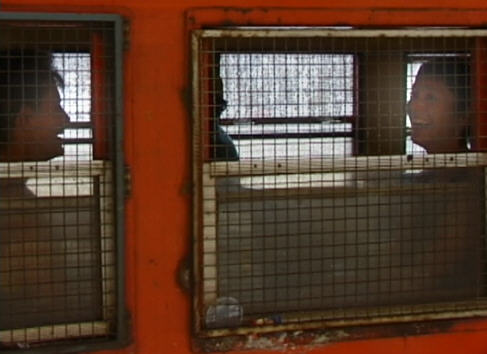
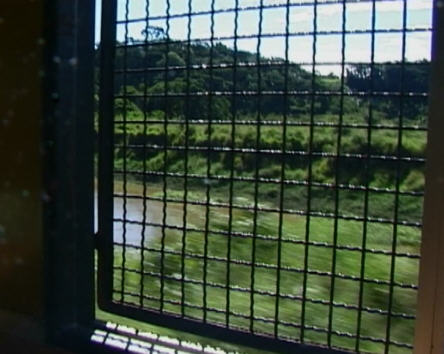
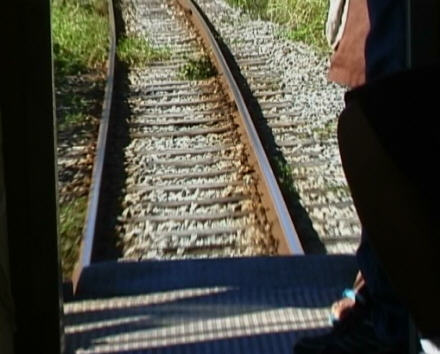
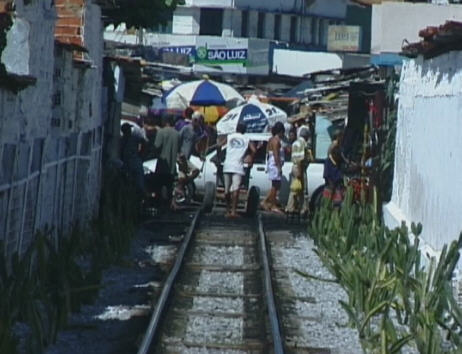
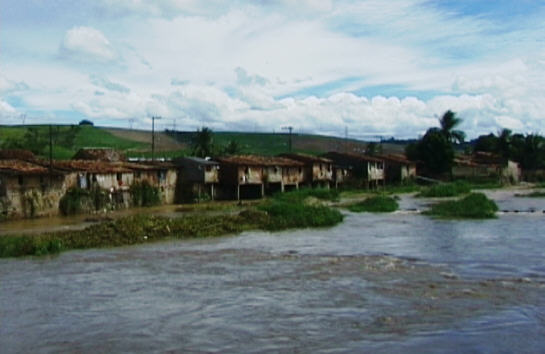
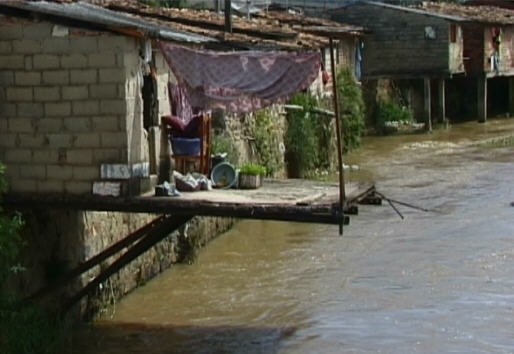
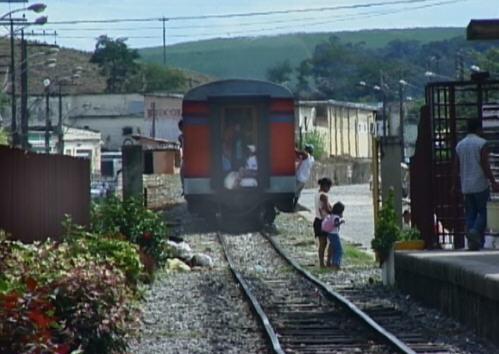
Our stay in Maceió was drastically shortened by this unacceptable trip ashore. Although the little town was actually very charming, we left it as quickly as possible, surely understandably. Apart from an adventurous train ride to Rio Largo, we skipped all other excursions.
A train ride along Rio Largo
Maragogi
Some members of the yacht club in Maceió advised us that we simply had to visit Maragogi. They said entering behind the reef was a bit tricky, but with their sketch we should be able to find the small passage. So now we had an A4 sheet of paper with various bearings, position points, and a few lines meant to represent the coast and the reef. Oh, and they added as a final warning that we were only allowed to pass through during daylight, in clear water, and strictly at high tide, because that was very important, otherwise....
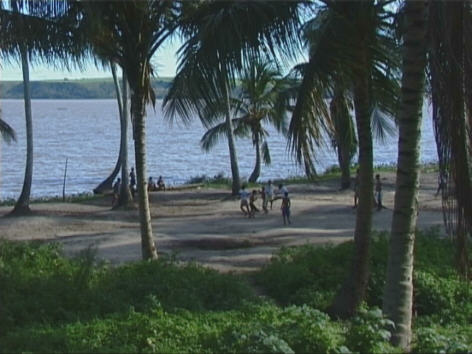
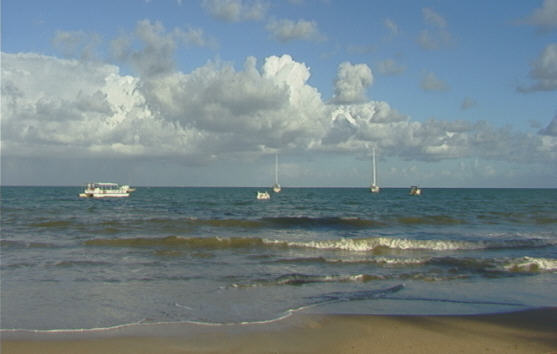
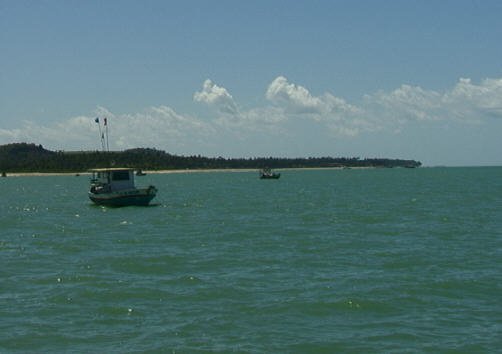
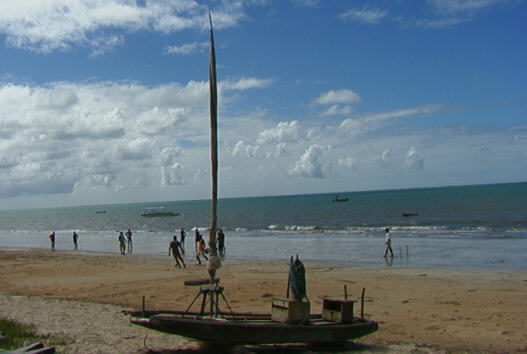
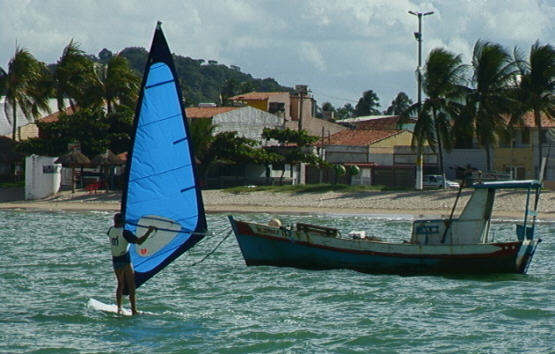
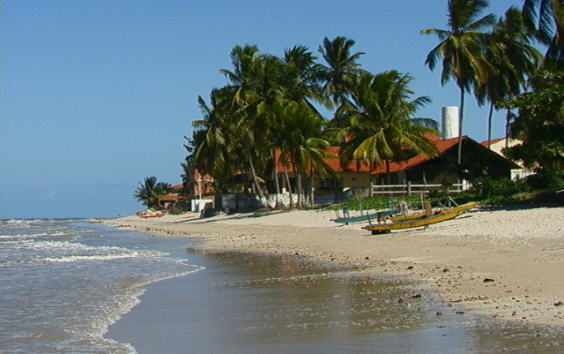
With this sketch in the cockpit, at high tide and during the day, we slowly felt our way in behind the reef off Maragogi. Aside from some excitement when the depth sounder suddenly showed a water depth of only 2 meters, thank goodness just for a brief moment, we managed the entry without any problems. A clean, small Brazilian fishing village awaited us. Once again, our two MOMOs were far and wide the only sailing boats. Otherwise, there were only the small local fishing boats and, of course, miles of sandy beach. At low tide, various playing fields were immediately marked out on it, and the football matches lasted until the water had reclaimed about half of the needed space. This spectacle repeated itself every day, and it immediately became clear to me why Brazil is a world champion in football. The talent pool here is inexhaustible.
Pasteleria
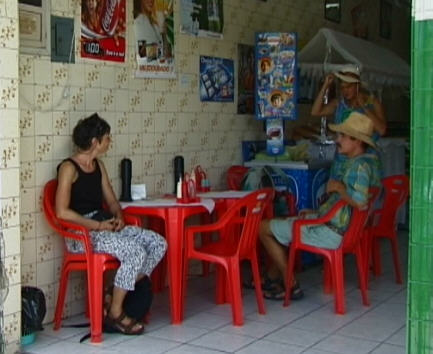
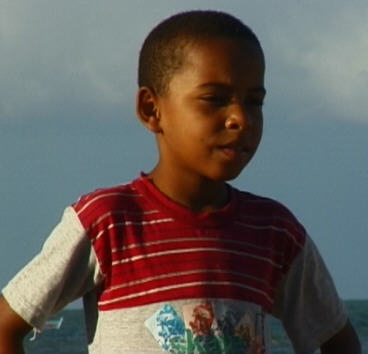
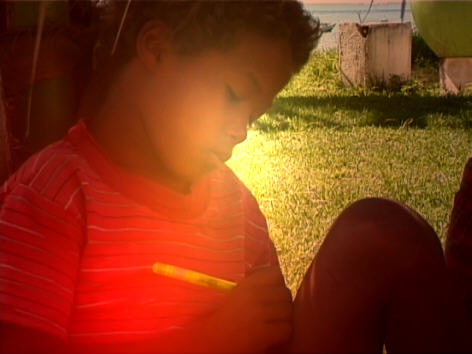
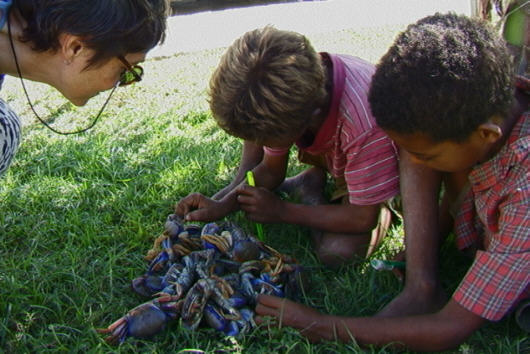
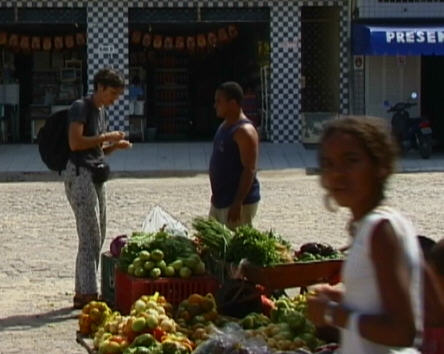
We experienced the incredible scale of Brazilian hospitality once more during a visit to the village. When a mild hunger hit me, I decided to fight it with a "pastel". Incidentally, "pastéis" look like oversized ravioli, except they are deep-fried in oil and, freshly prepared, taste very good. So Yvonne and I went to the village pasteleria, ate two pastéis each and drank fruit juice with them. The two pasteleria owners were a young couple and showed a great interest in us. Where we came from. What, across the sea on a sailboat. Whether we liked Brazil and how we were experiencing the country. Since Yvonne can already communicate quite well in Portuguese, which I once again cannot claim for myself, a lively conversation ensued. When, after just under two hours, we felt we had to leave because we still urgently needed to buy fruit and milk, we asked for the bill. Bill? No, we had of course been their guests. It was a great honor for them that we had stopped by their pasteleria. They wanted to thank us because no one from the small country of Switzerland had ever visited them before. Quite bashfully, we put our wallets away again, and it was clear to us that these two would receive a gift from the MOMO. We knew they had a small son who was in the first grade of school. So the next day Yvonne sat down behind the sewing machine and sewed a funky pencil case for the boy. Equipped with various colorful ballpoint pens, we delivered it toward evening.
Boules
In between, we went ashore to have a caipirinha in "our" beach restaurant. This is a drink made from cachaça, limes, sugar, water, and ice. To decide between us two MOMO crews who would pay for this drink (though it usually turned out to be several), we agreed that the winners of the boules game would be treated.
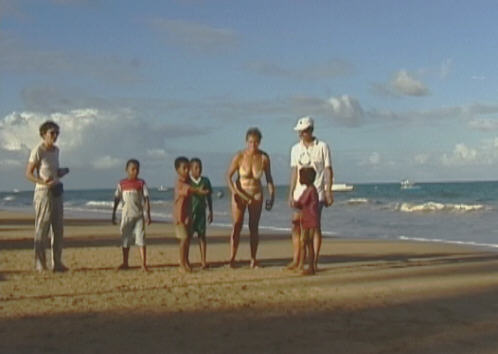
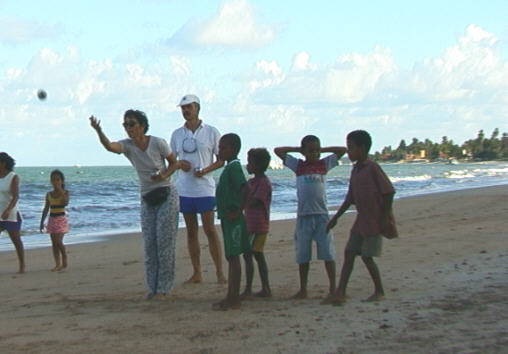
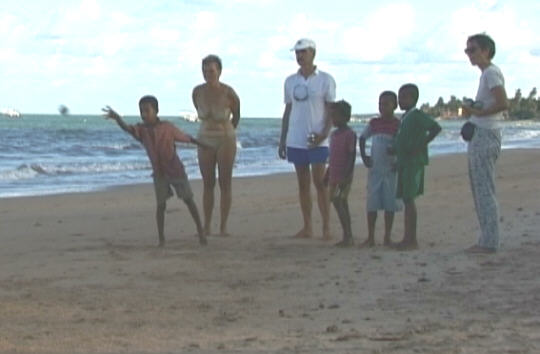
Hardly had we started playing on the beach when the first children arrived. At first very hesitantly and as spectators. A short time later there were already several of them and they were eagerly discussing which boules had won. After a brief consultation with our "opponent", we promptly put together two new teams. Germany and Switzerland were each reinforced with four Brazilian children. Now the fun really began and the children's expert chatter became increasingly louder. To prevent any disappointment, or even a physical altercation, on the part of the children, these kinds of games curiously always ended in a tie.
A procession for the day of the patron saint of the Pescadors
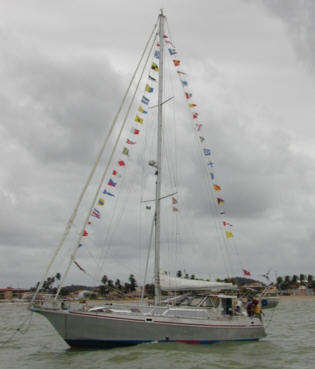
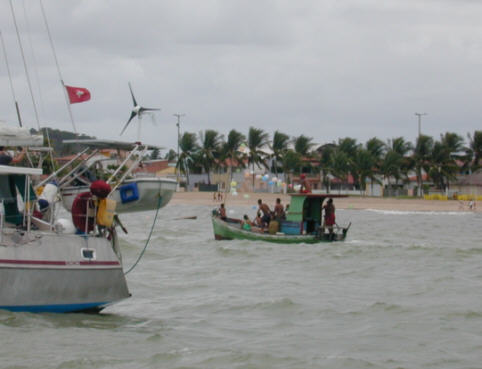
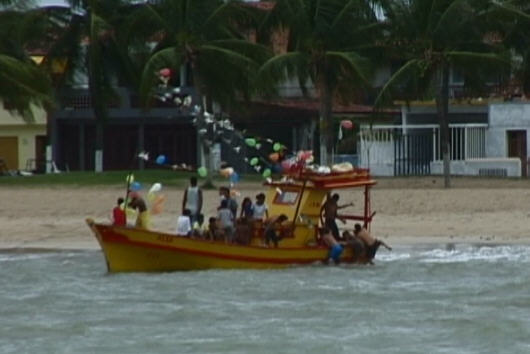
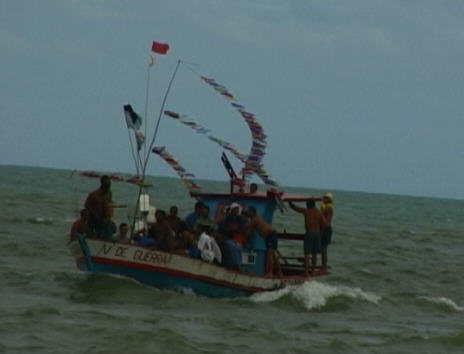
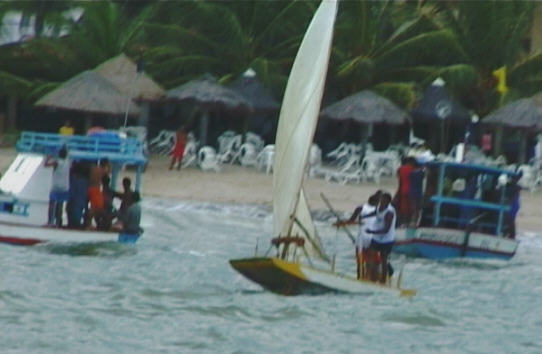
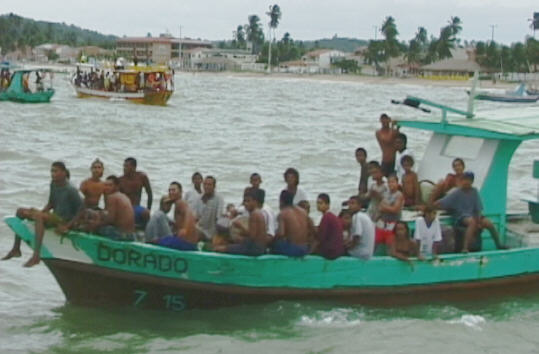
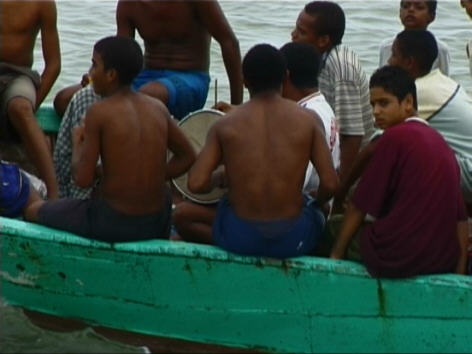
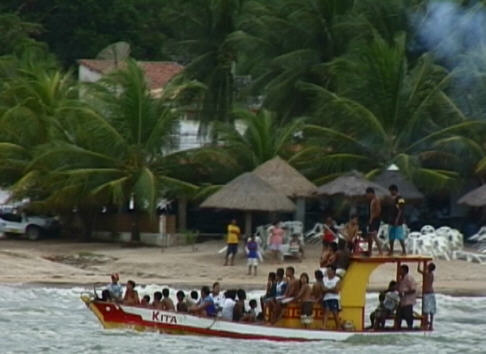
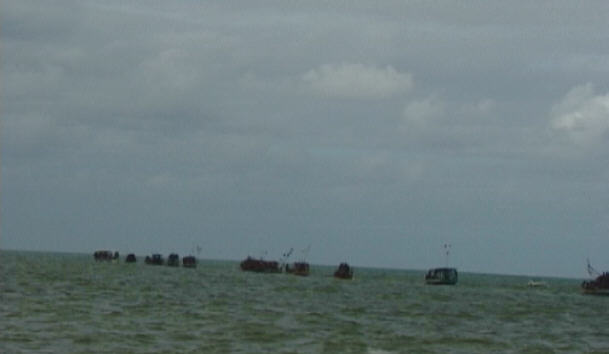
For a few days now, various fishermen had been drawing our attention to the coming Sunday. That was when their big day was supposed to take place. The annual procession in honor of the patron saint of the "Pescadors". Naturally, to celebrate this day, we dug out our large flag decoration from the deepest corner of our MOMO. This had gathered a little dust, as it was hoisted for the last time almost exactly two years ago on the occasion of our MOMO boat christening. Sunday morning at 10:00, the two MOMO's were bobbing up and down in the water. In the meantime, stronger winds had set in and, together with the swell that crashed fully over the reef into the otherwise sheltered lagoon at high tide, it was now getting very uncomfortable. We kept an eye out for the announced, festively flagged fishing boats. Had they pulled our leg? No activity on the boats lying around us. Finally, around noon, some fishermen appeared and began to decorate their boats with simple, homemade flags and scraps of plastic. I almost felt embarrassed now about our flag parade. Within the next hour, people were scrambling around on practically all the fishing boats in the entire lagoon, decorating them. Afterwards, they drove as close as somehow possible to the shallow shore to pick up family members and guests. This alone was a special spectacle. Women, children, and men waded through the surf towards the fishing boats. The children in their swim trunks, the adults likewise, except that the latter were also carrying a package of clothes on their heads. Once the crates of drinks were also stowed on board, the spectacle got underway. The boats drove criss-cross everywhere and let off firecrackers. Around us, as if they had targeted us, there was a hell of a noise. Around half past two, the boats began to form up and drove in a single file behind an excursion catamaran. On this, the holy patron saint, whose real name we unfortunately didn't find out, and the village VIPs were gathered. The entire lagoon was now driven around together over the next hour. Having made their petition, surely even more fish will get caught in their nets next year.