Cape Verde
Rescue operation for the "Never Moore" – São Nicolau and Santo Antão
Sunday afternoon, Yvonne and I are sitting comfortably in the boat, glad that the heavy swell has subsided a bit. Then we receive a radio call from our Swedish neighbors. Helena from the "Smilla" believes that the Dutch "Never Moore" is drifting away. And indeed, I can see for myself that it is moving away from us towards the open sea, even though nobody is on board. The nightmare of us long-term sailors has become reality. Since the "Never Moore" is a 30-tonne two-masted vessel and, according to our bearings, there is no danger of running aground, we decide to go ashore and organize a sufficiently powerful fishing boat. On Sunday the harbor office is naturally closed, so we visit the harbor master at home in the town. After a longer search we find his apartment. He is sitting comfortably with his large family at the Sunday lunch table. Without complaining, which is not a matter of course on a Sunday, he comes with us to the Delegação Maritima. There, a powerful fishing boat is organized by telephone. We now head back in our dinghy towards the "Never Moore". In the meantime, quite a bit has happened there. Two boats have entered the bay. "Smilla" tried by radio to alert them to the problems of the "Never Moore". One boat, the "Holland", replied and was briefed about the situation and the fishing boat assistance that had been set in motion. However, the helmsman of the "Holland" now smelled money (salvage reward) and had himself transferred to the "Never Moore" by dinghy. He found the engine key and now sailed it safely back to the anchorage. All's well that ends well? Among the community of long-term sailors there is a code of honor that we come to each other's aid for free. Unfortunately, the helmsman of the "Holland" does not belong to this species of selfless helpers. Although he had no commission and knew exactly that our assistance was already underway, he boarded the "Never Moore" and now demanded a salvage reward from the insurance company of the "Never Moore", moreover stating false facts. But he has seriously underestimated the harbor master of Sal-Rei. In his official report on this "Never Moore" rescue operation, he officially confirms our efforts and our rescue operation, and not his false representations. To the attention of the "Never Moore" insurance company, we have also made a multi-page, truthful account of this exciting Sunday afternoon, as well as a declaration of waiver of assistance payments to us. Thus we hope that the greedy Dutchman can be stopped.
Sal-Rei

Our hike to Ribeira Brava on São Nicolau
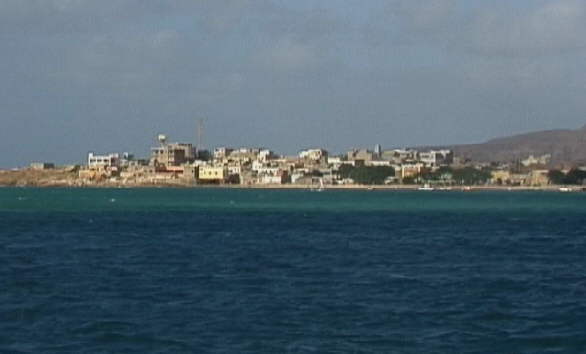
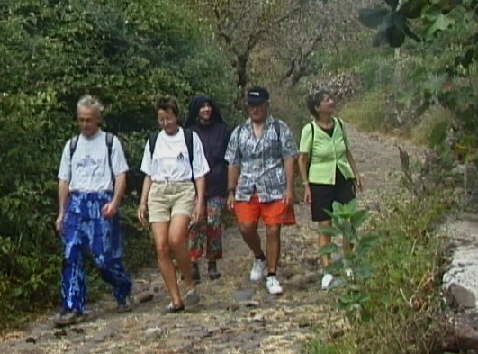
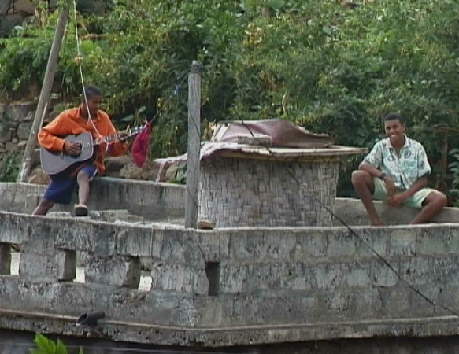
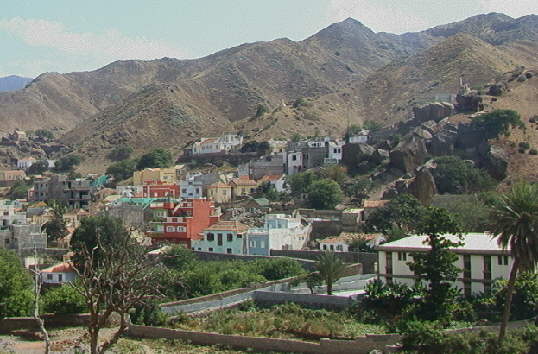
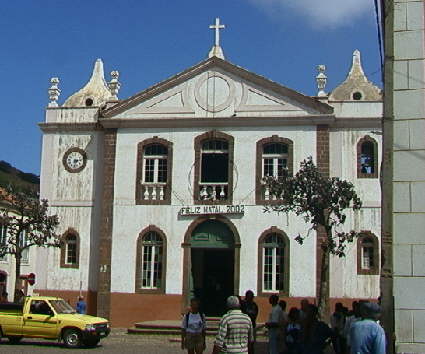
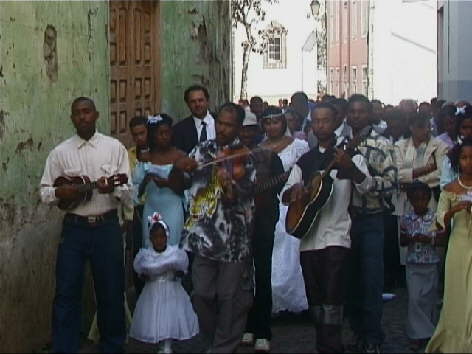
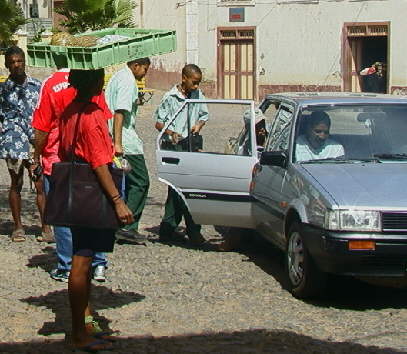
We arrived in Tarrafal on the island of São Nicolau on Thursday, 9 January 2003. To our joyful surprise, we met our French friends and neighbors from Monastir there. After the initial big, welcoming hello, we were already invited to a fine dinner on the "Mentalo". There we decided to hike through the interior of the island together, much to the delight of Dominic and myself, just a tiny bit. The "Mimoja", the other Swiss boat in the bay, happily joined us. The six of us set off with an aluguer towards Cabeçalinho, though this first had to drive several rounds through the village before it had finally found its 12 passengers. This is a very small village, high up on a mountain ridge. The side where we drove up is barren and inhospitable. The other side of the mountain, down towards Ribeira Brava, is green and quite fertile. What contrasts meet there. How few tourists stray into this valley was brought home to us when we encountered two young boys. Each of them was laboriously dragging his water canister up the mountain. When they caught sight of us, they froze at first, only to take to flight in panic as we approached further. They simply left behind their canisters with the water, which is very precious here. The reason for this strange behavior remains a mystery to me to this day. Arriving in Ribeira Brava, live music suddenly sounded from a side street. Curious as we are, we got to the bottom of the matter. A small festive procession was actually coming along. A wedding celebration was underway. Everyone in their finest clothes and the bride all in white. It is only worth mentioning in passing that she swept half the street with her long train. In this situation, the cheerful yet melancholic music certainly tugged at our heartstrings.
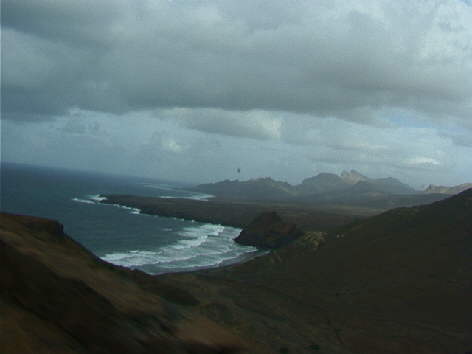
The island of São Nicolau

The Grogue Distillery
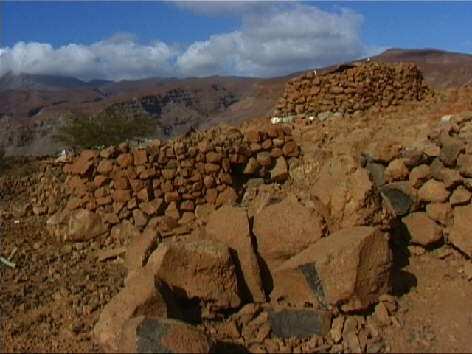
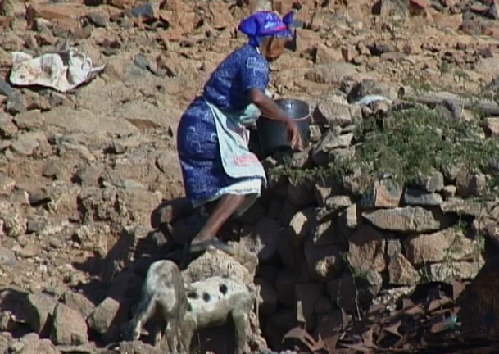
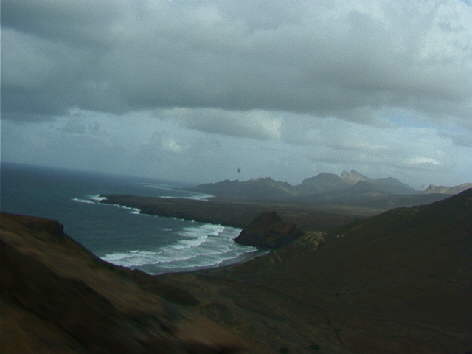
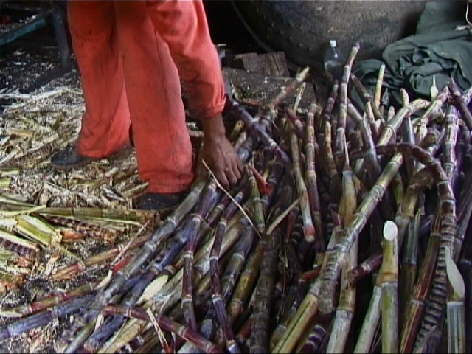
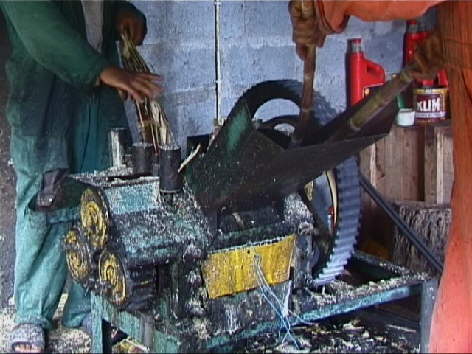
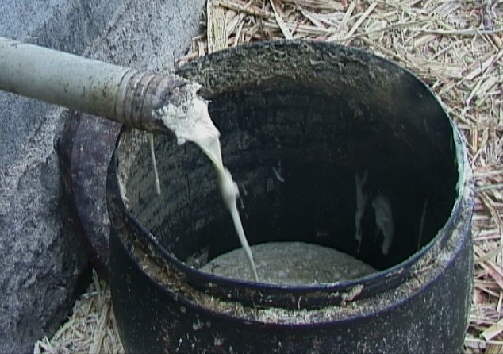
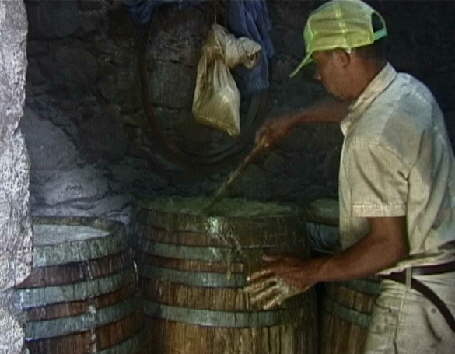
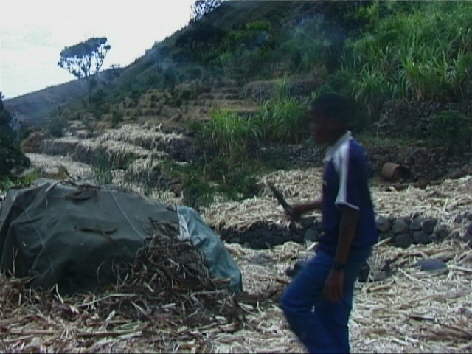
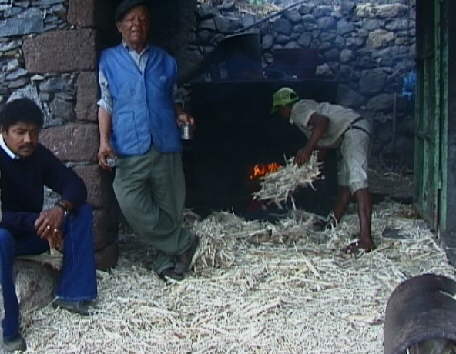
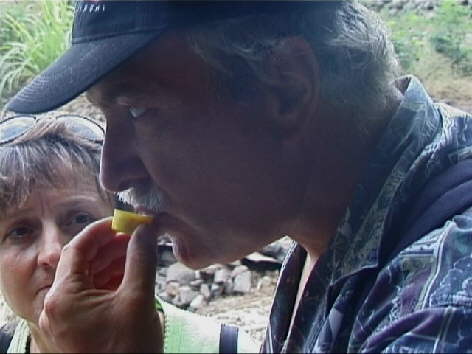
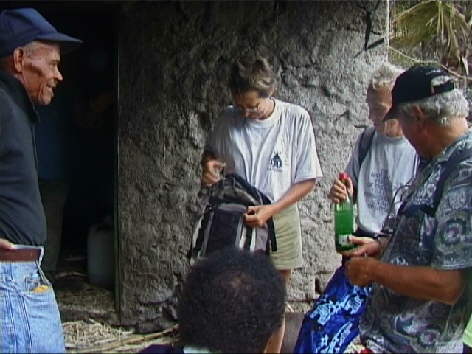
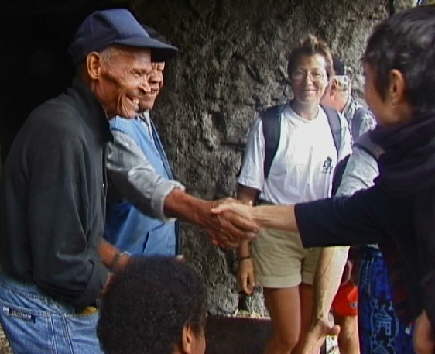
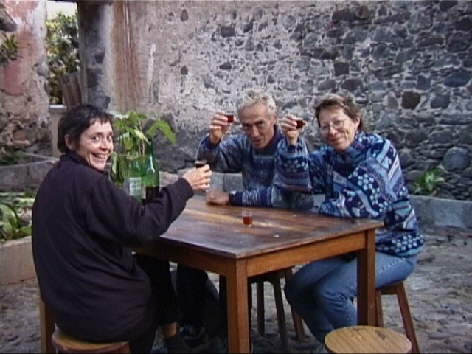
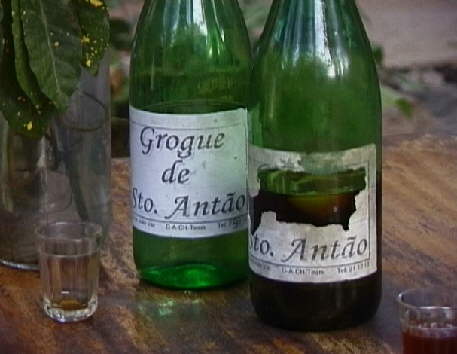
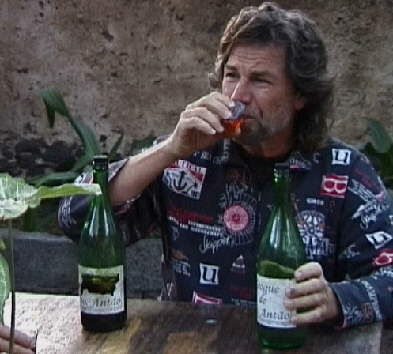
Further down the valley, we are stopped by an older man. After a long back and forth, it turns out that he doesn't want to sell anything, but simply wants to show us the village distillery. Naturally, we gladly accept this surprising invitation. We step through a large, half-decayed gate into an inner courtyard. The ground is littered with pressed sugar cane stalks. These are first passed through a press manufactured in the 19th century. The sugar cane juice obtained in this way is then put into a cask, where it ferments quietly, disturbed only by occasional stirring. The pressed and subsequently dried sugar cane stalks are used to start the fire for distilling. The end result, the grogue, is quite something to behold and to drink. Mixed with a little local punch, a composition of sugar cane syrup, lemon juice, and a secret ingredient, it even tastes good to me! Before saying goodbye, we have to, or rather are allowed to, taste their grogue. Naturally, every couple now wants to buy a bottle of this liquor. But now there is a big problem. As I mentioned at the beginning, they do not want to sell us anything, but simply show us their distillery. After a long back and forth, we also learn the reason why they do not want to, or cannot, sell us anything. They have no smaller glass bottles for bottling! An old vermouth glass bottle was eventually found in the village, and so, unfortunately, only 1 liter of grogue changed hands.
Unjustified Horror Stories About Mindelo and Cape Verde
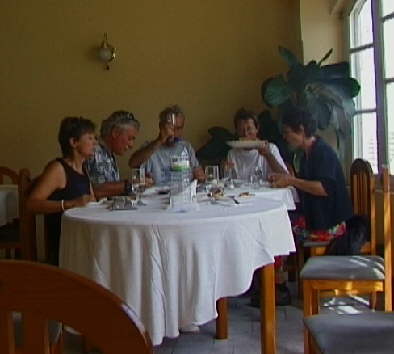
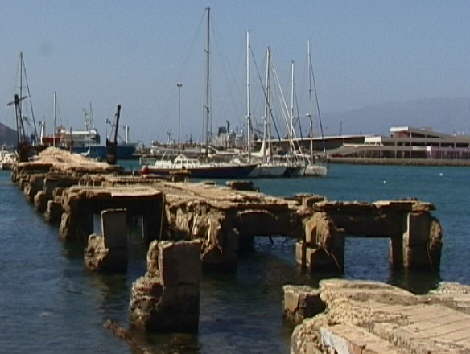
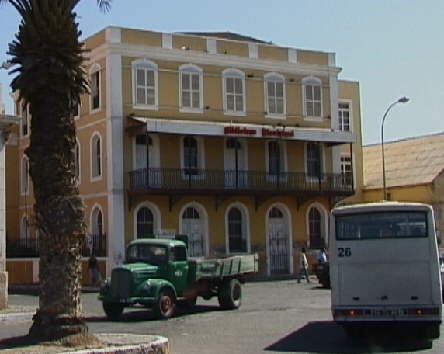
What horror stories have been written about this city and its harbor. Have we really just always been lucky, or are we perhaps even blind? When I think back to the conversations among us sailors in La Gomera, to the horror stories and warnings that made the rounds there, I cannot confirm a single one of them, not even remotely. When Mr. Bobby Schenk, I have read many of his technically excellent books and also had them on board the MOMO, publishes such a negative review about a country, in my opinion, it is very one-sided and almost irresponsible.
Over the past 8 weeks, we have had exceptionally good contact with the locals. They, in turn, have always been very helpful and courteous towards us. Of course, our MOMO and the dinghy are always locked at night, but don't we do that in Switzerland with our house and car as well? When we are ashore, we only carry a small amount of cash in our wallets, while the rest is kept under our T-shirts in a body pouch. Late in the evening, we no longer walk alone into the small alleys, but stay on our boat instead. However, these are common-sense precautions that we would take, and do take, in Zürich, Berlin, Hamburg, the Caribbean, etc.
Following the Swiss-German motto, freely adapted from Corinne: Fresh and cheerful to every lion..., we always try to approach every local and stranger, greet them warmly in their language, and show them respect. To this day, this simple recipe has proven successful and has certainly saved us a few problems.
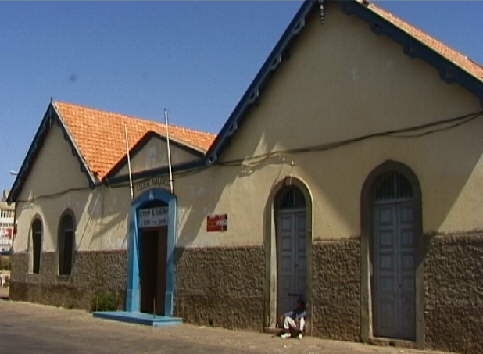
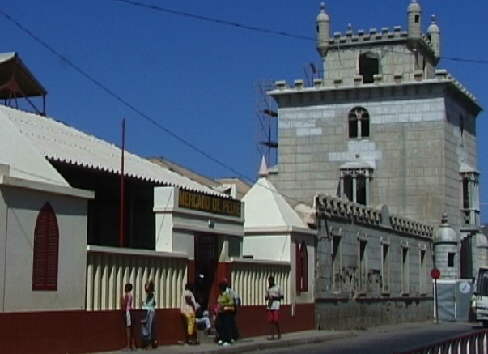
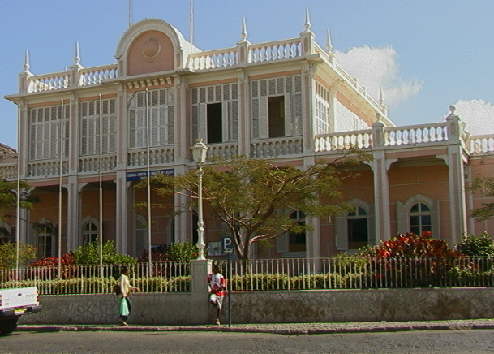
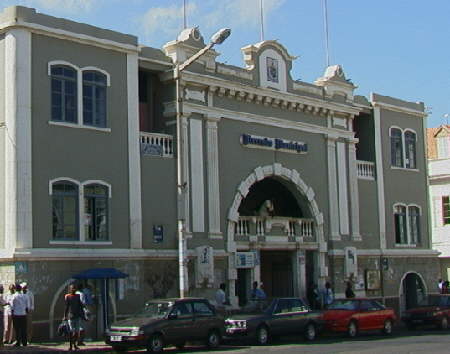
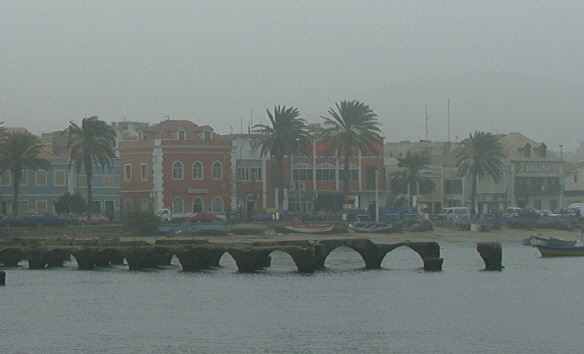
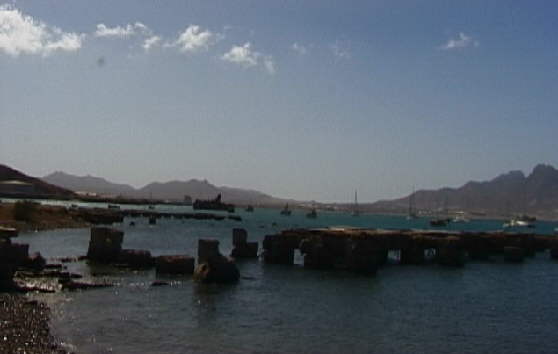
Mindelo, on São Vicente
Visit to the Island of Santo Antão
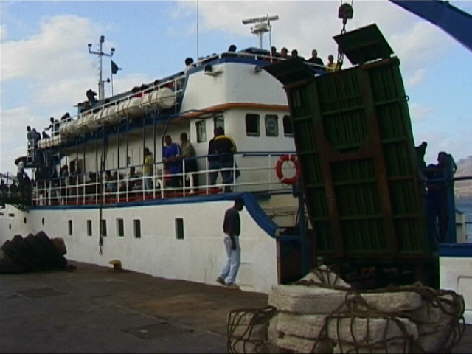
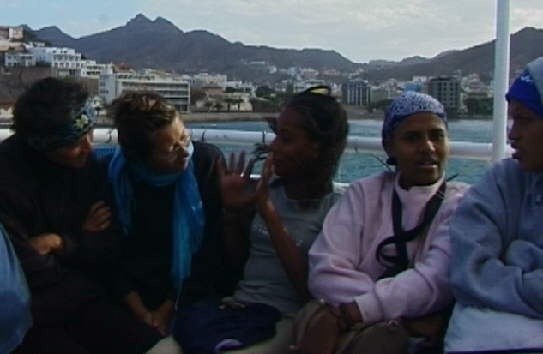
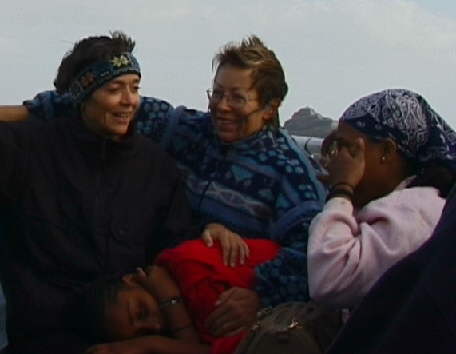
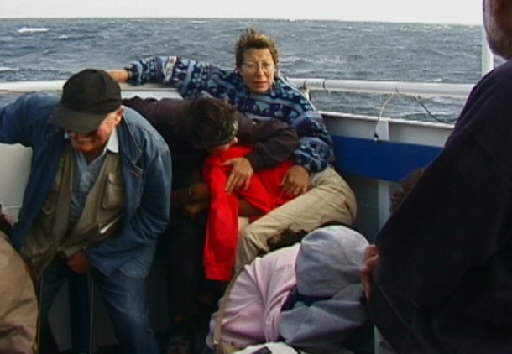
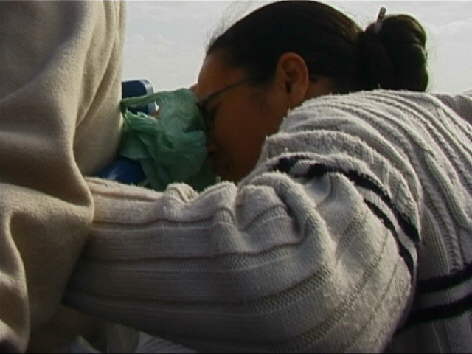
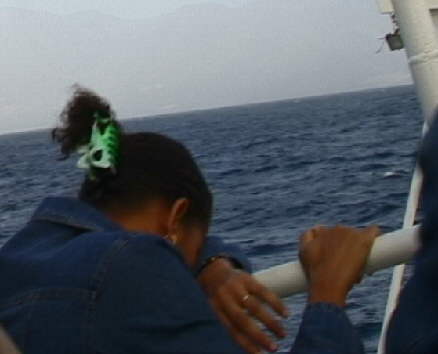
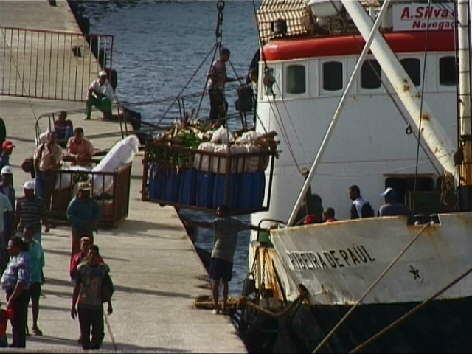
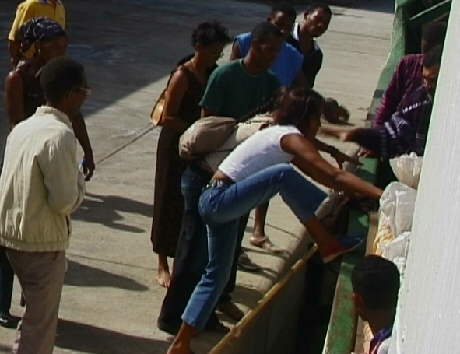
We visit this island using the public ferry due to the lack of a safe harbor there. Even the short crossing, about 1 hour, turned into a spectacular experience. The ferry was packed with people, cars, animals, large stones, and all sorts of possible and impossible things. Shortly after departure, the ship began to rock gently back and forth. Faint squeals from female passengers began. The first ones started looking for a suitable place for their stomach contents, either on the floor or overboard. After half a mile, or rather half an hour of travel, surely half of the passengers were seasick. Like fish dragged ashore, individual people twitched all around us, while others sat mutely in a crouching position. For us, this meant paying close attention so we didn't receive an unwanted stomach shower from somewhere. Luckily we were on the open-air deck, so at least the fresh sea air carried away the intrusive taste of stomach juices.
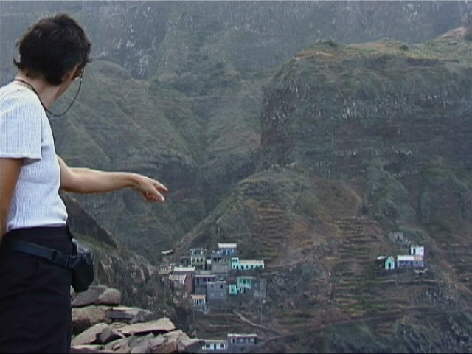
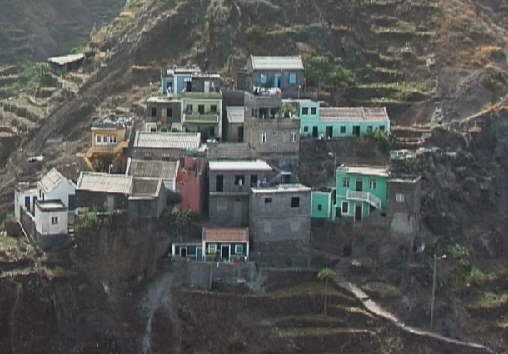
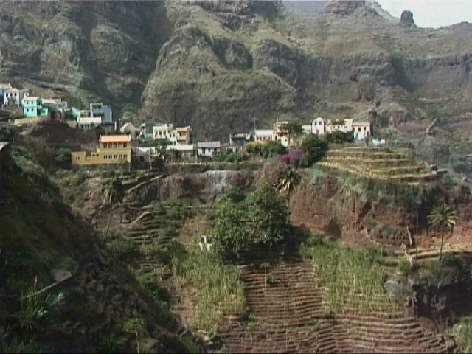
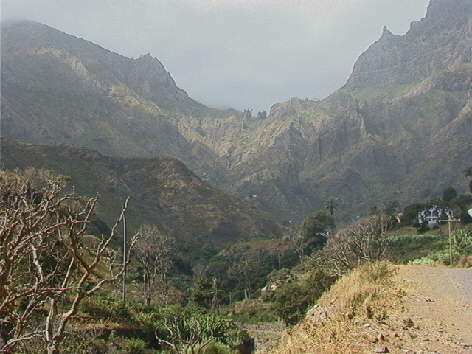
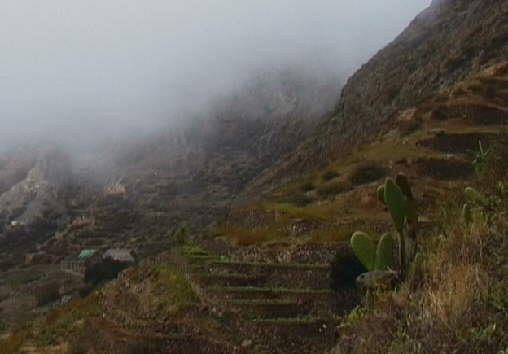
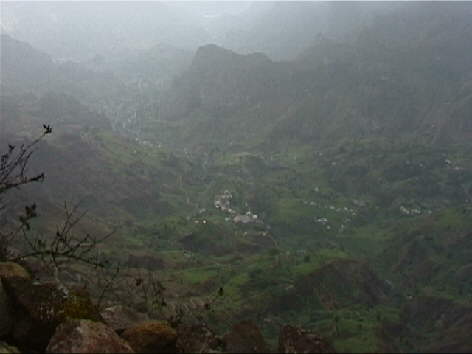
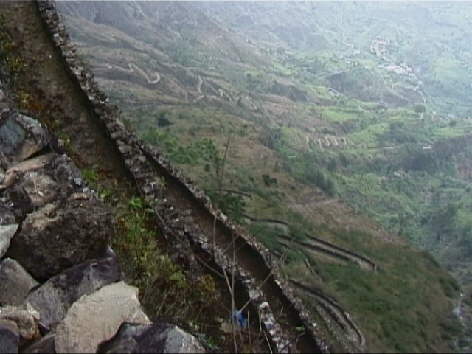
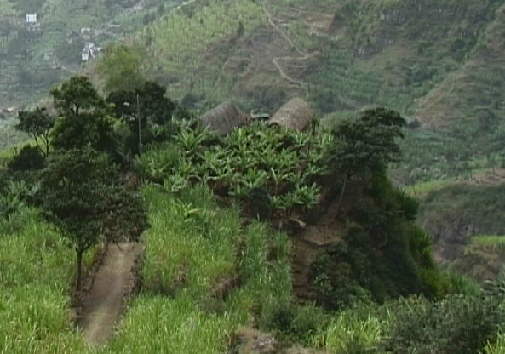
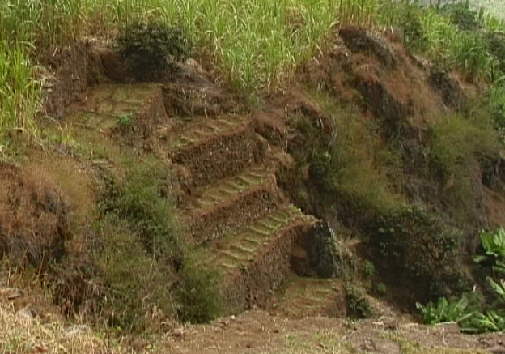
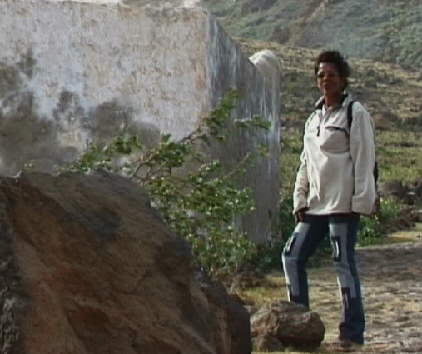
Arriving in Porto Novo, we were already expected. The aluguer, organized by André Mégroz, picked us up and took us up to the crater rim, located at an altitude of 1170 meters. In thick fog, we started our valley hike towards Paúl, along with Ghjselaine and Dominik from the "Mentalo" and ourselves. When the fog cleared about 100 meters lower down, we thought we were no longer in Cabo Verde. We had never known this country like this before. Lush green, palms full of delicious bananas, vegetable patches, coffee bushes, and so on. All of this on small terraces that were painstakingly built over many generations. In between, water even trickled down the mountain. Like in a fairy tale. The contrasts here in Cabo Verde had never been so striking. Occasionally, children approached us spontaneously and presented us with small, hand-picked bouquets of flowers. In return, of course, the eagerly desired ballpoint pens came into action again. The trail continued via a steep but very well-maintained mule track towards Paúl. The 1000 meters of altitude difference were slowly starting to take a toll on our knees. Therefore, the small distraction when a Frenchman living here wanted to show us some typical items produced here in the valley was not unwelcome. After we bought a little coffee beans and palm molasses, everyone was satisfied.
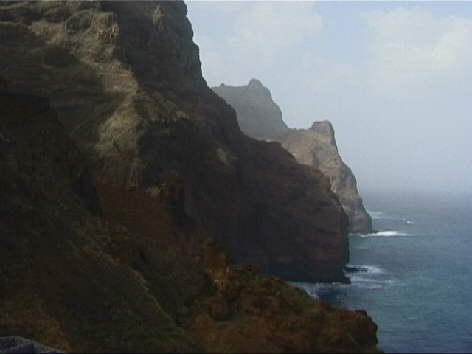
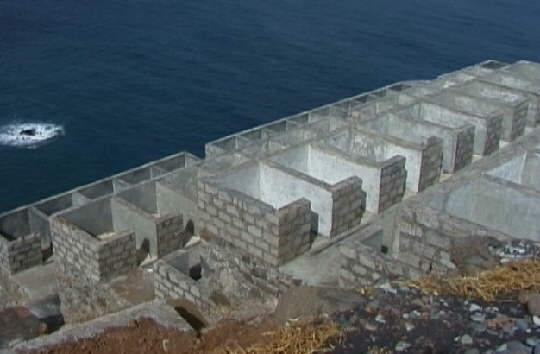
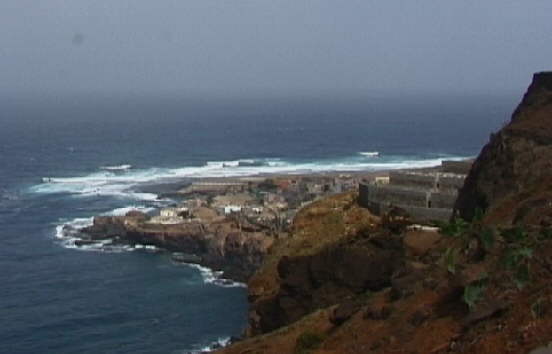
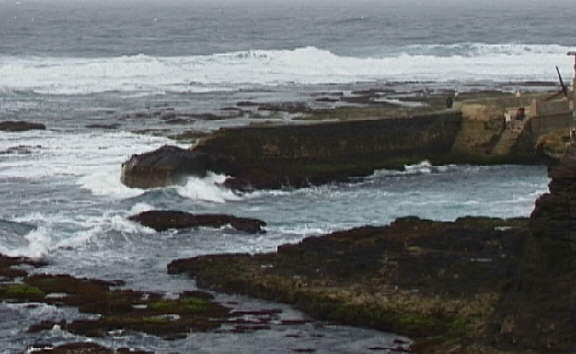
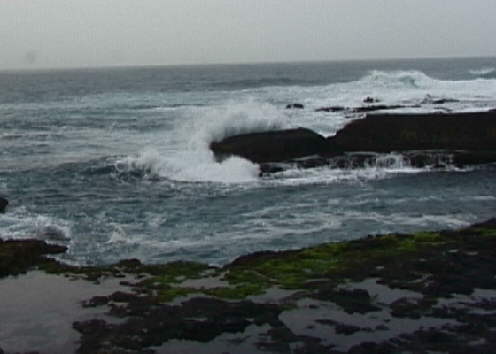
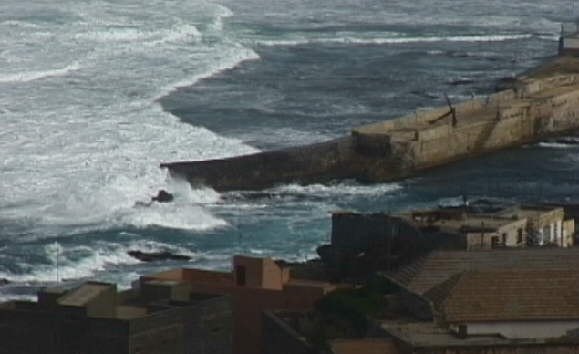
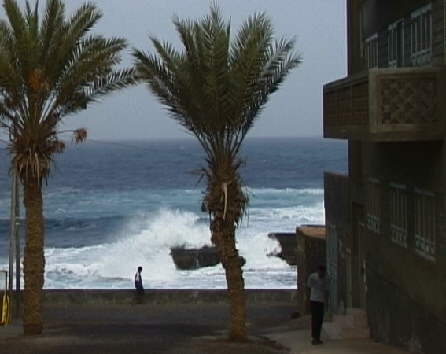
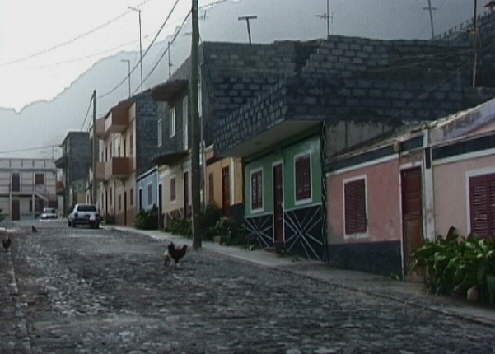
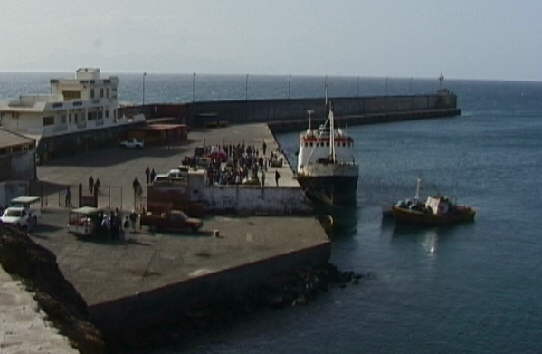
Shortly afterwards, André picked us up with "our" aluguer. The drive then led along the wild coast to Ponta do Sol. There is a special fishing harbor there. Using it is only possible for absolute experts among the fishermen. The surf is so strong and dangerous there that when entering, the interaction between the surf, the fishing boat, and the helpers on land must be precisely timed, otherwise the fisherman will have to build a new boat afterwards, provided he has survived.
Crossing to Santo Antão, the greenest island of Cape Verde, and subsequent hike
and the dangerous fishing port of Ponta do Sol