Brazil
Our life at anchor, final shopping in Brazil
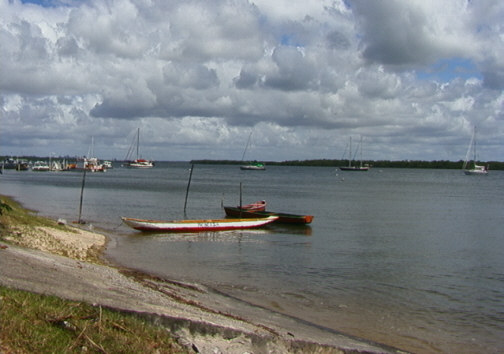
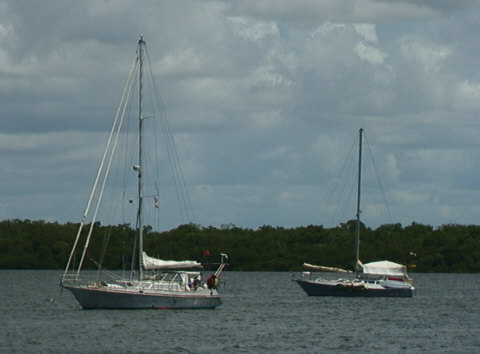
We have already been lying at anchor here in Jacaré for the entire month. Brian, an Englishman who has been living here for over 20 years, has built himself a family and a mid-sized shipyard during this time, Cabedelo Náutica LTDA. Alongside this, he makes his infrastructure and his good contacts with the locals available to us yachties. Anyone without a shower on board gets the opportunity to treat themselves to this luxury once again here. Most repair work can be done here, and he has even built an extra dinghy dock. For us sailors, Brian is the go-to guy here for all urgent cases.
We personally had firmly resolved to carry out various repairs on our MOMO here. But to say right away, our time once again unfortunately was not enough to get everything done. Various things that were not vital for survival had to be postponed for later. In return, we had lively contact with the cruising crews currently present here. One invitation followed another, and so we got to know many people, sailboats, and circumstances from Canada, South Africa, France, Sweden, and England. We also spent a lot of time with our new friends from the German Momo. We had many pleasant and interesting hours with them. From playing boules to eating excellent meals together, from mutual help with problems (whereby Wolfgang was able to help me more than the other way around), to the unforgettable caipirinha and Rummikub hours, there would be a lot more to tell. But that would then already be too intimate after all, and therefore we will rather leave that out.
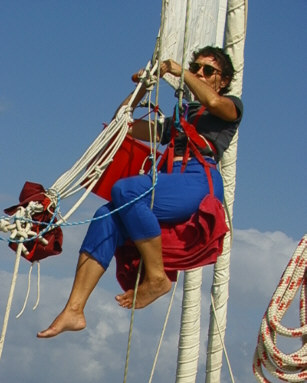
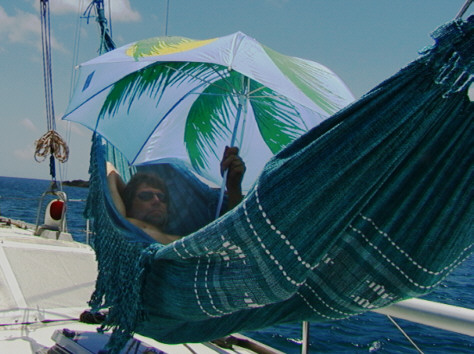
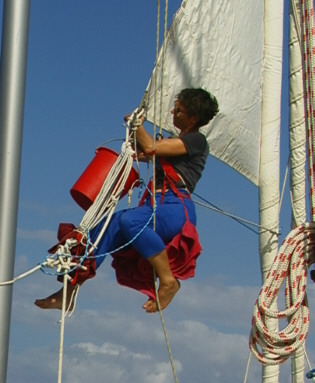
Despite our relaxed life, we actually did manage to get some work done after all. Among other things, Yvonne, hanging high up in the headsail, sewed up some sail seams and started sewing the new cockpit seat cushions. I myself spent a lot of time procuring needed spare parts. Hours of walking were often necessary for this in João Pessoa and its surroundings. In between, my inline skates were also put to use again, which resulted in a very unusual sight in this smaller town and the unwanted attention of the population. Tracking down the new battery charger and the square aluminum tube for better drainage of our cockpit roof, all the way to finding a new torque wrench and the new 16 mm stainless steel rod to fix the damage caused by the burglar, required an unimaginable amount of time for me. The stainless steel hose connections of our Volvo exhaust water collector also had to be re-welded. The generator's water pump had started to leak, and the sealing rings were supposed to be replaced. Supposed to be, because this size was nowhere to be found, and thus once again we had to dip into the bag of tricks to improvise something there. This list could be much longer, but who at home is interested in such trifles anyway. Oh yes, I bought a hammock. Yvonne took the adjacent picture on the occasion of the aptitude test. The connoisseur immediately recognizes, of course, that the problem with the sun protection has not yet been solved in an optimal way. At the moment, I still have to hold the umbrella myself, and that means I still have to work far too much during the siesta. In the meantime, the optimal solution has also been found here.
Memories of Jacaré
Bunkering water on a cruising yacht
Turn the water tap to the left. For showering, revel delightfully and endlessly in the jet of water, or treat yourself to a glass of clear and fresh drinking water when feeling thirsty. That is what a man (and of course also a woman) has been used to from Switzerland since time immemorial. But that drinking water is not so simple and taken for granted all over the world is something we Northern Europeans should be much more aware of. Perhaps then some would handle this precious wet resource a bit more carefully. It is very good that there is a tropical midsummer in Europe every now and then to bring the vital importance of clean water a little bit before our spoiled eyes.
The fact that the next big wars on our beautiful world will be fought precisely over this clean drinking water in the foreseeable future has already been prophesied for a long time.
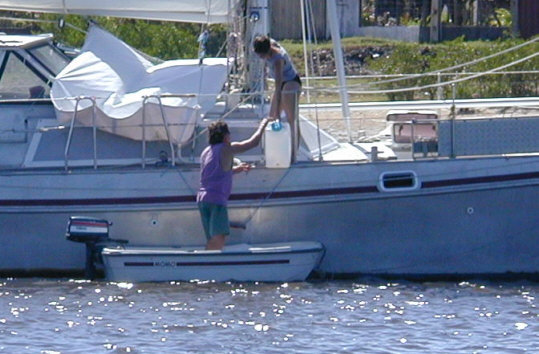
We know very well that with our MOMO, we are among the privileged of this earth on our journey, especially in the regions poorer in water. With our watermaker, we can convert about 75 liters of salt water per hour into good drinking water, which unfortunately is mineral-free. However, this also requires that clean salt water is available to us. In a yacht or industrial harbor and in rivers, this is naturally not the case. There, it is also impossible for us to operate the watermaker.
Now there are other ways for us to top up our empty water tanks. When it rains hard enough, we can catch the precious moisture with our special rain canopy and direct it into the tanks. When we are exceptionally moored in a marina, there is running water, but unfortunately mostly of inferior quality, directly from the dock.
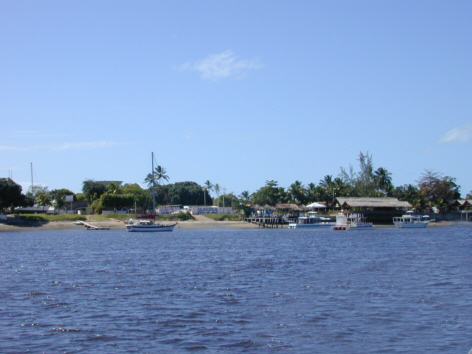
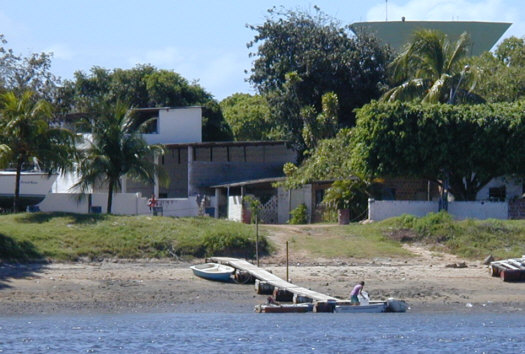
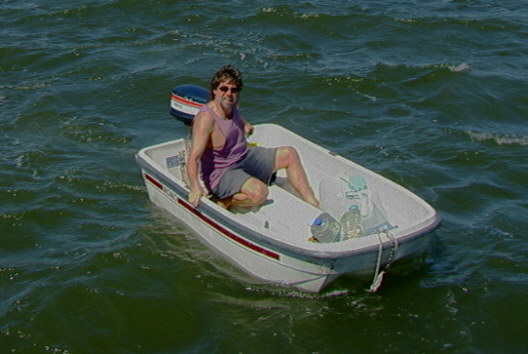
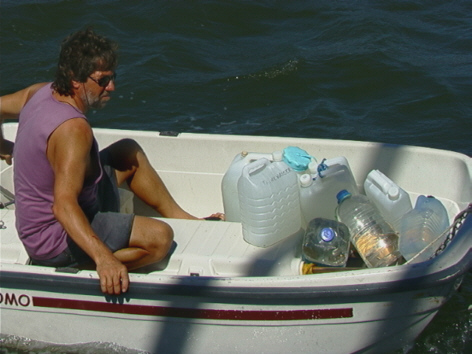
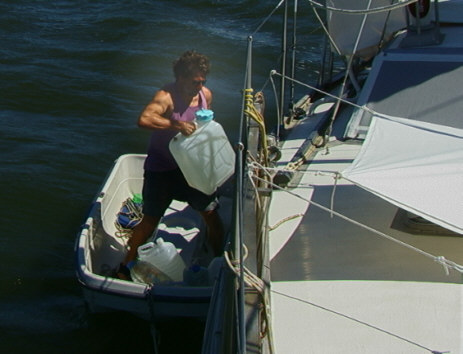
When we drop anchor somewhere in a river in front of a small village, the whole thing becomes much more elaborate. The rivers here in South America are usually very murky and completely useless for making water. Thus, we then have to look for a suitable water source in the village. Once we have found one, the hard labor begins. We have to fill the water into various canisters and carry them to the dinghy. Afterward, we drive the loaded tender back to the MOMO and hoist the water canisters on board. Depending on the swell, this is more or less a major acrobatic feat. Thus, per dinghy trip we can fill about 65 liters of fresh water into our tanks. Since our tank capacity is just under 700 liters, you can calculate for yourself how many dinghy trips that results in each time. Not to mention the time expenditure, because fortunately we (mostly) have plenty of time.
Perhaps you will think of us a little the next time you brush your teeth while the water gushes merrily from the tap.
Bolero de Ravel
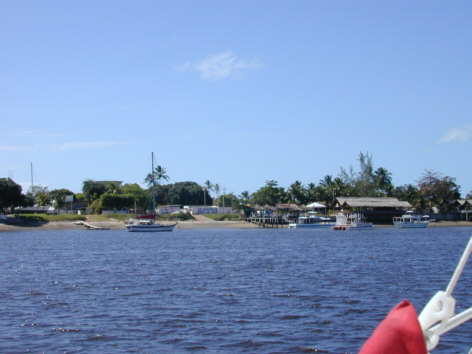
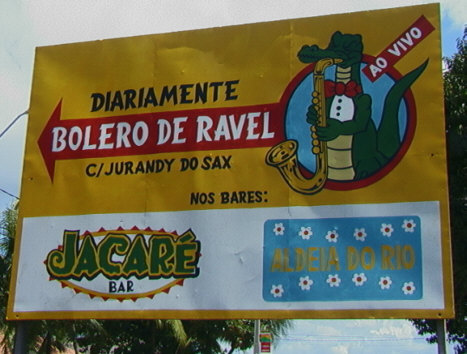
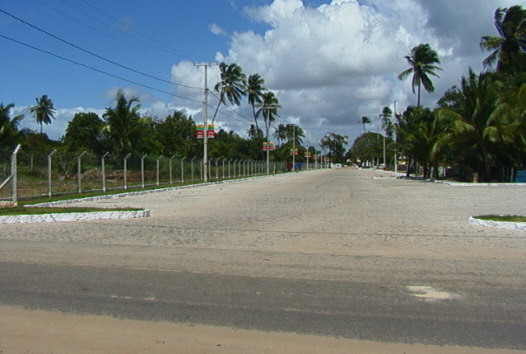
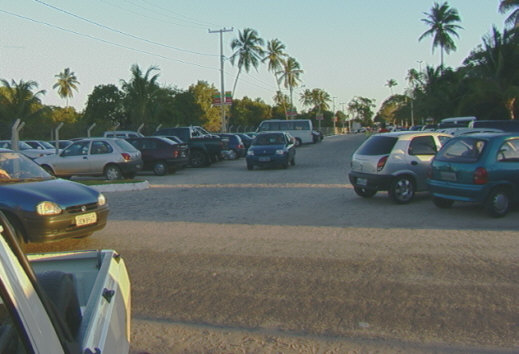
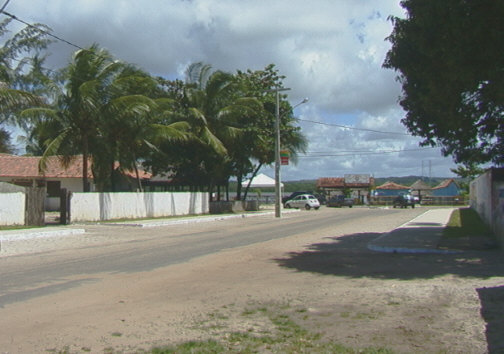
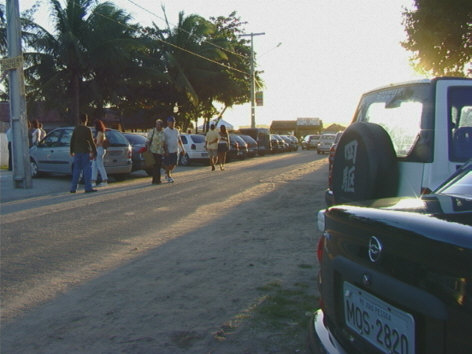
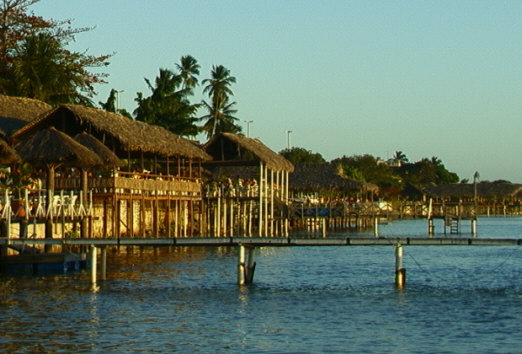
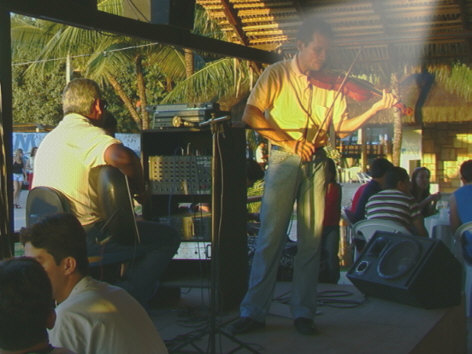
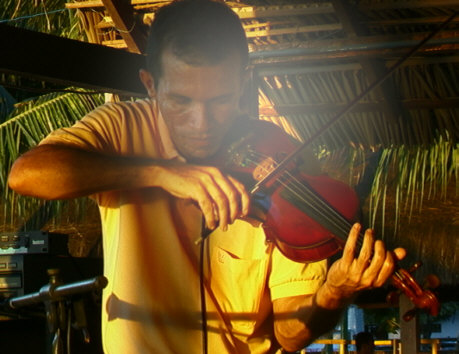
Every day at around 5:00 PM, life comes to Praia da Jacaré. The large parking lot slowly begins to fill up. The beach restaurants compete for the arriving guests. Each has its own live orchestra, which now begins with its music. It is Bolero time in Jacaré!
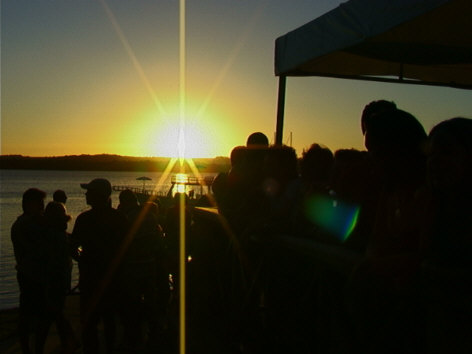
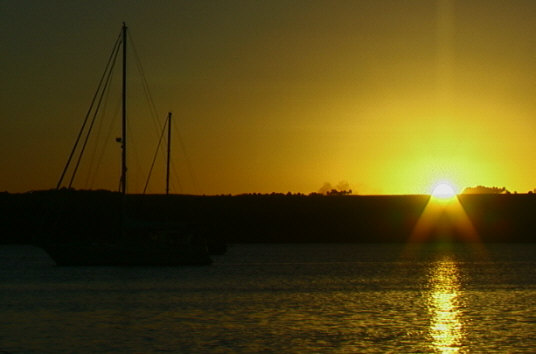
People take their seats, meaning they order their apéritif (naturally a Caipirinha or Caipirosca) and direct their gaze toward the west. There, day after day, an impressive spectacle indeed unfolds. The sun transforms the entire horizon into a golden fairytale landscape. In addition, the musicians in each restaurant play their Bolero de Ravel. Depending on the instrument and skill, better or less well. After about 10 minutes, the whole spectacle is over. The fiery orb has disappeared behind the horizon, the cameras are stowed away, and a long-lasting applause from the Brazilians present somehow rounds off the whole thing festively. By the way, no one could ever explain to me exactly who the applause is meant for, whether it is for the musicians, for another busy day successfully coming to an end, for the temperature without the sun now being more pleasant, or goodness knows what else. But actually, that doesn't really matter.
It should just be mentioned in passing that we were allowed to experience this impressive sunset atmosphere day after day for six weeks from our MOMO. But as it is in life, at first we were fascinated, then it became a habit, and finally we already regarded the natural spectacle as a matter of course.
Last Shopping before Departure from Brazil
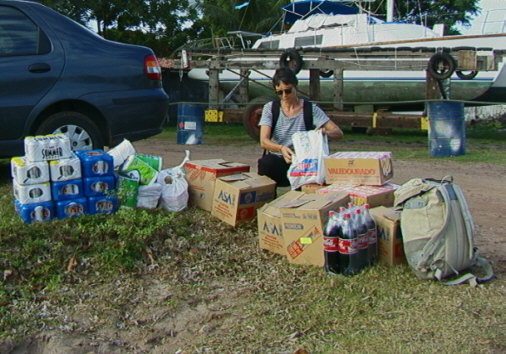
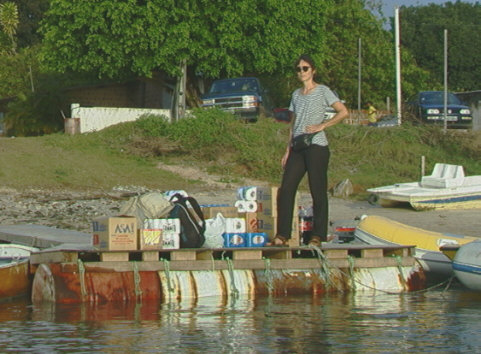
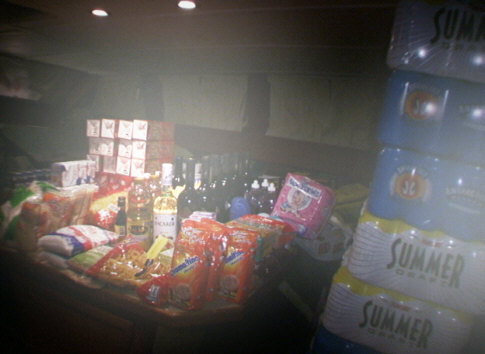
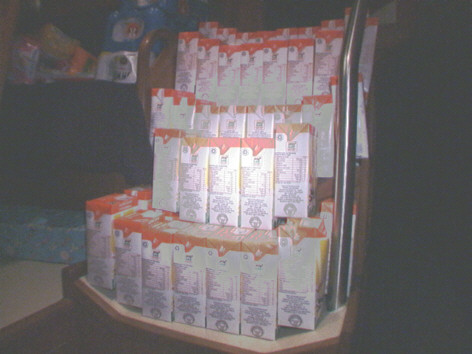
Shortly before leaving our beloved Brazil, we stuffed MOMO to the brim. For the sailors among you, this means that the waterline is currently about 10 cm lower, packed with all sorts of things. From groceries to fruit juices, from clothes to beer that we want to sell nicely in the Caribbean, we have stocked up for the near future. These paradisiacal prices of Brazil are unfortunately now a thing of the past for good, and we are already trying to adjust to the price shock in French Guiana.

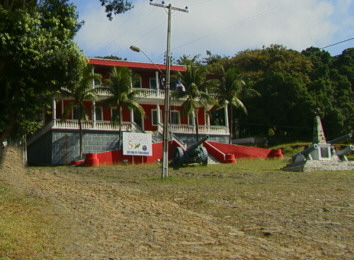
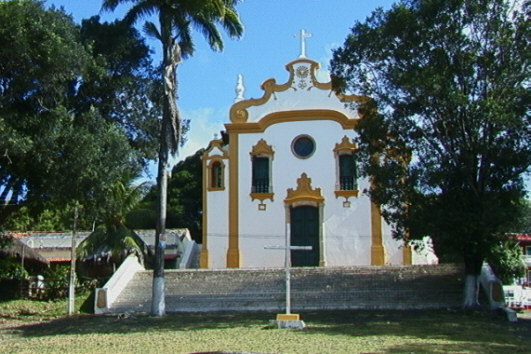
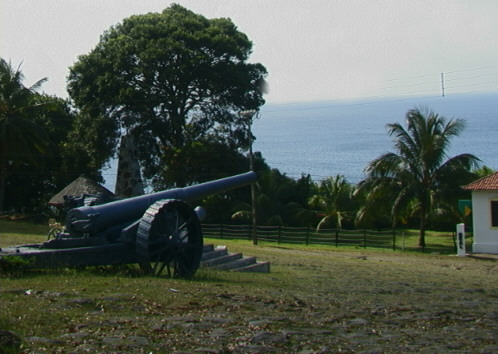
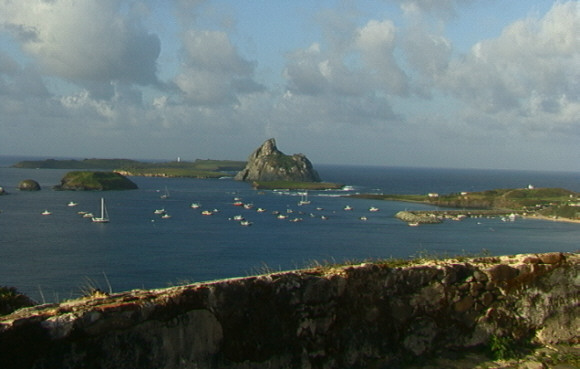
Ilha Fernando de Noronha
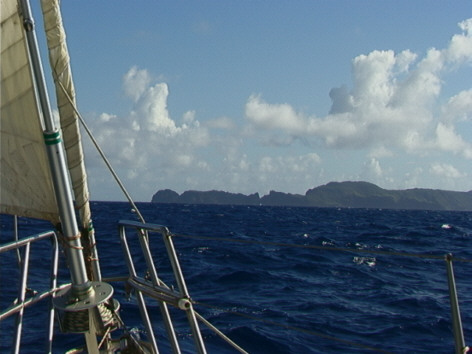
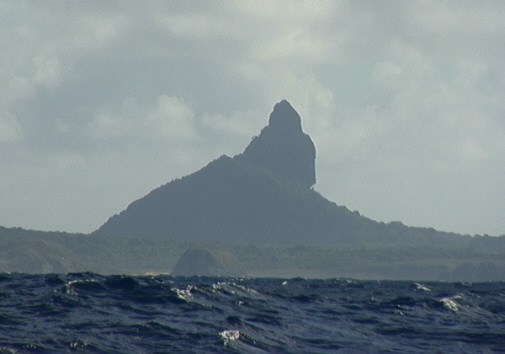
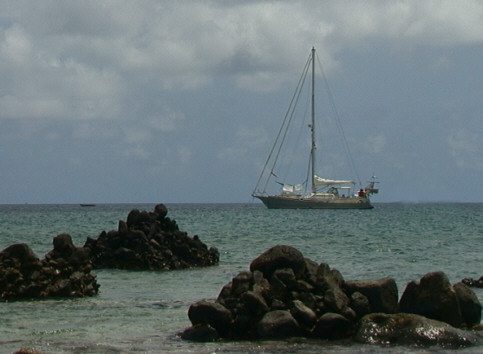
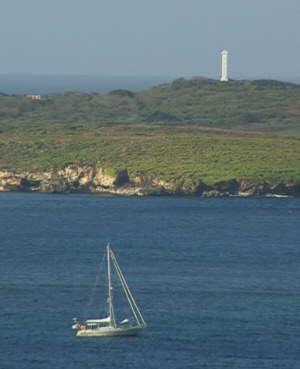
After leaving Jacaré and passing the Gabedelo lighthouse to starboard, about 200 nm of open Atlantic lie between us and the protected island of Fernando de Noronha. Exactly 46 hours later, our anchor drops in the bay of São Antão. Several smaller excursion boats, a few fishing boats, and only a single sailboat are anchored there. "Something isn't right here, only a single sailboat is in such a wonderful spot!" I say to Yvonne. Why, we would find out drastically four days later.
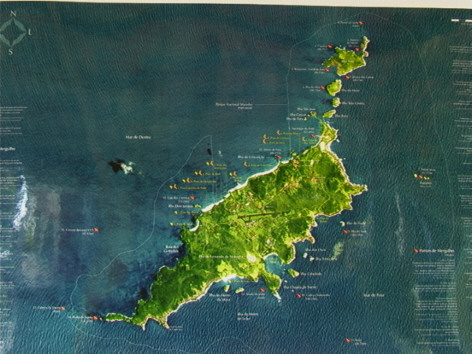
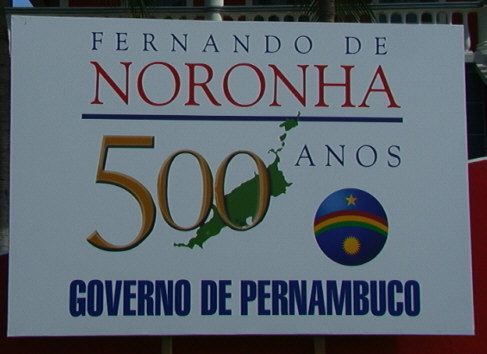
German Momo had been here before, 5 months earlier, and had been raving to us about the fantastic dive sites ever since. So together with a diving school, we set off on the third day and I was able to see for myself that she hadn't exaggerated. Scuba diving at a depth of 20 meters, we saw pretty much everything, from rays to moray eels, from turtles to hammerhead sharks, from parrotfish to countless small colorful fish. I had the impression that everything that could swim was out and about today. Unafraid, most of the fish came quite close, and some smaller ones even nibbled on the diving mask. From our anchorage, we could swim directly to a small reef. Armed with snorkel, mask, and fins, we spent many hours in this natural aquarium.
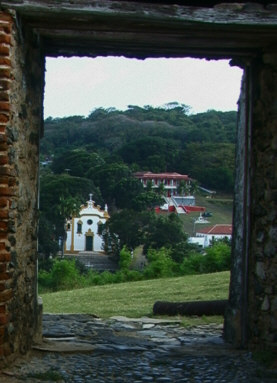
On the fifth day of our stay, a man came to our boat and explained that we had to report to a specific building immediately. This building was new, but otherwise not really clearly marked. So we went there the next morning. Two officials welcomed us quite friendly, just typically Brazilian. What followed, however, was no longer so pleasant. Since July 1, 2003, a new law had been in effect. Every yacht at anchor had to pay 50,– CHF per day, and every visitor 13,– CHF. We knew about the national park fee of 13,– CHF. But that we were now supposed to shell out 50,– CHF per day just like that for a boat at anchor, without any protection, without water and electricity, went far beyond our understanding. My tone of voice then became a little firmer and louder, so that Yvonne kept kicking her foot against my shin under the table. The responsible official even understood my displeasure and then, to our great astonishment, made a truly brilliant proposal. If we didn't leave on the spot, he would be willing to charge us the boat fee for only one day instead of 10 days. He had the opportunity to list us as participants in a deep-sea fishing competition that happened to be taking place. Of course, under these circumstances, we were happy to play deep-sea fishermen (only on paper). Visibly relieved by our consent, the official became quite talkative and told us about his "shit job". That practically every boat leaves on the spot again and that he only experiences drama and heated conversations here in his office. He also didn't understand the government in Recife and didn't agree with this policy at all, but he just had to do this unpleasant job here for 4 months. He had only 2 days left here, then he would be relieved and could return to the mainland in Recife. To accommodate us even more, he ordered his colleague to drive us to the government building in a beach buggy to pay the boat tax for the deep-sea fishing competition and then to the airport so we could pay the national park fee.
This understanding official masterfully managed not to upend our exceptionally good impression of Brazil in the last few days. For this, I would like to express my sincere thanks to him once again!